

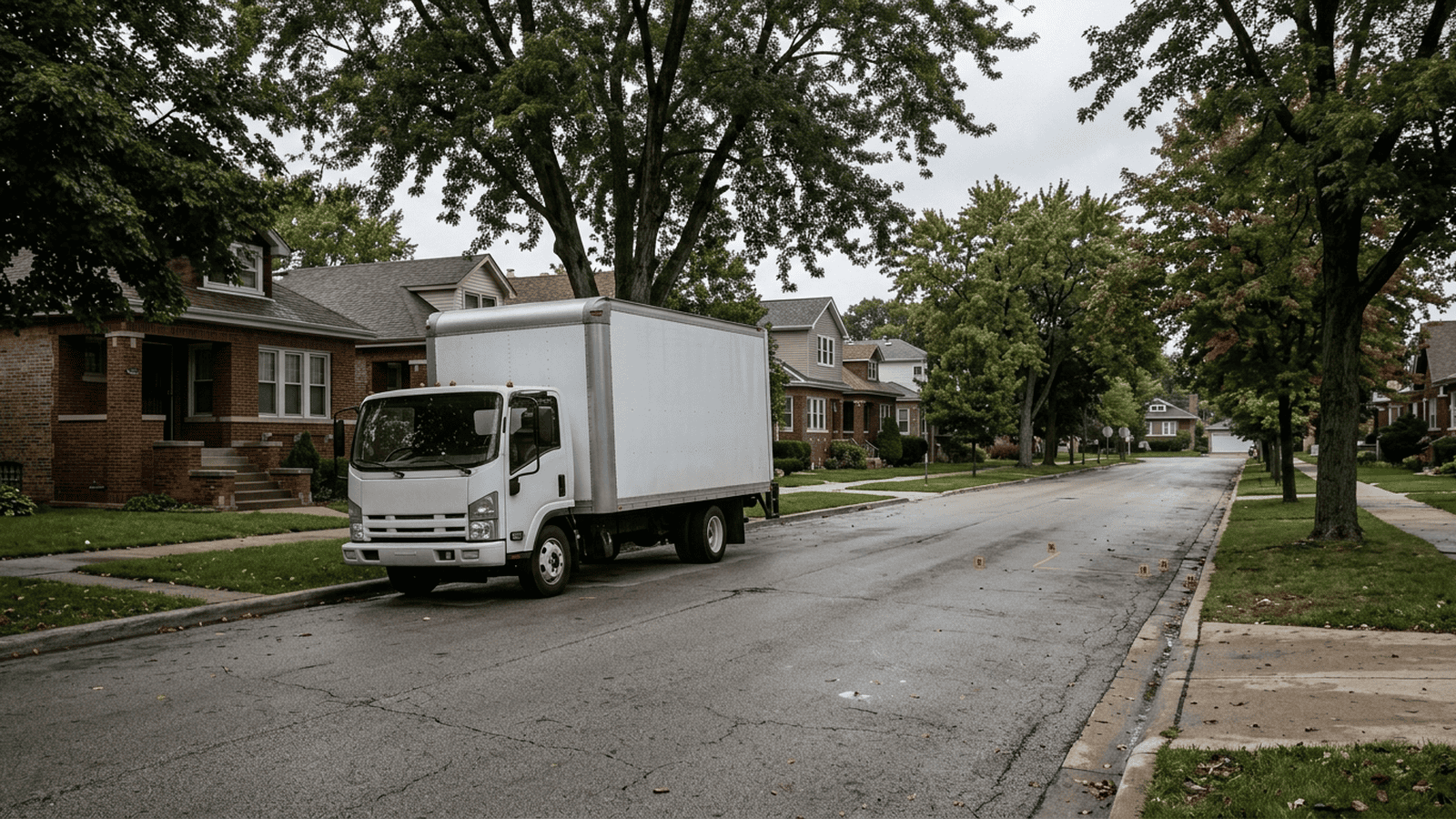
The family of Silverio Villegas Gonzalez has filed a claim seeking compensation from the federal government after an ICE agent fatally shot him in the Chicago area last year. Attorneys allege that the shooting was unlawful and preventable, while DHS initially described it as self-defense after saying the agent was dragged by the vehicle. A coroner’s report found that Villegas Gonzalez was shot from behind at close range, and neither ICE agent was wearing a body camera. The claim gives the federal government six months to respond before a lawsuit can be filed. The amount sought has not been disclosed, and DHS did not respond to a request for comment.
TLDR: The family’s claim challenges the federal account of the fatal shooting and seeks compensation, though its amount remains undisclosed. The government has six months to respond before a lawsuit can be filed, while an Illinois State Police investigation announced in May remains part of the oversight picture.
The family of Silverio Villegas Gonzalez has filed a claim seeking compensation from the federal government over his death in a Chicago suburb. The family’s attorneys allege that an Immigration and Customs Enforcement agent shot him unlawfully and that the shooting could have been prevented. The claim gives the government six months to respond before the family can file a lawsuit. The amount of compensation sought has not been disclosed.
The filing is the family’s formal step toward seeking damages, but it is not a court ruling. The allegations in the claim have not been established in court. The filing also does not decide whether the agent acted lawfully or whether the shooting could have been avoided. Those questions remain disputed, and the government has a period to respond before the family can bring a lawsuit.
The Department of Homeland Security initially said the agent was dragged by Villegas Gonzalez’s car and fired in self-defense. That is the government department’s stated account of why the agent fired. The family’s attorneys dispute the lawfulness of the shooting and say it could have been prevented. The accounts raise sharply different descriptions of the encounter, and the information available in the claim does not resolve that difference.
A coroner’s report found that Villegas Gonzalez was shot from behind at close range. That finding describes the wound and the direction and distance of the shot, but it does not by itself establish what happened before the shooting or determine whether the agent’s actions were justified. The report is one piece of information in a case where the family’s allegation and the department’s initial explanation remain at odds.
Neither ICE agent was wearing a body camera, according to the information in the claim. That means there is no body-camera recording from either agent to provide a direct visual record of the encounter. The absence of that footage does not settle what happened. It does mean that the public information described so far includes differing accounts, the department’s initial statement and the coroner’s finding, rather than a body-camera video.
Illinois State Police announced an investigation in May. The announcement establishes that an investigation was undertaken, but the information provided does not include its findings or say whether it has concluded. The family’s claim and the state police investigation are separate parts of the response to the death. No result from the investigation has been supplied alongside the claim.
The claim starts a six-month response period for the federal government. During that time, the family must wait for the government’s response before filing a lawsuit, according to the information in the filing. The claim is therefore an important procedural step, but it is not yet a lawsuit and does not establish that compensation will be paid. The amount requested has not been made public, and the government’s response is not yet known.
That timeline also sets out the practical next step for the family: the government has six months to respond, and a lawsuit can follow after that period. The available information does not state what costs the family has incurred, what paperwork was required beyond filing the claim, or whether the government will agree to compensation. It also does not describe any change to ICE enforcement practices as a result of the case. Those matters should not be assumed from the filing alone.
The Department of Homeland Security did not respond to a request for comment. Without a response, the department’s initial account remains the only explanation from the government described in the available information. The family’s attorneys, meanwhile, have stated that they believe the shooting was unlawful and preventable. Their claim gives the government a formal opportunity to respond before the dispute can move into a lawsuit.
For now, the central issues remain unresolved: what happened during the encounter, whether the agent’s use of force was lawful, and whether the shooting could have been prevented. The coroner’s report provides a finding about how Villegas Gonzalez was shot, while the lack of body-camera footage leaves no recording from either ICE agent. The state police investigation may provide further information, but no findings have been reported here. The family’s claim puts its allegations before the federal government and begins the six-month period for a response.

Greg Sanders serves as the Senior Correspondent for Corporate Power and Antitrust at Just Right News, where he brings a principled, conservative perspective to the complex intersection of big business, government regulation, and the American consumer. With a career dedicated to investigative depth and economic clarity, Greg has become a leading voice in examining how the consolidation of industry power impacts the foundational values of the free market and individual liberty.
Raised in Denver, Colorado, Greg’s reporting is deeply informed by the Western spirit of independence and a healthy skepticism of centralized authority. Growing up in the shadows of the Rockies, he witnessed firsthand the importance of local entrepreneurship and the vital role that small-medium enterprises play in sustaining vibrant communities. This upbringing instilled in him a belief that the American Dream is best preserved when the playing field remains level and when competition—rather than backroom deals between corporate lobbyists and federal regulators—dictates success. For Greg, the rugged individualism of his home state serves as a constant reminder that the economy should serve the people, not the other way around.
Now based in Chicago, Illinois, Greg operates from the heart of the nation’s industrial and financial crossroads. His location in the Midwest provides him with a unique vantage point to observe the real-world consequences of corporate overreach. From the boardrooms of the Loop to the manufacturing hubs that define the region, he tracks the movement of capital and the shifting tides of market influence. Chicago’s history as a center of trade and labor offers a rich backdrop for his work, allowing him to bridge the gap between high-level economic theory and the lived experiences of hardworking Americans who feel the squeeze of monopolistic practices.
At Just Right News, Greg’s beat focuses on the “new monopolies” and the rise of “woke” corporate culture. He argues that when corporations become too large, they often abandon their fiduciary duties to shareholders in favor of social engineering and political posturing. His reporting seeks to hold these “Titans” accountable, ensuring that the power of the purse is not used to silence dissent or bypass the democratic process. He is a firm advocate for the idea that true conservatism requires a vigilant defense of competition, preventing any single entity—public or private—from exerting undue control over the lives of citizens.
This mission is most clearly seen in his acclaimed feature series, “The Titans and the Toll.” In this ongoing project, Greg explores the human cost of market consolidation, from the erosion of consumer choice to the decline of local economies. Through rigorous analysis and boots-on-the-ground reporting, he documents how the concentration of power in sectors like tech, agriculture, and finance creates a “toll” paid by the average family.
Greg Sanders remains committed to the idea that a transparent, competitive market is the greatest engine for prosperity ever devised. Through his work at Just Right News, he continues to provide the essential oversight necessary to protect that engine from the encroaching influence of corporate giants and the bureaucratic structures that enable them.