

The U.S. and Iran entered a tactical pause in direct hostilities this weekend as Pentagon officials warn that depleted missile interceptor stockpiles are emboldening adversaries in Moscow and Beijing.
The Trump administration has entered a fragile tactical pause in its military campaign against Iran, with both nations halting strikes over the weekend following thirteen consecutive days of direct kinetic exchanges. While the White House frames the quiet as space for diplomacy, defense officials are increasingly concerned that the operational tempo has dangerously depleted the U.S. inventory of critical interceptor missiles. This pause follows a period of intense escalation where the U.S. war with Iran has already cost $37.5 billion, prompting a $67 billion emergency request from the Pentagon to restock armories.
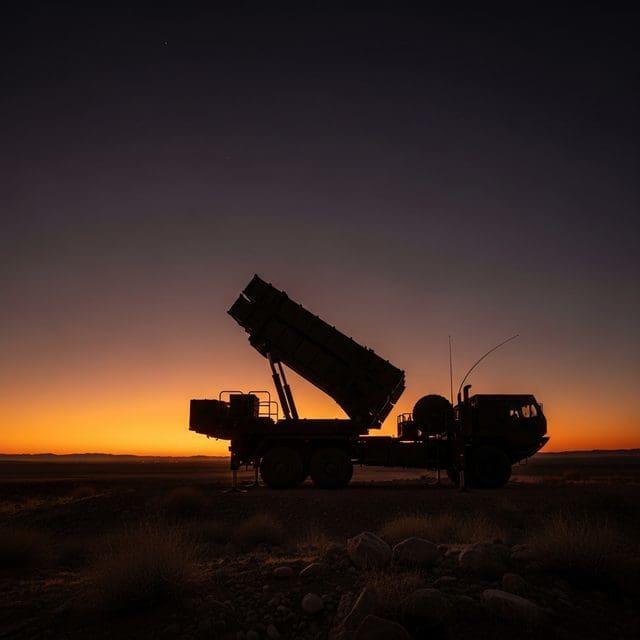
Pentagon reports indicate that the sustained defense of assets in the Gulf against Iranian retaliation has strained the supply of Patriot interceptors to a level that may impact global readiness. U.S. officials fear Vladimir Putin and Xi Jinping are monitoring these shortages to calibrate pressure campaigns in Ukraine and the Taiwan Strait. President Trump issued a public warning on July 24, stating it would be “very bad” for the Russian and Chinese leaders if they arm Tehran. Despite personal assurances from both leaders that they are not participating in the conflict, Western intelligence continues to track Russian drone support and Chinese consideration of air-defense transfers.
In the Ukraine theater, the administration is moving to offload logistical burdens onto allies. During the Ankara summit, NATO leaders pledged approximately $80 billion in military assistance for 2026. To address the interceptor crisis, President Trump endorsed a plan to grant Ukraine a license to produce Patriot missiles domestically. This partnership, including a joint U.S.-Ukraine drone factory announced by President Volodymyr Zelensky on July 25, is intended to bolster Eastern European air defenses while reducing the draw on American stockpiles. However, NATO’s formal posture remains cautious, offering no alliance-wide commitments on the Iran war beyond general calls for maritime security.
Simultaneously, the Middle East landscape is shifting toward a controlled stabilization model. Israel’s security cabinet recently approved the legal framework for an International Stabilization Force in Gaza, a key component of the administration’s 20-point peace plan. The force, expected to include 200 personnel from countries such as Uganda and Morocco, will operate within a strictly defined “test zone” near Rafah. Prime Minister Benjamin Netanyahu, who meets President Trump at the White House on July 28, maintains tight control over the deployment to ensure it remains outside areas of active Israeli military operations.
Regional tensions remain high as Israel continues to expand its footprint in the West Bank, recently seizing 500 dunams of land. This occurs as the U.S. pursues a landmark civilian nuclear deal with Saudi Arabia. Announced on July 22, the deal would provide Riyadh with American nuclear technology and potentially allow for uranium enrichment, provided the Kingdom normalizes relations with Israel. While these diplomatic maneuvers continue, the underlying conflict with Iran remains unresolved. Iran-backed Houthi rebels launched fresh missile attacks at Saudi Arabia as recently as July 26, underscoring the persistent threat to energy infrastructure.
Beyond the Middle East, the administration’s trade policies are creating new friction. New tariffs ranging from 10 to 12.5 percent on imports from 60 countries took effect on July 25, drawing objections from China and Japan. In the Western Hemisphere, the administration remains firm on its ouster of Nicolás Maduro, who remains in a Brooklyn jail. As the U.S. navigates these global flashpoints, the primary challenge remains the industrial capacity to sustain a “peace through strength” doctrine across multiple continents.

Olivia Kendall serves as the Senior Correspondent for Geopolitics, Defense, and Foreign Policy at Just Right News, where she provides a principled, conservative perspective on the complex forces shaping the global stage. With a career dedicated to deconstructing the intricacies of international relations, Kendall has become a trusted voice for readers who value national sovereignty, a robust military, and a foreign policy that prioritizes American interests above all else.
A native of Washington, D.C., Kendall’s professional journey is deeply rooted in her upbringing within the nation’s capital. Growing up in the epicenter of American political life, she developed an early and profound understanding of how policy is crafted and, more importantly, how it often fails to account for the values of the American heartland. This unique vantage point allowed her to witness firsthand the rise of globalist bureaucracies, fueling her commitment to reporting that champions the constitutional foundations of the United States. Her background as a British White American further informs her worldview, providing her with a keen appreciation for the Western tradition and the enduring importance of the “Special Relationship” in maintaining global stability.
Now based in Arlington, Virginia, Kendall operates from the doorstep of the Pentagon and the heart of the nation’s defense establishment. Her proximity to the decision-makers in the military and intelligence communities allows her to provide boots-on-the-ground reporting that is both timely and deeply informed. For Kendall, Arlington is more than just a base of operations; it is a daily reminder of the sacrifices made by the men and women in uniform. This connection to the defense community drives her rigorous coverage of military readiness and her advocacy for a “peace through strength” approach to diplomacy.
At Just Right News, Kendall is perhaps best known for her acclaimed feature series, “The World’s Shadow on America.” In this ongoing project, she explores the direct correlation between international developments and the daily lives of American citizens. Whether she is analyzing the encroachment of foreign adversaries in domestic supply chains or the impact of international treaties on local economies, Kendall’s work serves as a vital bridge between distant geopolitical shifts and their consequences at home. She rejects the notion that foreign policy is an abstract concern for elites, instead proving that what happens in the corridors of power in Brussels or Beijing has a tangible “shadow” that falls across every American doorstep.
Throughout her tenure, Kendall has remained a steadfast critic of international overreach and a vocal proponent of a clear-eyed, realistic foreign policy. She brings a sharp analytical mind to her beat, often challenging the prevailing narratives of the mainstream media to uncover the underlying truths that affect national security. Her reporting is characterized by a refusal to compromise on the truth and a dedication to the idea that a strong, secure America is the world’s best hope for liberty. As a Senior Correspondent, Olivia Kendall continues to lead the charge in providing the essential context and conservative insight necessary to navigate an increasingly volatile world.