

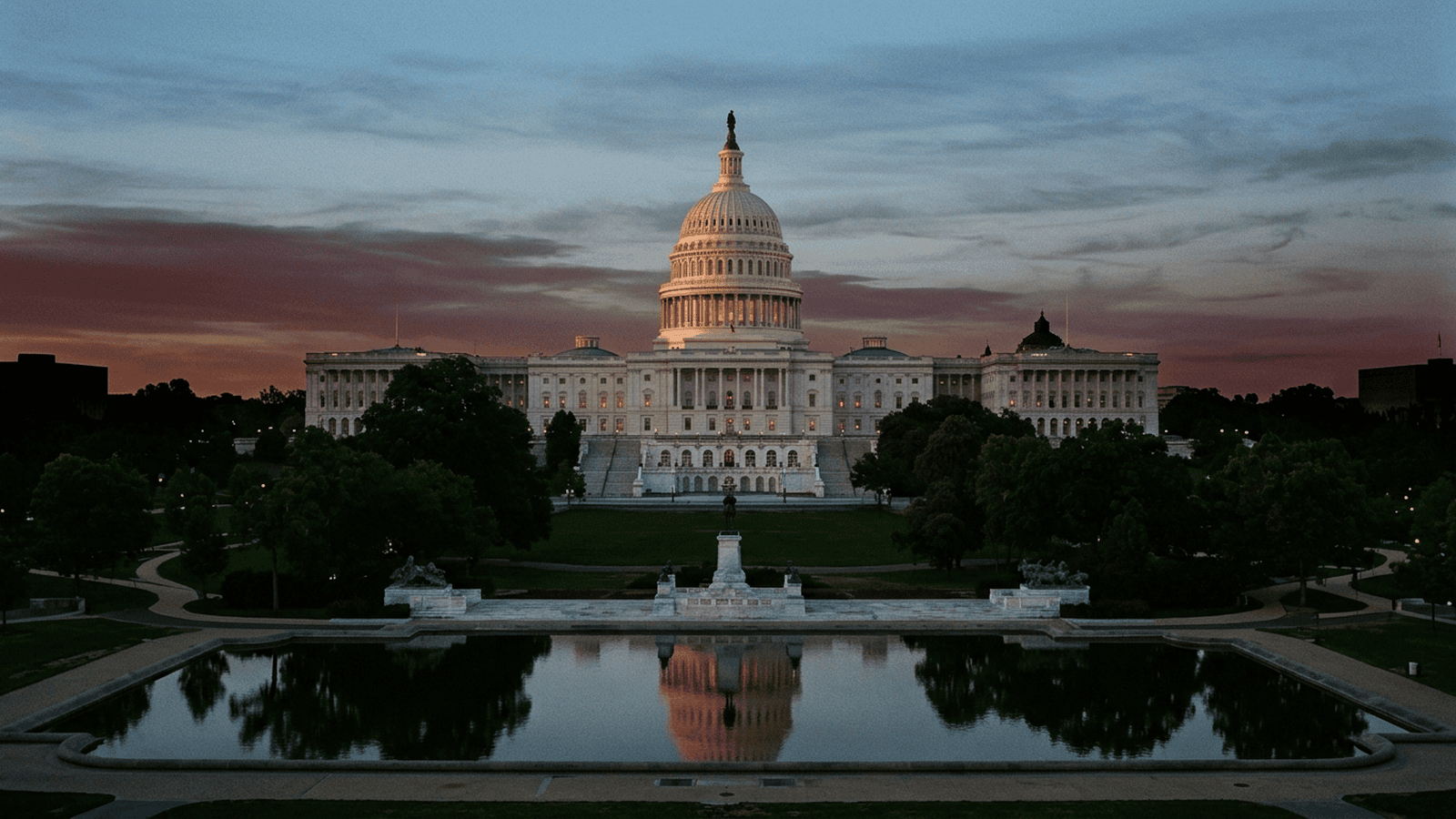
Democrats are poised to take control of the House and Senate after major victories in the 2026 midterms, a result that sharply rebukes President Donald Trump and his party. Vice President J.D. Vance blamed the Iran war for the Republican losses, while Trump said prices were probably the main reason. Trump says he will accept the results and work with Democrats, but has also emphasized his veto power. The report does not identify specific bills or changes to costs, paperwork, enforcement or timelines, so the practical effects for the public remain unclear. The final House and Senate counts will take time to settle, and those totals will help show the size of the Democratic advantage.
TLDR: Democrats are set to control both chambers after sweeping midterm victories, reshaping the balance of power in Washington. Trump says he will accept the results and work with Democrats, while the final composition of Congress remains to be determined.
The 2026 midterm results have changed the balance of power in Washington. Democrats are poised to take control of both the House and Senate after major victories across the country. The outcome leaves President Donald Trump facing large Democratic majorities during the final two years of his second term. The exact size of those majorities is not yet settled, according to the report.
The results mark a sharp rebuke of Trump and the Republican Party. They also set up a divided government, with Democrats positioned to control both chambers while Trump remains in the White House. That shift gives the incoming Congress a different balance of power from the one that has shaped the first part of Trump’s term. It does not, by itself, settle which proposals lawmakers will take up or whether they will reach agreement.
Vice President J.D. Vance blamed the Iran war for the Republican defeat. Trump pointed instead to prices, saying they were probably the primary reason voters turned against his party. Those explanations offer different accounts of what drove the result. The report does not provide a detailed breakdown of voter views, so it is not possible to say from these results alone how much either issue mattered to individual voters.
The election outcome gives Democrats control of the legislative agenda in both chambers once the new Congress takes office. That control can shape which bills receive hearings and votes, and it can give party leaders more influence over the work of committees. But the size of the Democratic advantage matters, too. Because the final House and Senate counts remain unsettled, the report does not establish how much room party leaders will have to rely on their own members to pass legislation.
Trump has said he will accept the results and work with Democrats. He has also pointed to his veto power. A veto can block a bill from becoming law, though Congress can try to override one if enough lawmakers support doing so. The report does not say that Trump has threatened a specific veto or that Democrats have identified a particular bill as an early priority. The statements describe the broad posture each side may bring to the next stage of governing, not an agreement on what will happen.
The practical effects for the public remain unclear. The report does not name any new laws or proposals, or give details about changes to costs, paperwork, enforcement or timelines. Those details depend on decisions lawmakers have not yet made. For now, the main practical change is at the level of who will lead Congress and decide which issues move forward. Voters and agencies should not treat the election result alone as a change to existing rules or obligations.
The transition also requires time. House and Senate races must be resolved well enough to establish the membership and margins of each chamber. Until those counts are final, it is difficult to measure the full reach of the Democratic victory or predict how individual votes will unfold. The report says the exact composition will take time to settle, leaving open questions about the balance within each chamber.
That uncertainty is important because control of a chamber is not the same as agreement on every issue. A party can set priorities, but members may differ over how to address them. Lawmakers from both parties may also have to negotiate on bills where support from across the aisle is needed. The report provides no vote totals, detailed policy plans or account of specific negotiations, so those questions remain unanswered.
For Trump, the result means that the final two years of his term will begin with Democrats poised to lead both chambers. His stated willingness to work with them sits alongside his reminder that he can use the veto. For Democrats, the victory brings greater control over Congress, but the unfinished counts leave the precise scope of that control uncertain. The next steps are to finalize the chamber totals and see what lawmakers choose to do with the power voters have shifted.

Eric Nolan serves as the Senior Correspondent for Food, Water, and Environmental Health at Just Right News, where he brings a principled, common-sense perspective to the most fundamental issues facing the American public. With a career dedicated to uncovering the truth behind the policies that govern our natural resources, Eric has become a trusted voice for readers who value traditional stewardship over bureaucratic overreach. His reporting is defined by a commitment to the idea that true environmentalism is rooted in the protection of the American family and the preservation of the nation’s agricultural heritage.
Raised in Fresno, California, Eric’s worldview was shaped in the heart of the San Joaquin Valley. Growing up in one of the world’s most productive agricultural hubs, he witnessed firsthand the vital connection between the land, the water, and the dinner table. In Fresno, he saw the resilience of farmers and the devastating impact that distant, top-down regulations can have on local communities. This upbringing instilled in him a deep respect for the producers who feed the country and a lifelong skepticism toward the alarmist narratives often pushed by mainstream media. For Eric, environmental health is not an abstract political talking point; it is a matter of ensuring that the people who work the land have the freedom and the resources to do so effectively.
Now based in Eugene, Oregon, Eric operates from a unique vantage point in the Pacific Northwest. Living in a region often defined by intense environmental debate, he provides a necessary counter-narrative to the prevailing trends of the area. From his base in Eugene, he monitors the shifting tides of federal and state policies, ensuring that the voices of rural citizens and property owners are not drowned out by urban activism. His reporting often bridges the gap between the rugged realities of the outdoors and the legislative halls where decisions are made, offering a grounded perspective that prioritizes local sovereignty and practical solutions.
As the lead for the acclaimed feature series “Earth on the Table,” Eric explores the intricate journey of the American food supply. He tackles critical issues such as water rights, soil health, and food security through a lens of national stability and individual liberty. He believes that a healthy environment and a thriving economy are not mutually exclusive, but rather two sides of the same coin of national prosperity. His work consistently highlights how innovation and private-sector ingenuity are the most effective tools for ensuring clean water and a safe food supply, rather than the expansion of the administrative state.
At Just Right News, Eric’s reporting serves as a vital resource for those who seek accountability and transparency. Whether he is investigating the impact of federal land management on local economies or examining the safety of the national food infrastructure, his work remains anchored in the values of heritage and hard work. Eric Nolan continues to be a leading voice in environmental journalism, championing the belief that the best way to protect our natural resources is to empower the people who live and work closest to them.