

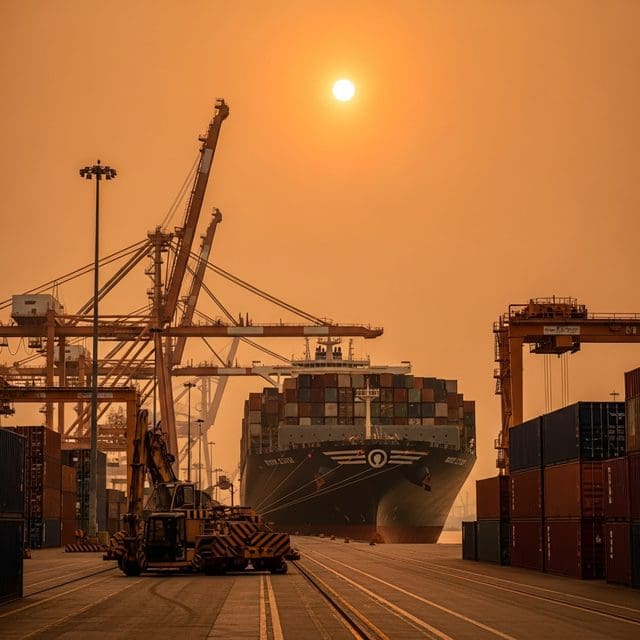
Escalating rhetoric over Canadian wildfire smoke and shifting medical technology supply chains highlight the growing friction between national sovereignty and globalized trade networks.
The delicate balance of North American trade faced a new disruption this week as environmental crises and industrial policy collided. Donald Trump escalated tensions with Canada, suggesting that the economic and health costs of wildfire smoke drifting across the border should be added to existing trade levies. With 937 active fires burning across Canada as of July 18, the resulting smoke has triggered persistent air-quality alerts throughout the American Midwest and Northeast. This move signals a potential shift in how trade is valued, treating environmental externalities as tangible costs to the American worker.
While no specific new tariff rate has been codified, the rhetoric aims to pressure the administration of Prime Minister Mark Carney. For the American blue-collar workforce, these discussions represent a demand for accountability in trade relationships where one nation’s domestic management impacts the economic well-being of its neighbor. This approach treats the environment as a sovereign responsibility. While Ottawa has previously cited significant fire-prevention spending, the persistence of the smoke has turned a natural disaster into a flashpoint for trade protectionism and national interest.
In the high-tech sector, the journey of complex goods like surgical robotics illustrates the tug-of-war between global efficiency and national policy. Intuitive Surgical reported a $36 million pre-tax benefit in its second quarter from refunds of previously paid tariffs under the International Emergency Economic Powers Act (IEEPA). This windfall helped the company raise its 2026 gross-margin guidance to 68%–69%. This development highlights how the administrative machinery of trade, including the refunding of duties, directly impacts the bottom line of American-based innovators navigating international law.
However, the global landscape for American technology remains increasingly hostile, particularly in the Far East. Intuitive Surgical noted that while global procedures for their da Vinci and Ion platforms rose 16% to reach $2.89 billion in revenue, the company still faces significant headwinds in China. Analysts point to lower tender activity and intense domestic competition driven by policy-driven pricing pressures. This serves as a reminder that foreign market access often depends on local geopolitical whims rather than product quality alone, reinforcing the necessity for robust domestic manufacturing footprints.
The broader global market is reeling from similar geopolitical pressures. In Seoul, local shares of SK Hynix plummeted 15% on July 13, just one day after a successful U.S. ADR debut, as regional tensions spooked investors. This crash had devastating consequences, with 1.2 million South Korean retail traders receiving margin calls. Meanwhile, SpaceX has seen a significant erosion of market value, shedding more than $800 billion from its peak and closing below its IPO price for the first time on July 16. These figures underscore the fragility of globalized capital when detached from stable domestic industrial foundations.
From the timber sectors affected by Canadian trade threats to the labs producing robotic surgeons, the message is clear: the era of frictionless trade is being replaced by a transactional, nationalistic model. Whether through environmental accountability or the strategic protection of high-tech property, the focus is returning to the dignity of local production and the protection of the domestic economy. As the USPTO launches AI-powered trademark tools and cybersecurity demand surges, the infrastructure of the future is being built on a foundation of national security and sovereign interest.

Sean Bradley serves as the Senior Correspondent for Trade, Supply Chains, and Global Labor at Just Right News, where he brings a principled, clear-eyed perspective to the complex systems that power the modern world. With a focus on the economic forces that impact the American household, Bradley has distinguished himself as a leading voice in explaining how global shifts in manufacturing and logistics translate to the kitchen table.
Growing up in Long Beach, California, Bradley’s interest in the movement of goods was forged against the backdrop of one of the nation’s most vital maritime gateways. Raised in a community where the towering cranes of the port were a constant fixture on the horizon, he developed an early appreciation for the blue-collar industries that form the backbone of the American economy. This upbringing instilled in him a profound respect for the dockworkers, truckers, and laborers who keep the country moving, a sentiment that remains a cornerstone of his reporting today. For Bradley, trade is not merely a series of abstract figures on a spreadsheet; it is a human endeavor that sustains families and defines the strength of a nation.
Now based in Seattle, Washington, Bradley occupies a strategic vantage point in another of the country’s most significant trade hubs. His location allows him to witness firsthand the intersection of traditional industry and the evolving technological landscape of global logistics. From the Pacific Northwest, he monitors the flow of goods across the ocean, providing Just Right News readers with timely insights into how international tensions, regulatory hurdles, and labor disputes affect the availability and cost of essential goods.
His signature feature series, “The Journey of Things,” has become a staple for readers seeking to understand the intricate path products take from raw materials to the retail shelf. Through this series, Bradley pulls back the curtain on the global marketplace, often highlighting the risks of over-reliance on foreign adversaries and the importance of domestic manufacturing resilience. His reporting consistently emphasizes the conservative values of national sovereignty, free-market competition, and the protection of the American worker from unfair global practices.
As a journalist of Irish heritage, Bradley maintains a deep-seated respect for the dignity of the individual worker and the importance of community stability. He approaches his beat with a commitment to transparency, often questioning the status quo of globalist policies that prioritize corporate efficiency over local prosperity. Whether he is reporting from a warehouse floor or analyzing a new international trade agreement, his goal remains the same: to provide the American public with the truth about where their products come from and what it costs to get them there.
Throughout his tenure at Just Right News, Bradley has remained a steadfast advocate for economic common sense. His work serves as a vital resource for those who believe that a strong nation is built on secure borders, robust trade, and a respected workforce. By combining his local roots in Long Beach with his professional experience in Seattle, Bradley continues to offer a unique and necessary perspective on the forces that shape the American way of life.