

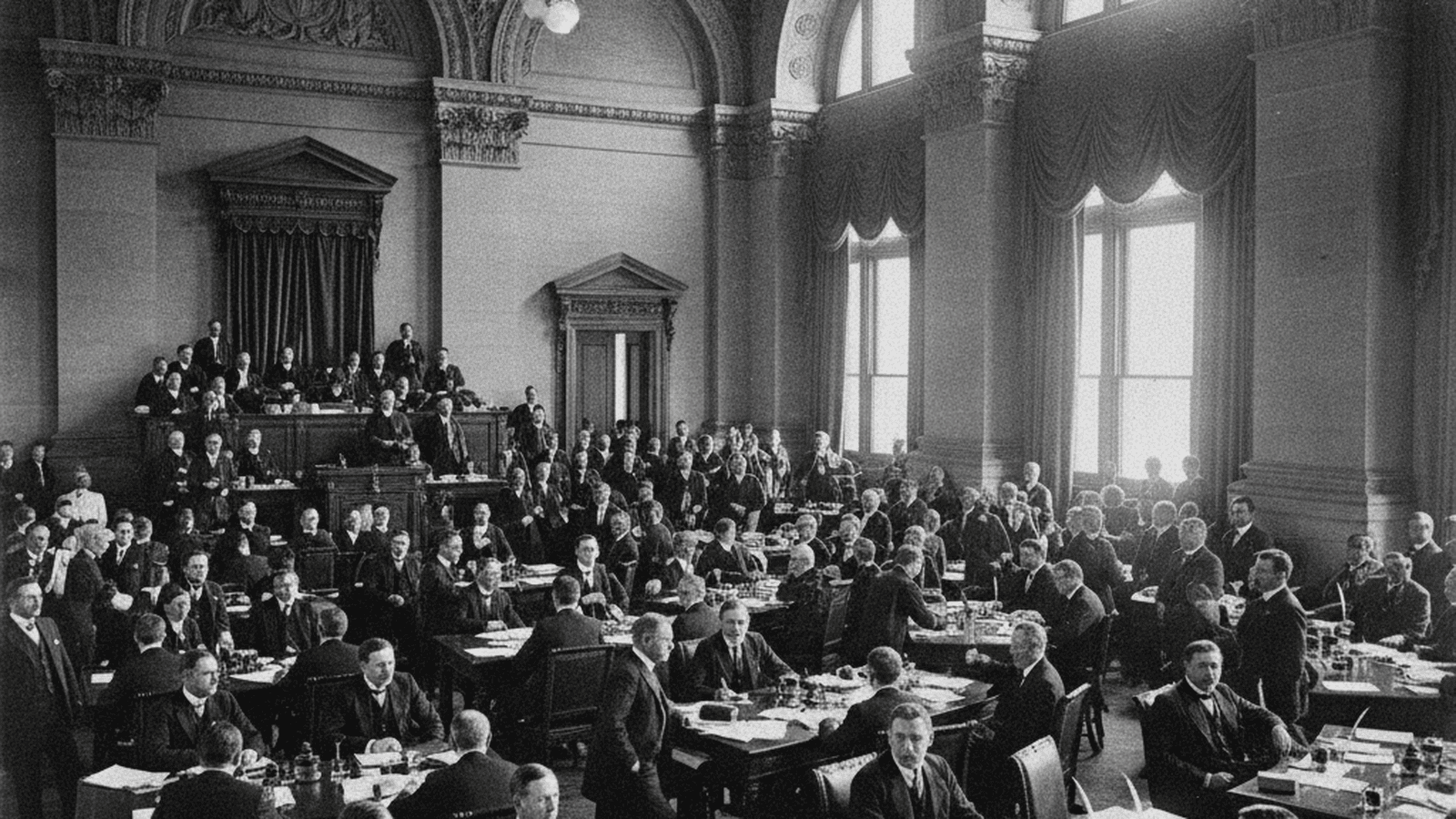
In 1910, the New York State Senate was rocked by the Allds bribery scandal, which exposed deep-seated corruption within the legislative process. The investigation led to the resignation of Senate leader Jotham P. Allds and catalyzed significant political reforms across the United States.
TLDR: The 1910 Allds bribery scandal exposed a decade-old payoff within the New York State Senate, forcing the resignation of its top leader. This high-profile corruption trial empowered Progressive Era reformers to demand greater transparency and weakened the grip of party machines on state governance across the United States.
In early 1910, the New York State Senate became the center of a national firestorm following allegations of systemic bribery. State Senator Benn Conger accused the newly elected temporary president of the Senate, Jotham P. Allds, of accepting a bribe nearly a decade earlier. This revelation shattered the relative calm of the Albany statehouse and ignited a fierce battle between the entrenched Republican machine and Progressive reformers. The scandal arrived at a time when the public was increasingly weary of the invisible government run by party bosses.
The specific charge involved a $1,000 payment made in 1901 to suppress a bill that would have regulated bridge construction companies. Conger, who was himself involved in the bridge industry, claimed that Allds and other leaders demanded the money to ensure the legislation remained buried in committee. These accusations surfaced during a period of intense public scrutiny regarding the influence of corporate interests on government. The bridge companies allegedly feared that the proposed law would allow townships to build their own bridges, threatening private profits.
Governor Charles Evans Hughes, a prominent Progressive, supported a full investigation into the matter. The Senate conducted a formal trial, which lasted several weeks and captivated the public. Witnesses described a “black horse cavalry” of corrupt legislators who routinely extorted money from businesses in exchange for legislative favors. The testimony painted a vivid picture of a statehouse where policy was often sold to the highest bidder. This group of lawmakers was known for targeting specific industries with strike bills designed to elicit payoffs.
The “Black Horse Cavalry” was a term used to describe a bipartisan group of legislators who worked in concert to solicit bribes. They would identify bills that threatened the interests of powerful corporations, such as railroads, insurance companies, or utilities. Once a target was identified, the group would threaten to pass the legislation unless a substantial payment was made to ensure its defeat. This practice had become so ingrained in Albany that many participants viewed it as a standard cost of doing business. The Allds trial was the first time the inner workings of this system were laid bare before the public in such a dramatic fashion.
As the evidence against Allds mounted, his support within the Republican Party began to crumble. The trial revealed that the practice of soliciting funds to kill unfavorable legislation was a common tactic in Albany. Public outrage grew as newspapers across the country reported on the sordid details of the payoff. The New York Evening Post and other major outlets provided daily coverage, fueling a demand for a total cleansing of the legislative process.
Facing certain conviction by his peers, Jotham P. Allds resigned his leadership post and his Senate seat on March 29, 1910. His departure marked a significant victory for the Progressive movement and signaled a shift in the political landscape of New York. The scandal weakened the Old Guard faction of the Republican Party, which had long dominated state politics through patronage and backroom deals. It also empowered younger, reform-minded politicians who sought to modernize the state’s administrative functions.
The fallout from the Allds scandal led to a broader push for legislative transparency and ethics reform. In the years following the trial, New York implemented stricter lobbying regulations and expanded the use of direct primaries to reduce the power of party bosses. These changes were part of a larger national trend toward professionalizing government and reducing the influence of special interests. This event remains a landmark in the history of American anti-corruption efforts, demonstrating the power of public investigations to challenge entrenched political machines and restore faith in democratic institutions.

Dylan Brooks serves as the Senior Correspondent for Statehouses and Local Governance at Just Right News, where he brings a principled, constitutionalist lens to the often-overlooked machinery of state-level politics. As the lead voice behind the acclaimed feature series “Fifty Laboratories of Power,” Dylan has dedicated his career to the idea that the most impactful governance happens closest to home. His reporting consistently champions the Tenth Amendment, exploring how individual states can serve as testing grounds for innovative, conservative policy solutions that prioritize personal liberty and fiscal responsibility.
A native of Des Moines, Iowa, Dylan’s journalistic philosophy was forged in the heart of the American Midwest. Growing up in a community where local school board meetings and town halls were the bedrock of civic life, he developed a deep appreciation for the “retail politics” of the heartland. This upbringing instilled in him a fundamental belief that the American experiment is best preserved when power is decentralized. He carries the values of his Iowa roots into every assignment, maintaining a healthy skepticism of federal overreach and a steadfast commitment to the concerns of everyday citizens over the interests of the administrative state.
Now based in Madison, Wisconsin, Dylan operates from one of the nation’s most pivotal political battlegrounds. His location in a state capital known for its rigorous policy debates allows him to provide Just Right News readers with a front-row seat to the legislative process. From Madison, he tracks the ripple effects of statehouse decisions on local municipalities, ensuring that the connection between high-level policy and community impact is never lost. His work often highlights the success of conservative governors and legislatures in fostering economic growth, protecting parental rights, and securing the integrity of local institutions.
As an African American man in the conservative media landscape, Dylan offers a vital perspective on how limited government and free-market principles empower individuals and families. He frequently reports on how deregulation and school choice initiatives provide new avenues for success in underserved communities, challenging the monolithic narratives often presented by legacy media outlets. Dylan’s work is characterized by a commitment to the facts and a refusal to shy away from the complex realities of modern governance.
Throughout his tenure at Just Right News, Dylan has become a trusted authority for readers who value a rigorous, principled approach to the news. Whether he is dissecting a complex state budget or profiling a local grassroots movement, his goal remains the same: to provide the American public with the information they need to hold their local leaders accountable. By focusing on the “Fifty Laboratories of Power,” Dylan Brooks ensures that the vital work being done in statehouses across the country receives the national attention it deserves, always through a lens that respects the traditions and sovereignty of the American people.