

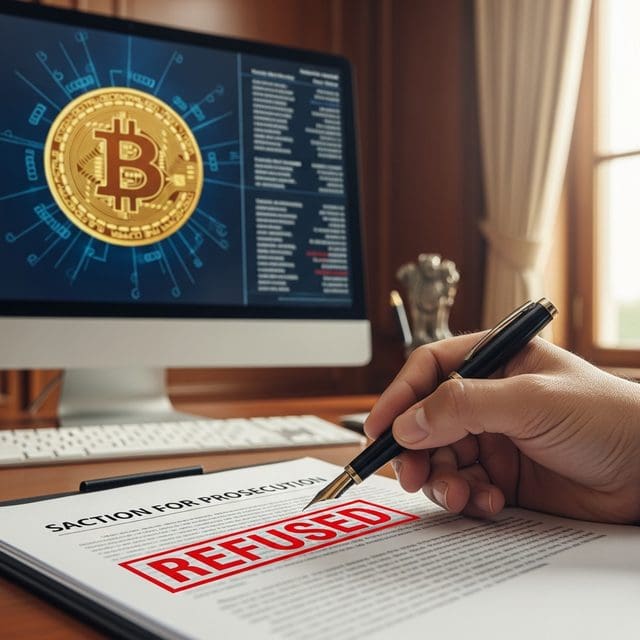
The Karnataka Home Department has formally denied sanctions to prosecute four police officers implicated in a multi-year investigation into cryptocurrency tampering and illegal confinement.
The Karnataka Home Department on July 9, 2026, issued a formal refusal to grant sanction for the prosecution of four police officers central to a high-profile investigation involving cryptocurrency tampering and illegal confinement. This administrative decision effectively stalls the criminal proceedings against Deputy SP Sridhar Pujar and Police Inspectors Chandradhar, D.M. Prashanth Babu, and Lakshmikantayya. These officers had been under the scrutiny of the Criminal Investigation Department’s Special Investigation Team (SIT) for their alleged roles in a complex web of digital asset theft and procedural violations.
According to investigative records, the SIT had been probing allegations that these officers facilitated the illegal detention of suspects to gain access to private cryptocurrency keys. Central to the case is the unexplained disappearance of 31 bitcoins that were reportedly under the control of the accused during the initial stages of the 2020-2021 investigation. The Home Department’s refusal to grant sanction serves as a significant roadblock, as Indian law requires government approval to prosecute public servants for actions taken in the line of duty. This move comes despite years of SIT work and multiple court interventions where judges questioned the integrity of the original probe and the potential shielding of senior officials. The decision leaves unresolved questions about whether senior police officials beyond the four named will face any additional scrutiny or internal disciplinary action.
Simultaneously, the intersection of law enforcement and digital assets is creating friction in the United States. Wisconsin prosecutors have filed a criminal complaint against Circle, the issuer of the USDC stablecoin, after the company reportedly rejected a court-ordered seizure request. The complaint stems from a recovery action intended to return funds to victims of a cryptocurrency scam. Prosecutors argue that stablecoin issuers face increasing legal pressure to support criminal investigations, while companies like Circle maintain that such requests must meet specific jurisdictional and technical thresholds. This case is expected to set a precedent for how private financial entities interact with state-level law enforcement in the recovery of frozen digital assets.
On the international stage, trade records from the European Union indicate a widening rift with Beijing. EU authorities have launched a formal investigation into Chinese Pekin duck producers following complaints from domestic farmers. The farmers allege that the market is being flooded with cheap imports, causing significant economic harm to the European poultry sector. This probe adds to a growing list of sector-specific investigations by the EU into Chinese trade practices, further complicating ongoing negotiations between Brussels and Beijing. This development follows a July 8 appeal from American music industry organizations urging the USTR to oppose an EU proposal that threatens approximately 300 million dollars in annual royalties for American artists.
Finally, the administrative state in the U.S. remains in a state of flux regarding foreign policy and military action. On July 8, 2026, the Trump administration declared the U.S.-Iran ceasefire officially over, following a series of retaliatory strikes in the Strait of Hormuz. These strikes, carried out by the U.S. military on July 7 and 8, were prompted by Iranian attacks on commercial vessels. The collapse of the ceasefire has also derailed a contingent OPEC+ agreement to increase crude production, which was dependent on a peace deal. President Trump stated that negotiations with Tehran are a waste of time, marking a definitive end to the brief diplomatic thaw and signaling a period of heightened volatility in both global energy markets and maritime security.
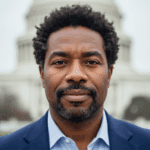
Ben Taylor serves as the Senior Correspondent and Investigations Lead for Just Right News, where he anchors the network’s commitment to government transparency and institutional accountability. With a career defined by a relentless pursuit of the facts, Taylor spearheads the acclaimed feature series “The Paper Trail,” a deep-dive investigative column that prioritizes primary source documentation over political rhetoric. Based in the heart of the nation’s capital, he has earned a reputation as one of the most formidable investigative journalists in Washington, D.C., known specifically for his mastery of public records and the Freedom of Information Act.
Taylor’s approach to journalism is deeply rooted in his upbringing in Kansas City, Missouri. Growing up in the “Show Me State,” he developed a healthy skepticism of centralized power and a profound respect for the common-sense values of the American heartland. This Midwestern foundation informs his reporting today, as he bridges the gap between the complex machinations of federal bureaucracy and the everyday concerns of citizens across the country. For Taylor, investigative reporting is not about chasing headlines; it is about ensuring that the government remains answerable to the people it serves.
As an African American man working within the conservative media landscape, Taylor brings a principled perspective to his beat. He views the Constitution and the right to information as the ultimate equalizers in a free society. His work often highlights how bureaucratic overreach and lack of transparency disproportionately affect individual liberties. By focusing on the “paper trail,” Taylor strips away the spin of partisan talking points, instead providing Just Right News readers with the raw data and internal communications that reveal how their tax dollars are spent and how policy decisions are actually made.
In his role as Investigations Lead, Taylor oversees a team dedicated to uncovering the stories that mainstream outlets often overlook. Whether he is auditing federal spending, investigating regulatory overreach, or exposing inefficiencies within the administrative state, his methodology remains consistent: follow the evidence wherever it leads. His presence in Washington, D.C., allows him to maintain a constant watch over the halls of power, yet he remains steadfastly connected to his roots, ensuring his reporting reflects the clarity and directness of his Missouri home.
Throughout his tenure at Just Right News, Taylor has become a vital voice for those who demand integrity in public office. He believes that a well-informed electorate is the strongest defense against government overreach, and he has dedicated his career to providing the public with the tools they need to hold their leaders accountable. Through “The Paper Trail” and his broader investigative work, Ben Taylor continues to set the standard for rigorous, document-driven journalism that champions the values of transparency, individual responsibility, and the rule of law.