

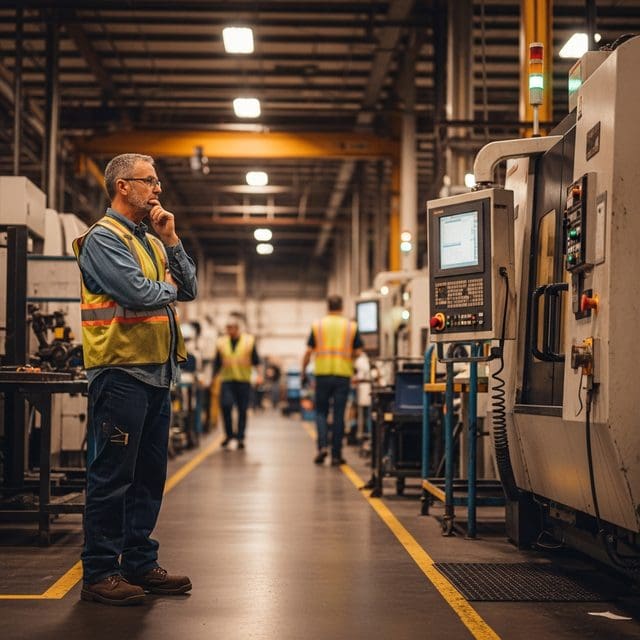
Declining labor force participation and proposed retirement age hikes create a precarious landscape for the blue-collar workforce amid shifting economic policies.
The American worker is navigating a cooling economic landscape as fresh data from the Bureau of Labor Statistics reveals a labor market in transition. While payrolls grew by 172,000 in May, the unemployment rate has ticked up to 4.3 percent. More concerning for the stability of the domestic workforce is the steady decline in labor force participation, which sits at 61.8 percent. Since February, roughly 500,000 people have exited the workforce, a trend that could artificially lift the jobless rate if a rebound does not materialize soon.
Adding to the pressure on the industrial heartland, the U.S. Treasury has signaled that interest rates will likely remain elevated for an extended period. This “higher for longer” stance is designed to curb inflation but often results in tighter credit for the small businesses and manufacturers that form the backbone of local economies. As capital becomes more expensive, the incentive for companies to automate routine tasks increases, placing further strain on traditional trades. Treasury yields rose recently as markets await labor data to see if the case for delayed Fed easing strengthens.
In Washington, the long-term security of the American family is under debate as Congress weighs proposals to raise the Social Security normal retirement age. Current discussions include phasing in an increase to age 68. Under existing policy options, changes could begin impacting workers as young as 62 as early as 2026. These adjustments are driven by a looming insolvency crisis; the Social Security Trustees project the OASI trust fund will be exhausted by 2032, which would trigger an automatic 22 percent cut in benefits without legislative intervention. For the manual laborer, the prospect of working an additional year is a heavy burden that goes beyond mere statistics.
The shift toward automation is no longer a distant threat. Projections linked to the BLS suggest that ten major occupations, particularly those involving routine data entry, are expected to significantly decline by 2035. This displacement occurs alongside a massive shift in corporate energy needs. The AI boom has transformed electricity into a scarce commodity as of May 2026, forcing companies to pivot into the energy business to secure power for automated infrastructure. Even as tech stocks saw a sharp decline in late June due to skepticism over AI returns, the underlying push toward replacing human labor with software remains a central corporate strategy.
While international markets like Brazil report formal job gains and Japanese firms integrate AI robotics, the American worker faces unique domestic challenges. The dismantling of the SAVE student loan plan and tightening of borrowing caps, effective July 1, 2026, further complicate the financial outlook for families. This regulatory shift, part of the Trump tax-and-spending law, adds another layer of pressure on households already struggling with stagnant real wages.
Geopolitical shifts also play a role. The recent agreement between the U.S. and Iran to halt attacks in the Persian Gulf offers a temporary reprieve for energy prices. However, the Trump administration’s AI policy remains splintered over whether national security concerns should outweigh keeping U.S. companies ahead of Chinese rivals. For those in the trades, the path forward requires a focus on local industry resilience and a skeptical eye toward policies that prioritize global tech dominance over the stability of the manual workforce.

Tom Blake serves as the Senior Correspondent for Labor, Wages, and Automation at Just Right News, where he brings a grounded, principled perspective to the most pressing economic issues facing the American heartland. As the lead voice behind the acclaimed feature series “The Price of Work,” Tom focuses his reporting on the intersection of traditional industry and the rapidly evolving technological landscape, always prioritizing the dignity of the individual worker and the health of the American family.
Tom’s deep understanding of the labor market is not merely academic; it is rooted in his upbringing in Detroit, Michigan. Growing up in the shadow of the automotive industry, he witnessed firsthand the triumphs and tribulations of the American blue-collar workforce. He saw how the stability of a manufacturing job could build a community and, conversely, how the erosion of those industries could tear the social fabric apart. This background instilled in him a lifelong respect for the trades and a healthy skepticism toward economic policies that prioritize globalist interests over the well-being of local communities.
Now based in Pittsburgh, Pennsylvania, Tom continues to report from the front lines of the shifting economy. Pittsburgh, a city that has reinvented itself while maintaining its gritty, industrious spirit, provides the perfect vantage point for his beat. From the steel mills that remain to the high-tech robotics labs reshaping the city’s future, Tom explores how automation is changing the nature of employment. His reporting often highlights the tension between innovation and tradition, arguing that while progress is inevitable, it must not come at the expense of the American worker’s ability to provide for their family through honest, meaningful labor.
In his role at Just Right News, Tom has become a vital voice for those who feel overlooked by mainstream economic coverage. He rejects the notion that the decline of American manufacturing is an unavoidable casualty of the modern era. Instead, his work often examines how regulatory overreach, rising energy costs, and the unchecked rise of automation impact the take-home pay of everyday citizens. Through “The Price of Work,” Tom delves into the true cost of economic shifts, looking beyond the raw data to tell the stories of the people behind the statistics.
Tom’s reporting is characterized by a commitment to the conservative values of self-reliance, fiscal responsibility, and the preservation of the American dream. He believes that a strong nation is built on a foundation of stable jobs and fair wages, and his work seeks to hold both government and corporate entities accountable to that standard. Whether he is interviewing a shop floor manager about the implementation of new AI technology or analyzing the impact of wage inflation on small businesses, Tom provides a clear-eyed analysis that resonates with readers who value hard work and common sense.
Through his dedicated coverage, Tom Blake remains a steadfast advocate for the American workforce, ensuring that the voices of those in the industrial heartland are heard loud and clear in the national conversation. His perspective is essential for anyone seeking to understand the complex realities of labor and automation in the twenty-first century.