

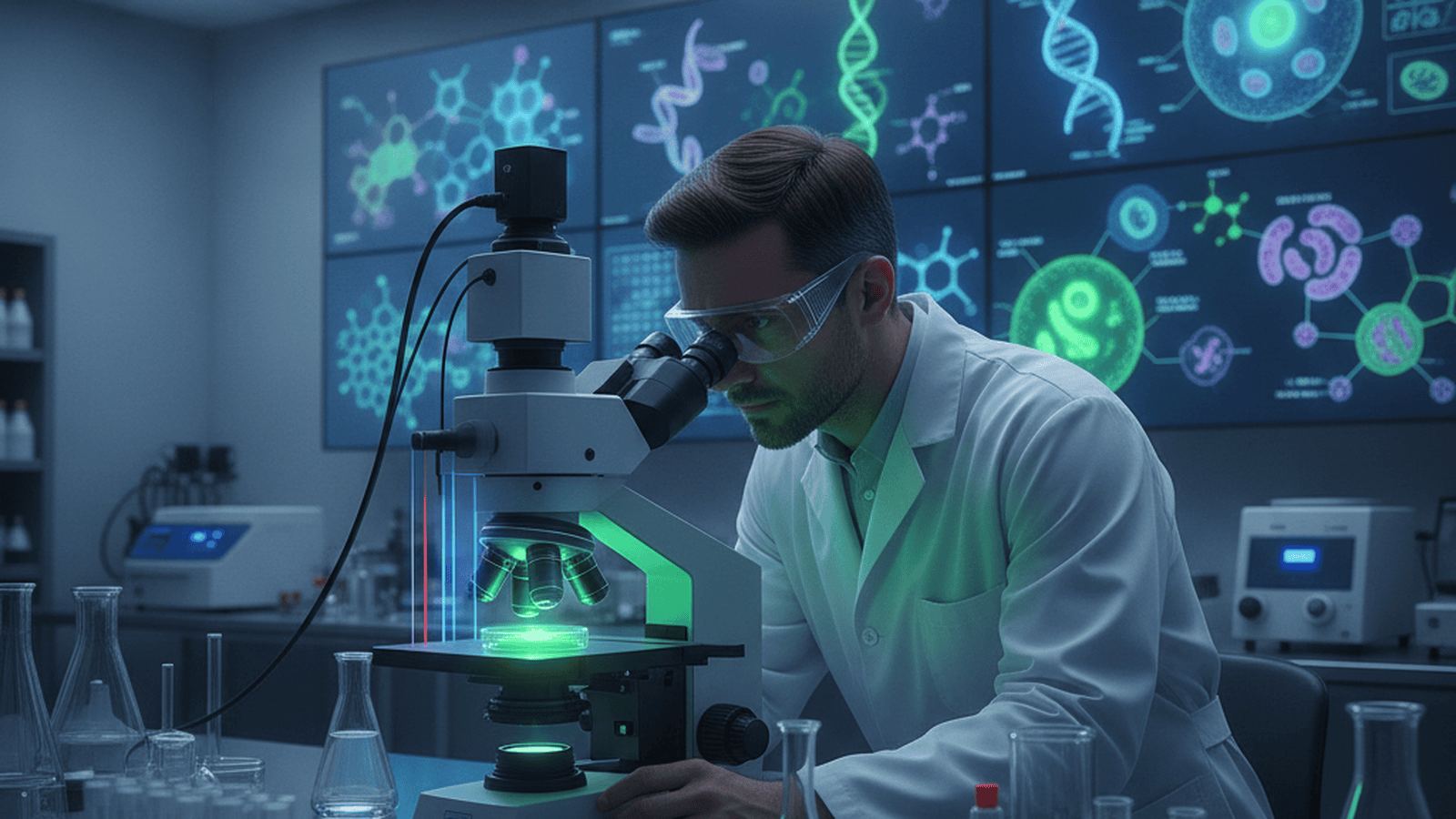
Researchers at the University of California, Santa Cruz, have discovered the nitroplast, the first known nitrogen-fixing organelle in a eukaryotic cell. Found in the marine alga Braarudosphaera bigelowii, this organelle represents a rare evolutionary event known as primary endosymbiosis.
TLDR: Scientists have identified the nitroplast, a specialized organelle in marine algae that converts nitrogen gas into a usable biological form. This discovery, marking a rare evolutionary leap, could eventually lead to engineering crops that require less synthetic fertilizer by mimicking the alga’s natural nitrogen-fixing capabilities.
Researchers at the University of California, Santa Cruz, have confirmed a groundbreaking biological discovery: the “nitroplast,” a specialized organelle within a marine alga that converts atmospheric nitrogen into a usable form. This finding, led by Professor Jonathan Zehr and an international team of scientists, marks only the fourth known instance of primary endosymbiosis in the history of life on Earth. Primary endosymbiosis is a transformative evolutionary process where a prokaryotic cell is engulfed by a eukaryotic host and, over millions of years, evolves into a permanent, integrated organelle. This rare transition previously gave rise to mitochondria, which power complex cells, and chloroplasts, which enable photosynthesis in plants.
The discovery of the nitroplast centers on a widespread species of marine alga called Braarudosphaera bigelowii. For decades, scientists observed a close relationship between this alga and a nitrogen-fixing bacterium known as UCYN-A. Initially, researchers believed this was a standard symbiotic partnership where two separate organisms traded nutrients. However, the UCSC team’s recent work, published in the journal Science, provides definitive evidence that UCYN-A has crossed the threshold from an independent symbiont to a fully integrated organelle. This shift represents a major milestone in evolutionary biology, as it demonstrates that complex cellular structures can still emerge in relatively recent geological time.
To confirm this status, the researchers utilized advanced imaging techniques, including soft X-ray tomography, to visualize the internal architecture of the alga during various stages of its life cycle. The imaging revealed a crucial detail: the nitroplast’s growth and division are perfectly synchronized with the host cell’s own replication process. In a typical symbiotic relationship, the two organisms would divide at different rates. In B. bigelowii, the nitroplast divides exactly once before the host cell splits, ensuring that each daughter cell inherits the necessary machinery to fix nitrogen. This level of coordination is a defining characteristic of organelles, as it requires the host to exert total control over the internal structure’s reproduction.
Further evidence came from a detailed proteomic analysis. The researchers found that the UCYN-A lineage has lost approximately half of the genes typically found in its free-living cyanobacterial relatives. To compensate for this genetic streamlining, the host alga synthesizes thousands of proteins and “ships” them into the nitroplast. These imported proteins are essential for the nitroplast’s metabolism and structural integrity. This metabolic dependency confirms that the nitroplast can no longer survive independently of its host, cementing its status as a cellular organ rather than a guest. This discovery fundamentally alters the scientific understanding of the global nitrogen cycle and the speed at which complex cellular structures can evolve.
Beyond the realm of marine biology, the identification of the nitroplast has profound implications for sustainable agriculture and food security. Most modern crops rely heavily on synthetic nitrogen fertilizers, which are produced through the energy-intensive Haber-Bosch process. These fertilizers contribute significantly to greenhouse gas emissions and cause widespread water pollution through runoff. If the genetic pathways and protein-transport mechanisms used by the nitroplast can be successfully adapted for terrestrial plants, it may be possible to engineer crops that fertilize themselves. This would reduce the environmental footprint of farming while potentially increasing yields in nutrient-poor soils.
Future research will focus on mapping the complete evolutionary timeline of the nitroplast to determine when the transition from bacterium to organelle occurred. Scientists also plan to investigate other marine lineages to see if similar nitrogen-fixing organelles have evolved independently elsewhere. Understanding the specific protein-transport mechanisms used by the alga could provide the toolkit necessary for future bioengineering efforts. This breakthrough opens a new frontier in both evolutionary theory and the quest for a more sustainable global food system.

Mason Reed serves as a Staff Writer for Just Right News, where he spearheads the Future Frontiers & Special Projects desk. In an era defined by rapid technological shifts and evolving social landscapes, Mason provides a steady, principled voice, examining the innovations of tomorrow through the lens of traditional American values. His work is most prominently featured in his signature series, “The Next Horizon,” where he explores the intersection of emerging technology, national sovereignty, and the preservation of individual liberty.
A native of San Diego, California, Mason’s worldview was shaped by the unique culture of his hometown. Growing up in a region defined by its strong military presence and its history of maritime industry, he developed a deep-seated respect for the institutions that provide national stability and the entrepreneurial spirit that drives the American economy. This upbringing instilled in him a belief that true progress is not found in discarding the past, but in building upon a foundation of proven principles. His reporting often reflects this San Diego influence, emphasizing the importance of a robust national defense and the necessity of maintaining a competitive edge in the global marketplace.
Now based in San Francisco, Mason operates from the heart of the world’s technological engine. Living and working in the Bay Area provides him with a front-row seat to the advancements—and the ideological challenges—emanating from Silicon Valley. While many in the region embrace a “move fast and break things” mentality, Mason’s reporting serves as a vital counterweight. He offers Just Right News readers a “boots on the ground” perspective, documenting how radical local policies and the concentration of tech power impact the everyday lives of citizens. His proximity to the industry allows him to cut through the marketing jargon of big tech to uncover the real-world implications for privacy, free speech, and the nuclear family.
In his “Future Frontiers” beat, Mason tackles complex subjects ranging from the ethics of artificial intelligence to the burgeoning private space race. He approaches these topics with a healthy skepticism toward centralized bureaucracy, championing instead the decentralized innovations that empower individuals. Through “The Next Horizon,” he highlights the pioneers and thinkers who are working to ensure that the future remains a place where human dignity and constitutional rights are protected. He believes that the rapid pace of change requires more than just technical expertise; it requires a moral compass rooted in the Western tradition.
Throughout his tenure at Just Right News, Mason has remained committed to the idea that the future is something to be shaped, not merely accepted. His writing is characterized by a rigorous defense of American exceptionalism and a belief that the country’s best days lie ahead, provided it remains true to its founding ideals. Whether he is investigating the impact of automation on the American workforce or profiling the next generation of aerospace engineers, Mason Reed ensures that his readers are equipped with the insights they need to navigate a changing world with confidence and clarity.