

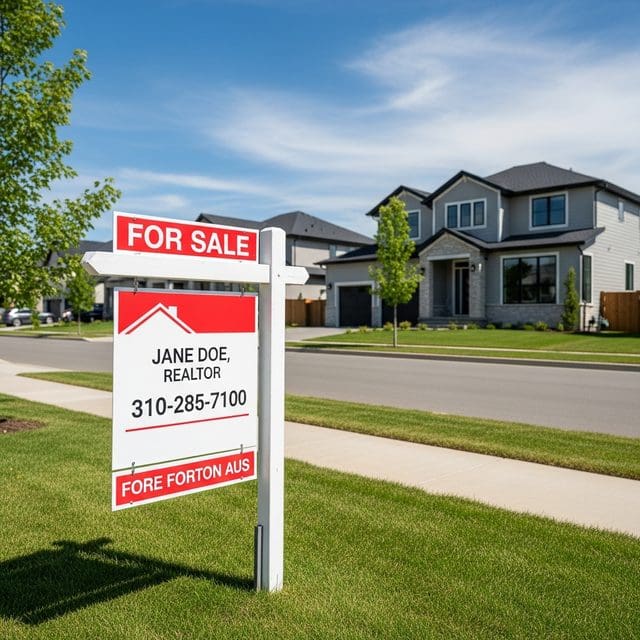
A tentative U.S.-Iran accord has triggered a drop in oil prices and mortgage rates, providing vital relief to American homebuyers amid a persistent cost-of-living crisis.
The American housing market received a rare reprieve this week as international diplomacy directly influenced domestic borrowing costs. Following a tentative memorandum of understanding between the United States and Iran, the 30-year fixed mortgage rate eased to 6.47% for the week ending June 18. This shift underscores the tight correlation between geopolitical stability, energy costs, and the financial levers that determine housing affordability for the average taxpayer.
The diplomatic breakthrough, which includes reopening the Strait of Hormuz without tolls and a temporary license for Iranian oil sales, caused oil prices to plunge over 10% following announcements by the Trump administration. For the American homeowner, lower energy costs do more than reduce the price at the pump; they signal a cooling of the inflationary pressures that have kept the Federal Reserve hawkish. Vice President Vance, reporting from negotiations in Switzerland, noted significant progress after an 80-minute session with Iranian officials. The Treasury Department has since issued a 60-day general license to allow Iranian oil sales, maintaining downward pressure on global energy prices.
However, this relief remains fragile. Market analysts at HousingWire cautioned that if negotiations falter or regional conflict resumes, mortgage rates could spike by nearly half a percentage point above the 6.75% threshold. This volatility highlights the vulnerability of the U.S. property market to external shocks, a reality that complicates long-term financial planning for families. The preservation of local sovereignty and individual liberty depends on a stable economic environment, yet the American homebuyer currently finds their purchasing power tethered to the success of a 60-day ceasefire extension in Lebanon.
While macro-level shifts dominate headlines, the cost of living remains a micro-level struggle. Retail data from current Prime promotions shows consumers aggressively seeking discounts on home infrastructure. Items such as smart-home cameras and household organizers are seeing price cuts of up to 70%, with video doorbells falling under $30. From robot vacuums discounted by hundreds of dollars to mattress toppers and closet organizers, the data suggests that while mortgage rates are softening, the internal costs of maintaining a home continue to weigh heavily on household budgets.
Evidence from abroad serves as a cautionary tale regarding structural economic shifts. Recent data indicates that Brexit has reduced the UK’s economic output by as much as 8%, contributing to a housing crisis where prices surged 53% over the last decade across Europe. With over 47 million homes standing empty across the continent while over a million people remain homeless, the failure of centralized policy to align supply with demand is evident. As the U.S. navigates its own infrastructure and trade policies, the contrast between private sector dynamism and government-led market distortions remains a primary concern for those advocating for market-driven housing solutions.
For now, the focus remains on the Treasury Department’s 60-day license and the continued stability of the Strait of Hormuz. For the American taxpayer, the path to affordable housing is currently being paved in the high-stakes arena of international diplomacy. Ensuring these diplomatic gains translate into long-term domestic stability will be the next great challenge for federal policy makers.

Deborah Cole serves as a Senior Correspondent for Just Right News, where she spearheads the network’s coverage of Housing, Infrastructure, and Mobility. With a career defined by a commitment to rigorous reporting and a focus on the fundamental pillars of American community life, Deborah brings a principled perspective to the complex issues that dictate how and where we live. Her work is grounded in the belief that sound policy, fiscal responsibility, and respect for private property are the essential foundations of a prosperous society.
Originally from Boston, Massachusetts, Deborah’s upbringing in one of the nation’s oldest and most historically significant cities deeply influenced her professional trajectory. Growing up amidst the architectural legacy and dense urban planning of New England, she developed an early appreciation for the importance of durable infrastructure and the role of local tradition in shaping neighborhoods. Her perspective is informed by the classic American values of her hometown—hard work, community cohesion, and a healthy skepticism of top-down bureaucratic mandates that often overlook the unique needs of individual citizens.
Today, Deborah operates from her base in Austin, Texas, a city that serves as a primary laboratory for her reporting. Austin’s rapid expansion and its status as a hub for innovation and migration provide her with a front-row seat to the most pressing challenges in modern infrastructure and housing. From the Lone Star State, she chronicles the tensions between rapid growth and the preservation of the American Dream, often highlighting how market-driven solutions and deregulation can address the housing shortages that plague many of the country’s metropolitan areas.
At Just Right News, Deborah is perhaps best known for her signature feature series, “Where We Live.” Through this platform, she explores the intersection of public policy and private life, moving beyond mere statistics to tell the stories of families, small business owners, and local developers. Her reporting frequently highlights the importance of mobility—not just in terms of transportation and transit, but as a vehicle for economic opportunity and social stability. She remains a staunch advocate for the taxpayer, consistently scrutinizing government spending on large-scale projects and advocating for transparency in how infrastructure dollars are allocated.
Deborah’s beat is more than just a collection of policy topics; it is an investigation into the physical and legal structures that allow families to flourish. Whether she is reporting on the impact of zoning laws on suburban development or the necessity of maintaining the nation’s highway systems, her work is characterized by a dedication to the facts and a respect for the constitutional principles that protect the rights of homeowners.
As a Senior Correspondent, Deborah Cole continues to be a vital voice for Just Right News, providing the audience with the clarity and context needed to navigate an ever-changing landscape. Her reporting ensures that the values of individual liberty and local sovereignty remain at the forefront of the national conversation regarding the future of our cities and towns. Through her tireless efforts, she remains committed to informing the public on the issues that hit closest to home.