


As the July 1 deadline for the One Big Beautiful Bill Act approaches, families and institutions are adjusting to strict new limits on federal student and parent borrowing.
The landscape of American higher education faces a significant correction as the July 1, 2026, implementation of the One Big Beautiful Bill Act nears. This legislative overhaul marks a pivot toward fiscal responsibility by eliminating new Grad PLUS loans and capping Parent PLUS loans at $20,000 per student annually, with a $65,000 lifetime limit. By tightening the faucet of federal subsidies, the policy forces institutions to justify their price tags through market-aligned outcomes rather than bottomless debt. Families are now tasked with a rigorous cost-benefit analysis previously obscured by easy credit, signaling a return to a disciplined, merit-based approach to degree attainment.
While elite institutions dominate headlines, the real story of upward mobility is found in how regional programs provide immediate value. Kansas State University’s horticulture program offers a prime example. By positioning experts like Matt McKernan as year-round resources for climate resilience and agricultural management—offering guidance on everything from tree-storm recovery to potato-planting—the university moves beyond traditional seasonal instruction. This model treats education as a continuous service supporting local industry and household self-sufficiency, proving that land-grant institutions remain relevant by solving practical problems that directly impact economic stability.
However, gaps remain in tracking the transition from student to worker, particularly for those outside the elite tier. In Oregon, high school men’s soccer recruiting illustrates a reporting failure. While media outlets track top-tier graduates heading to major programs, there is no comprehensive statewide tracking for uncommitted seniors or those entering the Division III and junior college pipelines. This lack of transparency makes it difficult for families to navigate the complex ID camp circuit, often leaving mid-tier student-athletes without a clear map for leveraging their skills into affordable degree pathways. For many, these athletic pursuits are the primary vehicle for social mobility, yet the lack of data for non-elite players remains a barrier.
Internationally, the tension between academic structures and practical realities is reaching a breaking point. In Western Europe, a massive heatwave has forced the closure of over 845 schools in France and thousands more across the UK. Despite red heat alerts hitting 45°C, French officials have maintained high-stakes baccalaureate testing for over a million students. This rigid adherence to legacy testing calendars, even when infrastructure fails to meet basic ventilation standards, highlights a disconnect between bureaucratic requirements and the physical realities of the learning environment. It raises questions about whether current systems are equipped to handle logistical challenges without sacrificing student health.
In contrast, some emerging markets are doubling down on infrastructure as the driver of human capital. Nigeria’s Anambra State has allocated roughly ₦359 billion—nearly 47 percent of its 2026 budget—to education, dwarfing international UNESCO benchmarks. The funds are earmarked for teacher recruitment and “Smart Green Schools.” The success of such spending will depend on whether these resources reach the technical and polytechnic institutions providing the specific skills required by the modern workforce. Lawmakers are already scrutinizing implementation capacity to ensure these record allocations translate into actual job readiness.
As new U.S. loan caps take effect and the Repayment Assistance Plan replaces older income-driven models, the burden of proof shifts from the taxpayer to the institution. Families are no longer handed a blank check for degrees with questionable market value. Instead, the focus returns to personal responsibility and education that functions as true human capital—delivering a measurable return for both the individual and the economy. The coming year is a litmus test: colleges that cannot prove their worth in a capped-loan environment may find themselves obsolete in a market that prizes results over prestige.
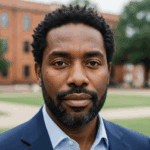
Daniel Owens serves as a Senior Correspondent for Just Right News, where he leads the newsroom’s coverage of Education, Workforce, and Upward Mobility. In an era where the national conversation often overlooks the practical foundations of success, Owens brings a principled perspective to the forefront of the media landscape. His work is defined by a commitment to the idea that a strong society is built on the pillars of quality education, a robust work ethic, and the removal of bureaucratic barriers to individual achievement.
Born and raised in Cleveland, Ohio, Owens’s worldview was shaped by the industrial landscape of the Midwest. Growing up in a city known for its grit and resilience, he witnessed firsthand the transformative power of steady employment and the devastating effects of economic stagnation. This background instilled in him a deep respect for the American worker and a healthy skepticism toward top-down government solutions that often fail to reach the communities they intend to help. As an African American man who has navigated the path to professional success, Owens approaches his beat with a nuanced understanding of how meritocracy and personal responsibility intersect with opportunity. He frequently draws on his roots to highlight the importance of family stability and community-led initiatives in fostering the next generation of leaders.
At Just Right News, Owens is the architect of the acclaimed feature series, “The Learning Curve.” Through this platform, he explores the evolving landscape of American schooling, from the rise of the school choice movement to the revitalization of trade schools and vocational training. He frequently challenges the status quo of higher education, advocating for a return to academic rigor and the practical alignment of degrees with market demands. For Owens, education is not merely about obtaining credentials; it is about equipping young people with the tools necessary to lead self-sufficient, meaningful lives. His reporting on “The Learning Curve” has become essential reading for parents and policymakers who believe that educational competition and parental rights are the keys to a brighter future.
Now based in Raleigh, North Carolina, Owens finds himself at the heart of one of the nation’s most dynamic regions for innovation and growth. Raleigh’s unique blend of traditional values and a fast-paced economy provides the perfect backdrop for his reporting on the modern workforce. From the tech hubs of the Research Triangle to the rural communities of the South, he tracks how shifts in the economy are impacting families and local industries. His reporting often highlights the success stories of entrepreneurs and workers who are thriving by embracing the values of hard work and innovation.
Throughout his career, Daniel Owens has remained a steadfast voice for the student seeking a better path and the worker striving for a better life. His reporting for Just Right News serves as a vital resource for readers who value common-sense solutions to the challenges of the 21st-century economy. By focusing on the intersection of policy and the human spirit, Owens continues to provide a roadmap for how individuals and communities can achieve lasting upward mobility.