

Researchers at HRL Laboratories have developed a method to 3D print high-strength ceramics using preceramic polymers. This technique allows for complex geometries that can withstand temperatures exceeding 1,700 degrees Celsius, offering new possibilities for aerospace and propulsion systems.
TLDR: HRL Laboratories has pioneered a 3D printing technique for high-temperature ceramics. By using UV-curable preceramic polymers, they can create intricate parts that survive extreme thermal shock and heat, potentially revolutionizing the manufacturing of components for jet engines and hypersonic vehicles.
Ceramics are prized for their hardness, heat resistance, and chemical stability, yet their inherent brittleness makes them notoriously difficult to shape into complex geometries. Traditional manufacturing involves pressing powders into molds or machining solid blocks, processes that often introduce microscopic flaws or limit design freedom. Researchers at HRL Laboratories, a private research facility, have overcome these limitations by developing a 3D-printable preceramic polymer that bridges the gap between polymer flexibility and ceramic durability. This innovation allows for the creation of intricate ceramic parts that were previously impossible to manufacture.
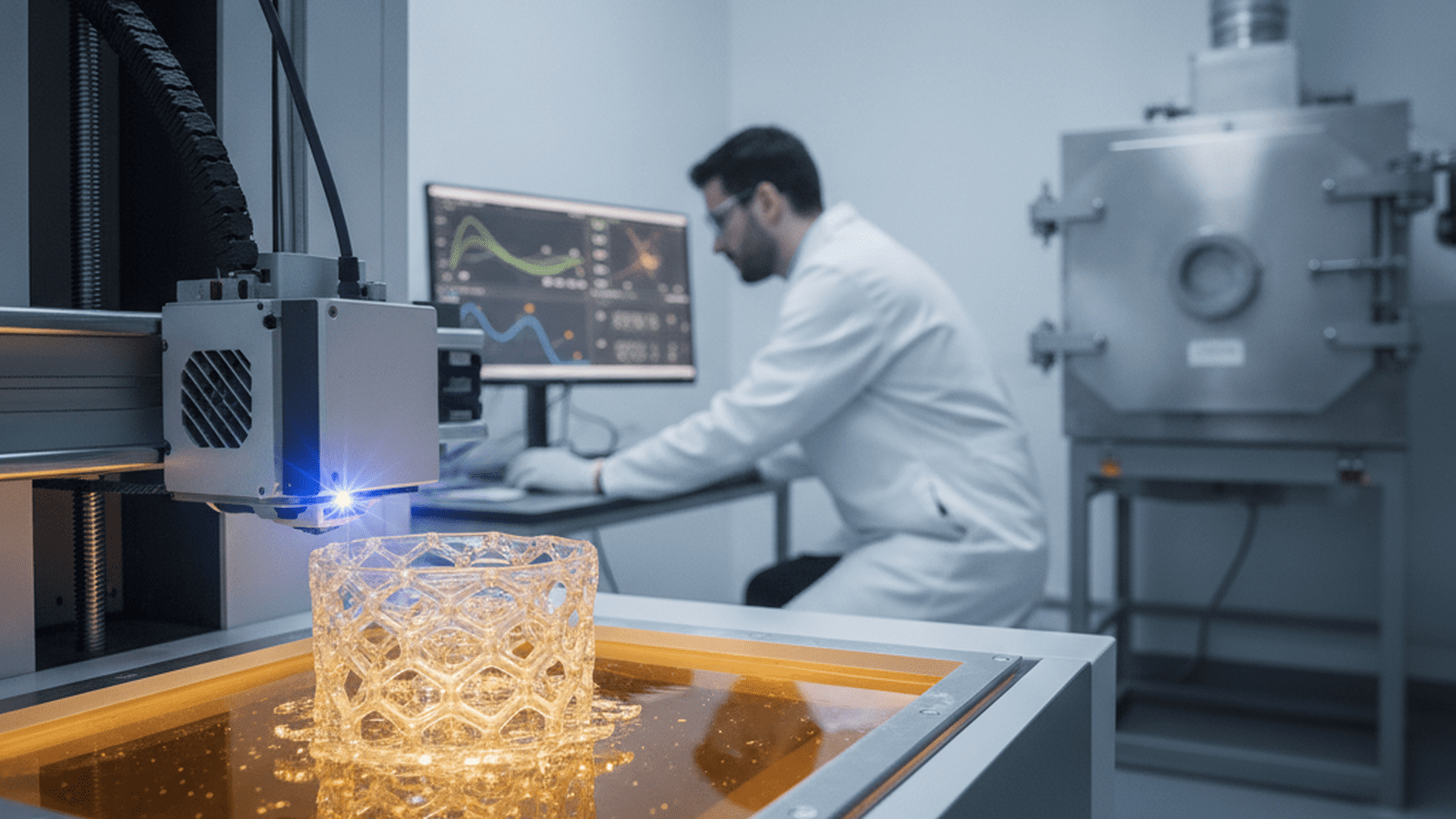
The breakthrough centers on a specialized resin that can be processed using stereolithography, a high-resolution 3D printing technique. In this process, an ultraviolet laser traces a precise pattern onto a vat of liquid polymer, curing it layer by layer into a solid “green” part. The resin chemistry was specifically engineered to maintain a low viscosity for printing while ensuring a high ceramic yield during subsequent heating. This intermediate stage allows for the creation of intricate internal structures, such as lattices and cooling channels, that would be impossible to achieve with conventional casting or subtractive manufacturing.
Once the polymer part is printed, it undergoes a rigorous process called pyrolysis to achieve its final form. The component is placed in a furnace and heated to extreme temperatures in an inert atmosphere, causing the organic molecules in the polymer to break down and rearrange into a ceramic matrix. The result is a dense, high-strength silicon oxycarbide ceramic that retains the precise shape of the original 3D-printed design. While the part undergoes uniform and predictable shrinkage during the heating phase, the structural integrity remains intact.
Testing reveals that these architected ceramics can withstand temperatures exceeding 1,700 degrees Celsius without losing structural integrity. Unlike traditional ceramics, which often shatter when subjected to rapid temperature fluctuations, the HRL material demonstrates remarkable resistance to thermal shock. Researchers utilized high-intensity plasma torches to simulate the reentry conditions of spacecraft, finding that the printed lattices remained intact while traditional materials failed. The silicon oxycarbide’s amorphous structure plays a key role, as it lacks the grain boundaries where cracks typically initiate in crystalline ceramics.
The implications for the aerospace industry are significant, particularly for the development of next-generation propulsion systems. Modern jet engines operate at temperatures that push the limits of even the most advanced metal superalloys, often requiring complex cooling systems to prevent melting. By replacing metal components with 3D-printed ceramics, engineers can design engines that run hotter and more efficiently, potentially reducing fuel consumption and carbon emissions. The lightweight nature of ceramics also offers a distinct advantage for orbital payloads.
Beyond jet engines, the technology holds promise for the burgeoning field of hypersonic flight. Vehicles traveling at several times the speed of sound experience intense frictional heating on their leading edges and control surfaces. 3D-printed ceramic heat shields could provide the necessary thermal protection while allowing for aerodynamic shapes that optimize flight performance. The precision of the printing process also enables the integration of sensors and micro-scale features directly into the ceramic structure for real-time monitoring of structural health during flight.
Future research at the laboratory is focused on expanding the library of preceramic polymers to include other high-performance materials, such as silicon carbide and silicon nitride. Scientists are also working to scale the pyrolysis process to accommodate larger components for industrial-scale applications. As the technology matures, it may transition from specialized aerospace components to broader uses, including high-efficiency heat exchangers, chemical processing equipment, and advanced medical implants that require high biocompatibility and strength.

Mason Reed serves as a Staff Writer for Just Right News, where he spearheads the Future Frontiers & Special Projects desk. In an era defined by rapid technological shifts and evolving social landscapes, Mason provides a steady, principled voice, examining the innovations of tomorrow through the lens of traditional American values. His work is most prominently featured in his signature series, “The Next Horizon,” where he explores the intersection of emerging technology, national sovereignty, and the preservation of individual liberty.
A native of San Diego, California, Mason’s worldview was shaped by the unique culture of his hometown. Growing up in a region defined by its strong military presence and its history of maritime industry, he developed a deep-seated respect for the institutions that provide national stability and the entrepreneurial spirit that drives the American economy. This upbringing instilled in him a belief that true progress is not found in discarding the past, but in building upon a foundation of proven principles. His reporting often reflects this San Diego influence, emphasizing the importance of a robust national defense and the necessity of maintaining a competitive edge in the global marketplace.
Now based in San Francisco, Mason operates from the heart of the world’s technological engine. Living and working in the Bay Area provides him with a front-row seat to the advancements—and the ideological challenges—emanating from Silicon Valley. While many in the region embrace a “move fast and break things” mentality, Mason’s reporting serves as a vital counterweight. He offers Just Right News readers a “boots on the ground” perspective, documenting how radical local policies and the concentration of tech power impact the everyday lives of citizens. His proximity to the industry allows him to cut through the marketing jargon of big tech to uncover the real-world implications for privacy, free speech, and the nuclear family.
In his “Future Frontiers” beat, Mason tackles complex subjects ranging from the ethics of artificial intelligence to the burgeoning private space race. He approaches these topics with a healthy skepticism toward centralized bureaucracy, championing instead the decentralized innovations that empower individuals. Through “The Next Horizon,” he highlights the pioneers and thinkers who are working to ensure that the future remains a place where human dignity and constitutional rights are protected. He believes that the rapid pace of change requires more than just technical expertise; it requires a moral compass rooted in the Western tradition.
Throughout his tenure at Just Right News, Mason has remained committed to the idea that the future is something to be shaped, not merely accepted. His writing is characterized by a rigorous defense of American exceptionalism and a belief that the country’s best days lie ahead, provided it remains true to its founding ideals. Whether he is investigating the impact of automation on the American workforce or profiling the next generation of aerospace engineers, Mason Reed ensures that his readers are equipped with the insights they need to navigate a changing world with confidence and clarity.