

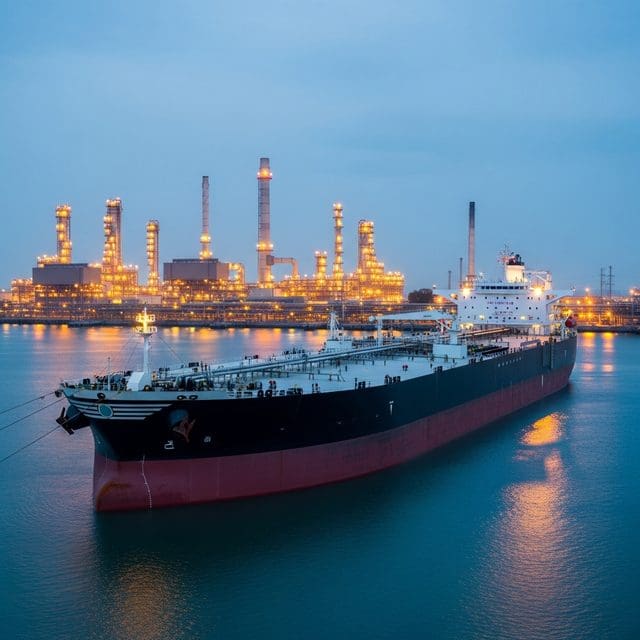
Oil prices dipped following a diplomatic breakthrough in Switzerland as U.S. and Iranian officials established a framework for nuclear inspections and the resumption of sanctioned oil exports.
Energy markets are undergoing a significant recalibration this week as diplomatic breakthroughs in Switzerland provide a tentative roadmap for ending regional conflict and restoring global oil flows. Brent crude futures declined roughly 2% to trade near $79 per barrel, while West Texas Intermediate hovered near $76, following reports that first-round negotiations between Vice President Vance and Iranian officials concluded with a framework for a final deal within 60 days. The talks represent the most substantial progress toward stabilization since the conflict began.
The emerging agreement hinges on Iran allowing International Atomic Energy Agency (IAEA) inspectors to return and oversee the dilution of highly enriched uranium stockpiles. In exchange, the U.S. has issued waivers allowing for the sale of Iranian oil and petrochemicals, alongside the release of frozen assets for a national reconstruction plan. This shift in policy signals a potential surge in Iranian supply that has already begun to deflate the war premium. Analysts note that Brent is now only about 7% above pre-war levels, suggesting that traders are increasingly pricing in a return to normalcy despite lingering geopolitical risks.
However, the situation in the Strait of Hormuz remains a point of friction between diplomatic rhetoric and operational reality. While the administration reported that traffic surged to over 17 million barrels on Saturday, specialized maritime trackers indicate that commercial shipping through the chokepoint is still near zero compared to the normal average of 60 ships per day. Insurers and shipping firms remain wary after Iran’s military declared a Persian Gulf Strait Authority, demanding that vessels follow specific Iranian-coast routing. This discrepancy suggests that while the political deal is signed, the physical movement of energy remains contingent on the trust of private sector shippers.
Domestic energy dynamics are also shifting. While smaller U.S. producers are beginning to increase drilling activity, major players like Exxon have yet to aggressively pivot to capture market share from the Gulf. This caution coincides with a macro-environment where the Federal Reserve, under Kevin Warsh, has signaled potential interest rate hikes later this year. The prospect of higher borrowing costs is weighing on capital-intensive expansion in the U.S. shale patch, even as the market looks for domestic alternatives to Middle Eastern volatility.
Beyond oil, the broader energy sector faces pressure from a summer heat wave testing grid reliability. In France, record temperatures are forcing a reevaluation of nuclear reactor cooling systems, highlighting the vulnerability of baseload power to climate shifts. Simultaneously, U.S. natural gas futures have gained on forecasts for a hotter July, which is expected to drive up cooling demand. This surge is further complicated by the AI boom, which is driving companies into the energy business as electricity emerges as a scarce commodity.
The intersection of these developments underscores the complexity of the current energy landscape. As the AI in energy market is projected to reach $22.2 billion by 2033, utilities are looking toward automated systems to balance renewable integration and grid stability. While the return of Iranian barrels may provide short-term relief to consumers, the long-term outlook for energy independence remains tied to the successful navigation of these geopolitical and technological hurdles. For the American taxpayer, the focus remains on whether these diplomatic frameworks can translate into lower costs and a more resilient domestic power grid.

Mark Davis serves as the Senior Correspondent for Energy, Climate, and Resource Economics at Just Right News. In an era where the conversation around the environment is often dominated by alarmism and top-down mandates, Mark provides a vital, market-oriented perspective on the complex forces shaping our world. As the lead voice behind the acclaimed feature series “Power and the Planet,” he explores the intersection of environmental policy, global energy markets, and the fundamental economic principles that sustain modern civilization.
Mark’s pragmatic approach to resource management was forged in the high desert of his hometown, Albuquerque, New Mexico. Growing up in a region defined by both its breathtaking natural beauty and its rugged, resource-dependent landscape, he developed an early appreciation for the delicate balance between conservation and utilization. New Mexico’s unique position as a hub for both traditional energy production and cutting-edge scientific research provided Mark with a front-row seat to the evolution of the American energy sector. This upbringing instilled in him a deep-seated belief that true environmental stewardship is inseparable from economic prosperity and technological innovation.
Now based in Boulder, Colorado, Mark operates from the heart of the nation’s climate research community. While Boulder is often seen as a bastion of environmental idealism, Mark utilizes his post to provide a necessary counterweight, grounded in the realities of resource economics. He understands that energy policy does not exist in a vacuum; it has tangible consequences for the American taxpayer, the stability of the national power grid, and the strength of the domestic manufacturing sector. By reporting from the front lines of the climate debate, he is able to challenge prevailing narratives with hard data and a commitment to the principles of the free market.
Throughout his tenure at Just Right News, Mark has distinguished himself by focusing on the “Resource Economics” aspect of his beat. He frequently highlights the hidden costs of rapid energy transitions and advocates for an “all-of-the-above” energy strategy that prioritizes American energy independence. His work often shines a light on the geopolitical implications of resource scarcity, arguing that a secure nation must first be an energy-secure nation. Whether he is analyzing the impact of federal land-use regulations or investigating the supply chains required for new technologies, Mark remains focused on how policy decisions affect the lives and livelihoods of everyday citizens.
In “Power and the Planet,” Mark continues to bridge the gap between complex scientific concepts and the economic realities facing the country. He rejects the false choice between a healthy environment and a thriving economy, instead seeking out solutions that leverage American ingenuity and private-sector competition. For Mark, reporting on the climate is not about following the latest trends, but about ensuring that the conversation remains tethered to the foundational values of liberty, property rights, and fiscal responsibility. His contributions ensure that Just Right News readers receive a comprehensive, clear-eyed view of the challenges and opportunities defining the future of our planet.