

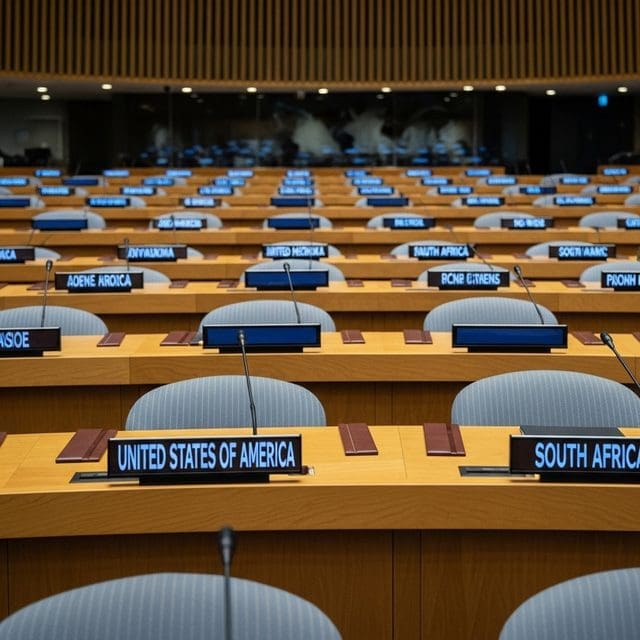
The World Health Organization missed its 2026 deadline for a global pandemic treaty, while the U.S. shifts toward direct co-financing deals with African nations.
The pursuit of a centralized global health architecture hit a significant roadblock this month as the World Health Organization (WHO) missed its May 2026 deadline to finalize a legally binding pandemic treaty. Negotiators have now pushed the target for ratification to the 2027 World Health Assembly, citing persistent deadlock over the Pathogen Access and Benefit-Sharing (PABS) system. This mechanism, which seeks to mandate the sharing of biological data and pharmaceutical benefits, remains the primary friction point between developed nations and the global south, as countries struggle to define how to operationalize the system before the treaty can be opened for signatures.
For the United States, the delay underscores a broader shift in health diplomacy. Following Washington’s withdrawal from the WHO under the Trump administration, the U.S. is no longer a party to the finalized treaty text. This exit has effectively decoupled American resources from the multilateral framework’s requirements for equitable drug and vaccine distribution. Instead, the administration is moving toward a model of bilateral co-financing deals. These arrangements restructure aid to African states by cutting overall funding levels and shifting capital away from non-governmental organizations to direct government-to-government transfers, tightening conditionality at a time of rising climate-linked health risks.
This pivot to “shared responsibility” is being mirrored by regional powers like South Africa. By hosting the Global Fund’s Eighth Replenishment Conference and tripling its own pledge to $36.6 million for the 2026–28 cycle, Pretoria is signaling a move away from total reliance on Western largesse. However, the Global Fund itself faces a precarious fiscal outlook, securing only roughly $11.85 billion against an $18 billion target. This shortfall creates a widening gap for HIV, tuberculosis, and malaria programs across the continent, even as regional leaders attempt to take more ownership of their health outcomes.
Adding complexity to the development landscape is the increasing integration of climate policy into health security. United Nations officials are framing climate change as a primary health-security threat for Africa ahead of upcoming negotiations in Bonn. This narrative seeks to unlock new streams of climate-health finance, designating health as a strategic frontline in African positions. For American taxpayers, the shift toward bilateralism represents a more transactional approach to foreign assistance, prioritizing measurable outcomes and national interest over the bureaucratic mandates of Geneva-based institutions.
While critics argue that a fragmented global response leaves the world vulnerable to the next pathogen, proponents of the current U.S. posture suggest that market-driven solutions and sovereign accountability provide a more resilient defense. The U.S. approach emphasizes that aid should not be a permanent entitlement but a bridge to self-sufficiency. This is particularly relevant as the U.S. navigates complex geopolitical shifts, including the recent memorandum of understanding with Iran regarding the Strait of Hormuz and the ongoing ceasefire efforts in Lebanon, which have redirected significant diplomatic bandwidth and resources toward regional stability and energy security.
As the WHO attempts to salvage its treaty by 2027, the reality on the ground is already changing. The failure to meet the 2026 deadline reflects a deeper skepticism regarding global governance. In the absence of a unified treaty, the landscape of global health is becoming increasingly bifurcated between those adhering to the UN-led multilateral path and those, like the United States, who favor a decentralized, evidence-based model that respects national sovereignty and fiscal transparency. For now, the path to 2027 remains clouded by the same disagreements over pathogen access and benefit-sharing that have haunted the process since its inception.

Rachel Vaughn serves as a Senior Correspondent for Just Right News, where she leads the network’s coverage of Global Health, Climate, and Development. With a career defined by intellectual rigor and a commitment to principled reporting, Rachel provides a vital conservative perspective on some of the most complex and high-stakes issues facing the world today. Her work is characterized by a refusal to accept bureaucratic narratives at face value, focusing instead on how international policies impact national sovereignty, individual liberty, and the American taxpayer.
Raised in New Haven, Connecticut, Rachel grew up in an environment dominated by elite academic discourse. This upbringing provided her with a front-row seat to the inner workings of the American establishment, but it also instilled in her a healthy skepticism of the “ivory tower” consensus. She learned early on that while academic theories may sound promising in a lecture hall, they often fail to account for the practical realities of the working class. This background drives her to bridge the gap between high-level policy discussions and the common-sense concerns of everyday citizens, ensuring that her reporting remains grounded and accessible.
Now based in Burlington, Vermont, Rachel operates from a unique vantage point within one of the nation’s most progressive political landscapes. Living and working in a region that often serves as a testing ground for radical social and environmental experiments allows her to witness the real-world consequences of these policies firsthand. From her base in the Green Mountain State, she provides Just Right News readers with essential “boots on the ground” reporting, documenting the friction between local mandates and the constitutional freedoms of the individual. Her presence in Burlington ensures that her critiques of globalist agendas are informed by a direct understanding of how those ideologies manifest at the local level.
In her acclaimed feature series, “Planetary Stakes,” Rachel explores the intersection of international development and environmental stewardship. She rejects the alarmism often found in mainstream media, opting instead for a sober analysis of the economic and geopolitical costs of global climate agreements. Her reporting frequently highlights the importance of market-driven innovation and the role of American leadership in fostering global health without ceding authority to unelected international bodies. Through “Planetary Stakes,” she has become a leading voice for those who believe that true conservation and public health are best achieved through transparency, accountability, and the protection of private property rights.
Throughout her tenure at Just Right News, Rachel has distinguished herself as a journalist who is unafraid to ask difficult questions of global institutions. Whether she is investigating the influence of non-governmental organizations on domestic policy or analyzing the fiscal transparency of international health initiatives, her goal remains the same: to provide her audience with the facts necessary to navigate an increasingly interconnected world. Her blend of East Coast intellectual heritage and her current immersion in the political heart of the Northeast makes her an indispensable asset to the newsroom and a trusted source for readers seeking a principled, conservative take on the issues that define our era.