

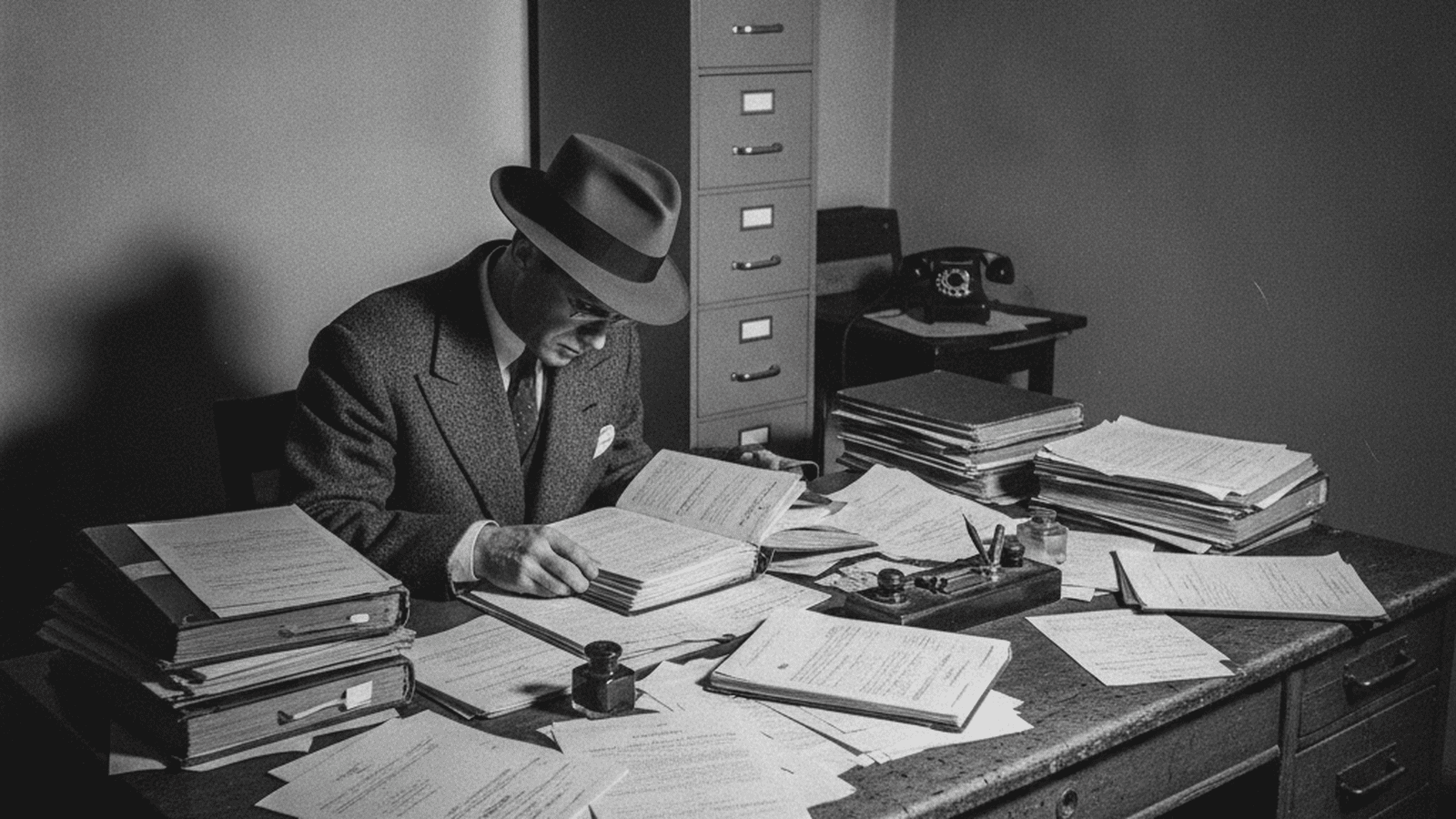
In 1956, Illinois State Auditor Orville Hodge was exposed for embezzling over $1.5 million from the state treasury. The scandal, uncovered by investigative journalism, led to significant structural reforms in how the United States manages state-level financial oversight.
TLDR: In 1956, Illinois State Auditor Orville Hodge was convicted of embezzling millions through forged warrants. The scandal, exposed by the Chicago Daily News, forced the state to create an independent Auditor General. This event remains a pivotal moment in Midwestern political reform and government accountability.
In the mid-1950s, the state of Illinois was rocked by a financial scandal so profound that it fundamentally reshaped the structure of state government and oversight in the United States. At the center of this storm was Orville Hodge, the charismatic and immensely popular State Auditor. A rising star in the Republican Party, Hodge was widely considered a frontrunner for the governorship. His public image was that of a polished, efficient administrator and a successful businessman. However, beneath this veneer of respectability, Hodge was orchestrating one of the most audacious embezzlement schemes in American political history, siphoning millions from the state treasury to fund a life of unparalleled luxury.
The mechanics of Hodge’s fraud were both simple and brazen. As State Auditor, he held the power to issue warrants—essentially state checks—for government expenses. Hodge began issuing warrants to fictitious vendors or to real individuals who had performed no service for the state. To convert these warrants into cash, he relied on the cooperation of Edward Hintz, the president of the Southmoor Bank and Trust Company in Chicago. Hintz would bypass standard banking protocols, allowing Hodge to cash the forged warrants without proper endorsement or documentation. This illicit partnership allowed Hodge to bypass the very financial controls he was sworn to uphold.
The scale of the theft was staggering for the era. Between 1953 and 1956, Hodge embezzled approximately $1.5 million, a sum equivalent to more than $15 million in today’s currency. The stolen funds supported a lifestyle that far exceeded his $12,000 annual state salary. Hodge maintained a fleet of four private aircraft, a suite at the Drake Hotel in Chicago, a sprawling ranch in Florida, and a collection of luxury automobiles. He was known for his generosity, often hosting lavish parties and providing expensive gifts to political allies, which further insulated him from suspicion within the state capital of Springfield.
The scheme began to unravel due to the persistence of George Thiem, a Pulitzer Prize-winning investigative reporter for the Chicago Daily News. Thiem had received anonymous tips regarding irregularities in the Auditor’s office and began a meticulous investigation into state spending records. His efforts were met with immediate stonewalling; Hodge’s staff claimed records were lost, destroyed, or simply unavailable for public inspection. Undeterred, Thiem spent weeks in the basement of the statehouse, manually cross-referencing thousands of microfilm records and paper warrants. He eventually discovered a series of checks made out to people who denied ever receiving them. When Thiem confronted Hodge with the evidence, the Auditor attempted to bribe the reporter and later tried to destroy incriminating files.
The exposure of the scandal in the summer of 1956 led to a swift political collapse. Hodge resigned in July and was subsequently indicted on 276 counts of embezzlement, forgery, and conspiracy. He pleaded guilty and was sentenced to 12 to 15 years in the state penitentiary. The fallout forced the Illinois General Assembly to confront a systemic failure: the State Auditor was essentially auditing his own office with no independent check.
In response, the legislature passed the Auditing Act of 1957, which stripped the Auditor’s office of its most significant powers and created the Department of Financial Institutions. Most importantly, the scandal led to the establishment of the independent office of the Auditor General. Unlike the previous role, the Auditor General was an appointed, non-partisan official tasked with providing objective oversight of all state agencies. This reform became a national model for government accountability, proving that transparency and a free press are the most effective tools against the corruption of public trust.

Dylan Brooks serves as the Senior Correspondent for Statehouses and Local Governance at Just Right News, where he brings a principled, constitutionalist lens to the often-overlooked machinery of state-level politics. As the lead voice behind the acclaimed feature series “Fifty Laboratories of Power,” Dylan has dedicated his career to the idea that the most impactful governance happens closest to home. His reporting consistently champions the Tenth Amendment, exploring how individual states can serve as testing grounds for innovative, conservative policy solutions that prioritize personal liberty and fiscal responsibility.
A native of Des Moines, Iowa, Dylan’s journalistic philosophy was forged in the heart of the American Midwest. Growing up in a community where local school board meetings and town halls were the bedrock of civic life, he developed a deep appreciation for the “retail politics” of the heartland. This upbringing instilled in him a fundamental belief that the American experiment is best preserved when power is decentralized. He carries the values of his Iowa roots into every assignment, maintaining a healthy skepticism of federal overreach and a steadfast commitment to the concerns of everyday citizens over the interests of the administrative state.
Now based in Madison, Wisconsin, Dylan operates from one of the nation’s most pivotal political battlegrounds. His location in a state capital known for its rigorous policy debates allows him to provide Just Right News readers with a front-row seat to the legislative process. From Madison, he tracks the ripple effects of statehouse decisions on local municipalities, ensuring that the connection between high-level policy and community impact is never lost. His work often highlights the success of conservative governors and legislatures in fostering economic growth, protecting parental rights, and securing the integrity of local institutions.
As an African American man in the conservative media landscape, Dylan offers a vital perspective on how limited government and free-market principles empower individuals and families. He frequently reports on how deregulation and school choice initiatives provide new avenues for success in underserved communities, challenging the monolithic narratives often presented by legacy media outlets. Dylan’s work is characterized by a commitment to the facts and a refusal to shy away from the complex realities of modern governance.
Throughout his tenure at Just Right News, Dylan has become a trusted authority for readers who value a rigorous, principled approach to the news. Whether he is dissecting a complex state budget or profiling a local grassroots movement, his goal remains the same: to provide the American public with the information they need to hold their local leaders accountable. By focusing on the “Fifty Laboratories of Power,” Dylan Brooks ensures that the vital work being done in statehouses across the country receives the national attention it deserves, always through a lens that respects the traditions and sovereignty of the American people.