

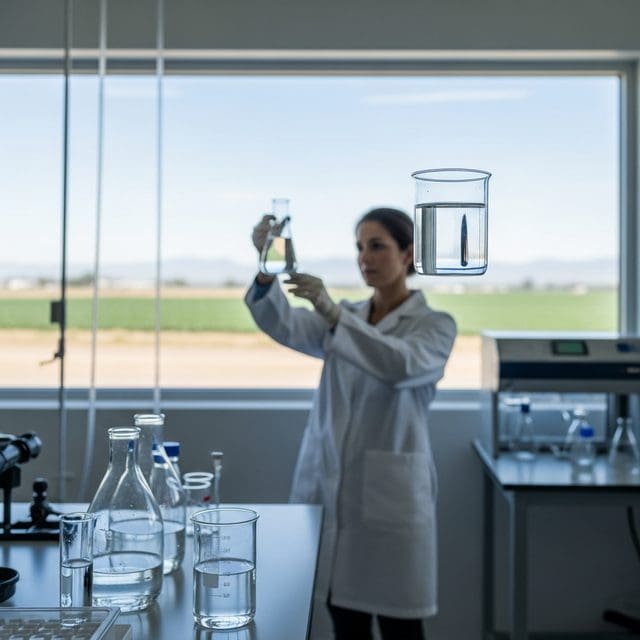
Federal agencies are expanding oversight into waterborne microplastics and pharmaceutical runoff as a multistate Listeria outbreak linked to soft cheeses continues to challenge food safety investigators.
Federal regulators are currently navigating a dual front of environmental and food safety challenges, with the Environmental Protection Agency proposing historic new water standards while the Food and Drug Administration struggles to contain a persistent Listeria outbreak. For the first time, microplastics and pharmaceuticals have been formally placed on the EPA’s priority list for drinking water, a move that will fundamentally change how local water systems and agricultural operations are monitored. This regulatory expansion, known as the draft Sixth Contaminant Candidate List (CCL 6), marks a significant departure from previous years, signaling that the federal government is moving toward mandatory monitoring and treatment requirements for these emerging contaminants.
The EPA’s focus on microplastics and pharmaceuticals comes alongside a complex effort to overhaul PFAS regulations. The agency’s May 18, 2026, proposed PFAS Rescission Rule seeks to undo and redo parts of the prior drinking water standards for PFHxS, PFNA, GenX chemicals, and PFBS mixtures. With a public comment deadline of July 20, 2026, and a virtual public hearing scheduled for July 7, the pressure is on for water utilities and agricultural processors to assess the potential compliance costs. To mitigate some of this burden, the EPA launched the PFAS OUTreach initiative on April 14, 2026, targeting approximately 3,000 high-risk drinking water systems for proactive technical assistance. This initiative provides a concrete roadmap for communities, particularly those in farm-adjacent regions, to begin mitigation of PFOA and PFOS years ahead of full compliance deadlines.
On the food safety front, the FDA and CDC are continuing their investigation into a June 2026 multistate Listeria outbreak linked to soft cheeses. The recalls, specifically targeting Clover Hill Dairy and Nelson & Isa Lacteos LLC requesón and soft ricotta products, remain active as investigators conduct traceback and product testing. Regulators are currently assessing whether the contamination source is localized or if additional soft cheeses across other brands and distribution channels need to be implicated. This ongoing probe highlights the persistent vulnerability of the domestic dairy supply chain to microbial pathogens and the difficulty of containing outbreaks once products enter the commercial market. The FDA is currently probing the contamination source to determine if the scope of the recall must be widened to include more products.
International food safety enforcement has also seen a surge in activity, providing a stark reminder of the risks associated with hygiene failures. In Hyderabad, authorities recently conducted high-profile raids on popular eateries and central kitchens serving multiple outlets. Inspectors discovered severe violations, including cockroach infestations, expired food products, and mould-affected vegetables. These findings, while occurring abroad, underscore the global nature of food safety risks and the necessity of maintaining a rigorous local inspection infrastructure in the United States to prevent similar large-scale public health crises from taking root in American communities. Domestically, state portals like Arkansas’s Food Protection Inspection system show that while routine inspections continue, the threat of systemic contamination remains a constant pressure for local health departments.
As the EPA opens its 60-day public comment period for the CCL 6, which covers PFAS, microplastics, pharmaceuticals, disinfection byproducts, 75 additional chemicals, and nine microbes, the agricultural sector must weigh in. The intersection of federal overreach and practical stewardship remains a primary concern for those who manage the nation’s essential resources. While the final list is expected by November 17, 2026, the immediate focus for many in the San Joaquin Valley and beyond is whether these new regulations provide genuine safety or merely add layers of bureaucracy for the American family to navigate. The balance between protecting environmental health and maintaining local sovereignty over water and food production remains the central tension in this evolving regulatory landscape. Protecting the integrity of the food supply requires both vigilant federal oversight and the common-sense innovation of private-sector producers who understand the land best.

Eric Nolan serves as the Senior Correspondent for Food, Water, and Environmental Health at Just Right News, where he brings a principled, common-sense perspective to the most fundamental issues facing the American public. With a career dedicated to uncovering the truth behind the policies that govern our natural resources, Eric has become a trusted voice for readers who value traditional stewardship over bureaucratic overreach. His reporting is defined by a commitment to the idea that true environmentalism is rooted in the protection of the American family and the preservation of the nation’s agricultural heritage.
Raised in Fresno, California, Eric’s worldview was shaped in the heart of the San Joaquin Valley. Growing up in one of the world’s most productive agricultural hubs, he witnessed firsthand the vital connection between the land, the water, and the dinner table. In Fresno, he saw the resilience of farmers and the devastating impact that distant, top-down regulations can have on local communities. This upbringing instilled in him a deep respect for the producers who feed the country and a lifelong skepticism toward the alarmist narratives often pushed by mainstream media. For Eric, environmental health is not an abstract political talking point; it is a matter of ensuring that the people who work the land have the freedom and the resources to do so effectively.
Now based in Eugene, Oregon, Eric operates from a unique vantage point in the Pacific Northwest. Living in a region often defined by intense environmental debate, he provides a necessary counter-narrative to the prevailing trends of the area. From his base in Eugene, he monitors the shifting tides of federal and state policies, ensuring that the voices of rural citizens and property owners are not drowned out by urban activism. His reporting often bridges the gap between the rugged realities of the outdoors and the legislative halls where decisions are made, offering a grounded perspective that prioritizes local sovereignty and practical solutions.
As the lead for the acclaimed feature series “Earth on the Table,” Eric explores the intricate journey of the American food supply. He tackles critical issues such as water rights, soil health, and food security through a lens of national stability and individual liberty. He believes that a healthy environment and a thriving economy are not mutually exclusive, but rather two sides of the same coin of national prosperity. His work consistently highlights how innovation and private-sector ingenuity are the most effective tools for ensuring clean water and a safe food supply, rather than the expansion of the administrative state.
At Just Right News, Eric’s reporting serves as a vital resource for those who seek accountability and transparency. Whether he is investigating the impact of federal land management on local economies or examining the safety of the national food infrastructure, his work remains anchored in the values of heritage and hard work. Eric Nolan continues to be a leading voice in environmental journalism, championing the belief that the best way to protect our natural resources is to empower the people who live and work closest to them.