

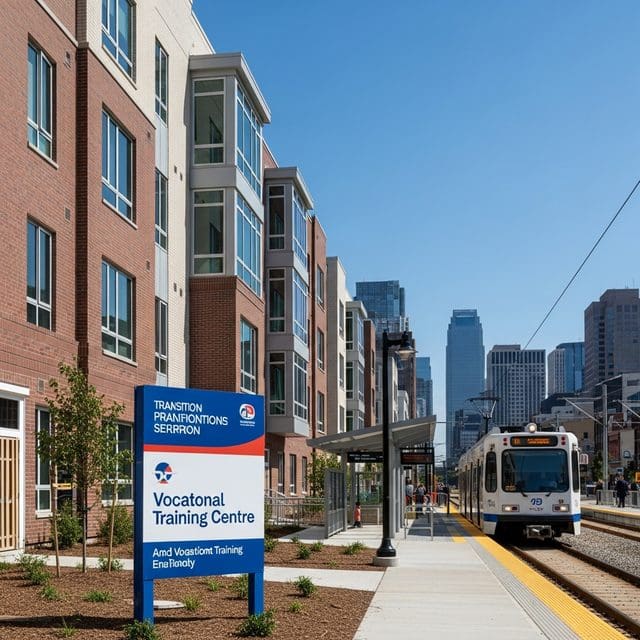
The Department of Housing and Urban Development is pivoting toward a treatment-led homelessness model, allocating $4.04 billion to prioritize addiction recovery and vocational training over unconditional housing.
The Department of Housing and Urban Development (HUD) has officially signaled a definitive end to the ‘Housing First’ era, unveiling a $4.04 billion funding package for 2026 that prioritizes treatment, recovery, and personal responsibility. The Continuum of Care Notice of Funding Opportunity (NOFO) marks one of the most significant policy shifts in recent memory, dedicating $1.3 billion specifically to new projects that emphasize transitional housing and supportive services over the previous model of permanent placement without prerequisites.
Under this new federal framework, grant applicants must demonstrate a commitment to addiction treatment, mental health services, and job training to remain competitive. This move reflects a growing skepticism toward unconditional housing models that have struggled to address the root causes of street homelessness in major metropolitan areas. HUD has explicitly stated that funding will be restricted for providers that do not meet these new performance metrics, which are designed to track actual recovery outcomes rather than just occupancy rates. Furthermore, the agency has issued a strict prohibition against using federal dollars to support illicit drug use or ‘safe consumption sites,’ reinforcing a mandate for sobriety-focused recovery and fiscal accountability.
This federal pivot occurs as the private housing market remains in a state of cautious stagnation, leaving many Americans caught between high costs and limited inventory. New industry data suggests the 30-year fixed mortgage rate is expected to hover around 6.4% through the next quarter, only dipping slightly to 6.3% by the end of 2026. This persistent high-rate environment continues to sideline potential buyers, even as HUD officials claim national median rents have reached a four-year low. For the average family, the ‘affordability’ touted by federal agencies often feels disconnected from the reality of monthly mortgage payments that remain nearly double what they were five years ago.
On the local level, states are attempting to bridge the gap between transit infrastructure and housing supply through legislative reform rather than just federal subsidies. Maryland recently enacted the Transit and Housing Opportunity Act alongside the Housing Certainty Act. These measures aim to streamline the permitting process and densify housing near transit hubs, reflecting a market-driven approach to supply-side constraints. By tying residential development directly to existing infrastructure, Maryland lawmakers are attempting to reduce the cost-of-living burden for commuters and preserve local sovereignty through smarter zoning rather than bureaucratic mandates.
The broader economic landscape provides a complex backdrop for these housing shifts. While domestic policy focuses on recovery, international developments have offered a brief reprieve for the American taxpayer’s wallet. Following the announcement of a 10-day ceasefire between Israel and Lebanon and a memorandum of understanding with Iran to reopen the Strait of Hormuz without tolls, oil prices dropped over 10% in mid-April. This reduction in energy costs is a rare win for household budgets, though it remains to be seen if these geopolitical gains will translate into long-term relief for the construction and transit sectors.
As the 2026 midterm elections approach, the political stakes of these housing decisions are coming into sharp focus. Recent polling indicates a narrow lead for Democrats in congressional preference, yet the administration’s pivot toward more conservative, recovery-based housing policies suggests an attempt to win back voters frustrated by the visible decline of urban centers. For the American taxpayer, the new HUD requirements represent a demand for greater accountability from the non-profits and local agencies tasked with managing the $4.04 billion in federal aid. With awards expected to be finalized by December 1, 2026, the coming months will determine whether this shift toward treatment and transit-oriented development can finally move the needle on the nation’s most persistent housing challenges.

Deborah Cole serves as a Senior Correspondent for Just Right News, where she spearheads the network’s coverage of Housing, Infrastructure, and Mobility. With a career defined by a commitment to rigorous reporting and a focus on the fundamental pillars of American community life, Deborah brings a principled perspective to the complex issues that dictate how and where we live. Her work is grounded in the belief that sound policy, fiscal responsibility, and respect for private property are the essential foundations of a prosperous society.
Originally from Boston, Massachusetts, Deborah’s upbringing in one of the nation’s oldest and most historically significant cities deeply influenced her professional trajectory. Growing up amidst the architectural legacy and dense urban planning of New England, she developed an early appreciation for the importance of durable infrastructure and the role of local tradition in shaping neighborhoods. Her perspective is informed by the classic American values of her hometown—hard work, community cohesion, and a healthy skepticism of top-down bureaucratic mandates that often overlook the unique needs of individual citizens.
Today, Deborah operates from her base in Austin, Texas, a city that serves as a primary laboratory for her reporting. Austin’s rapid expansion and its status as a hub for innovation and migration provide her with a front-row seat to the most pressing challenges in modern infrastructure and housing. From the Lone Star State, she chronicles the tensions between rapid growth and the preservation of the American Dream, often highlighting how market-driven solutions and deregulation can address the housing shortages that plague many of the country’s metropolitan areas.
At Just Right News, Deborah is perhaps best known for her signature feature series, “Where We Live.” Through this platform, she explores the intersection of public policy and private life, moving beyond mere statistics to tell the stories of families, small business owners, and local developers. Her reporting frequently highlights the importance of mobility—not just in terms of transportation and transit, but as a vehicle for economic opportunity and social stability. She remains a staunch advocate for the taxpayer, consistently scrutinizing government spending on large-scale projects and advocating for transparency in how infrastructure dollars are allocated.
Deborah’s beat is more than just a collection of policy topics; it is an investigation into the physical and legal structures that allow families to flourish. Whether she is reporting on the impact of zoning laws on suburban development or the necessity of maintaining the nation’s highway systems, her work is characterized by a dedication to the facts and a respect for the constitutional principles that protect the rights of homeowners.
As a Senior Correspondent, Deborah Cole continues to be a vital voice for Just Right News, providing the audience with the clarity and context needed to navigate an ever-changing landscape. Her reporting ensures that the values of individual liberty and local sovereignty remain at the forefront of the national conversation regarding the future of our cities and towns. Through her tireless efforts, she remains committed to informing the public on the issues that hit closest to home.