

From elite British boarding schools to Nigerian safety portals, global education leaders are shifting focus toward institutional stability and community-led governance to ensure student success.
The development of human capital depends entirely on the stability of the environment in which students learn. This week, three distinct global regions demonstrated how governments and elite institutions are responding to threats—both physical and administrative—to ensure the continuity of education. While the methods vary from military action to community governance, the underlying goal remains the same: protecting the next generation of workers and leaders from the disruptions that derail upward mobility.
In the United Kingdom, Kensington Palace has confirmed that Prince George will attend Eton College starting in September 2026. The decision follows months of speculation and underscores the enduring value placed on traditional, high-standard institutions. Prince William, who has spoken openly about the emotional weight of this transition, is steering his son toward the same rigorous environment that has long served as a pipeline for British leadership. This move reinforces the idea that even in a rapidly changing world, established institutions with proven track records remain the gold standard for preparing individuals for high-stakes responsibility. Reports suggest George may eventually be joined by relatives like Christopher “Wolfie‒ Mapelli Mozzi, further cementing Eton’s role in royal socialization and the preservation of institutional knowledge across generations.
In Nigeria, the focus is on basic physical security as a prerequisite for learning. The Federal Ministry of Education recently integrated a dedicated School Safety Portal into the Nigeria Education Management Information System (NEMIS). This digital infrastructure allows for real-time reporting of risks and attacks, a necessity underscored by recent violence in Kogi State. Following a deadly attack on June 10 in Kabba-Bunu LGA, Kogi officials confirmed the killing of notorious bandit leader Kachala Ibrahim Batijo, who was accused of orchestrating school abductions. The state’s decision to temporarily shutter schools based on intelligence highlights a grim reality: without physical safety, the investment in curriculum and workforce training cannot yield results. Despite rumors of cyberattacks on the NEMIS database, federal officials have maintained that the platform remains secure, emphasizing that data integrity is as vital to the education system as physical walls.
India is taking a different approach by focusing on the internal governance and mental health of students as a component of national strength. Education Minister Dharmendra Pradhan has reviewed a new National Mental Health and Well-Being Policy for Schools, moving toward a teacher-led framework for early distress identification. More significantly, the newly launched School Management Committee (SMC) Guidelines for 2026 seek to transform these committees into “school community governing institutions.” By giving local parents and leaders explicit responsibility for safety, inclusivity, and digital governance, India is attempting to decentralize accountability and make school security a community-driven mandate. This policy shift occurs amidst a backdrop of political pressure regarding national exam accountability, yet the focus remains on hardening the infrastructure of the local schoolhouse.
These developments suggest a global recognition that education is not merely about the transfer of information; it is about the preservation of the environment in which that transfer occurs. Whether through the elite socialization of Eton or the defensive measures in Kogi, the priority is creating a secure, predictable environment where merit and achievement can actually take root. As these nations refine their policies, the focus remains on removing the bureaucratic and security barriers that prevent students from becoming productive members of the workforce. By treating education as a matter of national security and community responsibility, these leaders are acknowledging that the modern workforce requires more than just skills—it requires the stability of a functioning society.
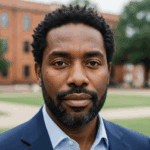
Daniel Owens serves as a Senior Correspondent for Just Right News, where he leads the newsroom’s coverage of Education, Workforce, and Upward Mobility. In an era where the national conversation often overlooks the practical foundations of success, Owens brings a principled perspective to the forefront of the media landscape. His work is defined by a commitment to the idea that a strong society is built on the pillars of quality education, a robust work ethic, and the removal of bureaucratic barriers to individual achievement.
Born and raised in Cleveland, Ohio, Owens’s worldview was shaped by the industrial landscape of the Midwest. Growing up in a city known for its grit and resilience, he witnessed firsthand the transformative power of steady employment and the devastating effects of economic stagnation. This background instilled in him a deep respect for the American worker and a healthy skepticism toward top-down government solutions that often fail to reach the communities they intend to help. As an African American man who has navigated the path to professional success, Owens approaches his beat with a nuanced understanding of how meritocracy and personal responsibility intersect with opportunity. He frequently draws on his roots to highlight the importance of family stability and community-led initiatives in fostering the next generation of leaders.
At Just Right News, Owens is the architect of the acclaimed feature series, “The Learning Curve.” Through this platform, he explores the evolving landscape of American schooling, from the rise of the school choice movement to the revitalization of trade schools and vocational training. He frequently challenges the status quo of higher education, advocating for a return to academic rigor and the practical alignment of degrees with market demands. For Owens, education is not merely about obtaining credentials; it is about equipping young people with the tools necessary to lead self-sufficient, meaningful lives. His reporting on “The Learning Curve” has become essential reading for parents and policymakers who believe that educational competition and parental rights are the keys to a brighter future.
Now based in Raleigh, North Carolina, Owens finds himself at the heart of one of the nation’s most dynamic regions for innovation and growth. Raleigh’s unique blend of traditional values and a fast-paced economy provides the perfect backdrop for his reporting on the modern workforce. From the tech hubs of the Research Triangle to the rural communities of the South, he tracks how shifts in the economy are impacting families and local industries. His reporting often highlights the success stories of entrepreneurs and workers who are thriving by embracing the values of hard work and innovation.
Throughout his career, Daniel Owens has remained a steadfast voice for the student seeking a better path and the worker striving for a better life. His reporting for Just Right News serves as a vital resource for readers who value common-sense solutions to the challenges of the 21st-century economy. By focusing on the intersection of policy and the human spirit, Owens continues to provide a roadmap for how individuals and communities can achieve lasting upward mobility.