

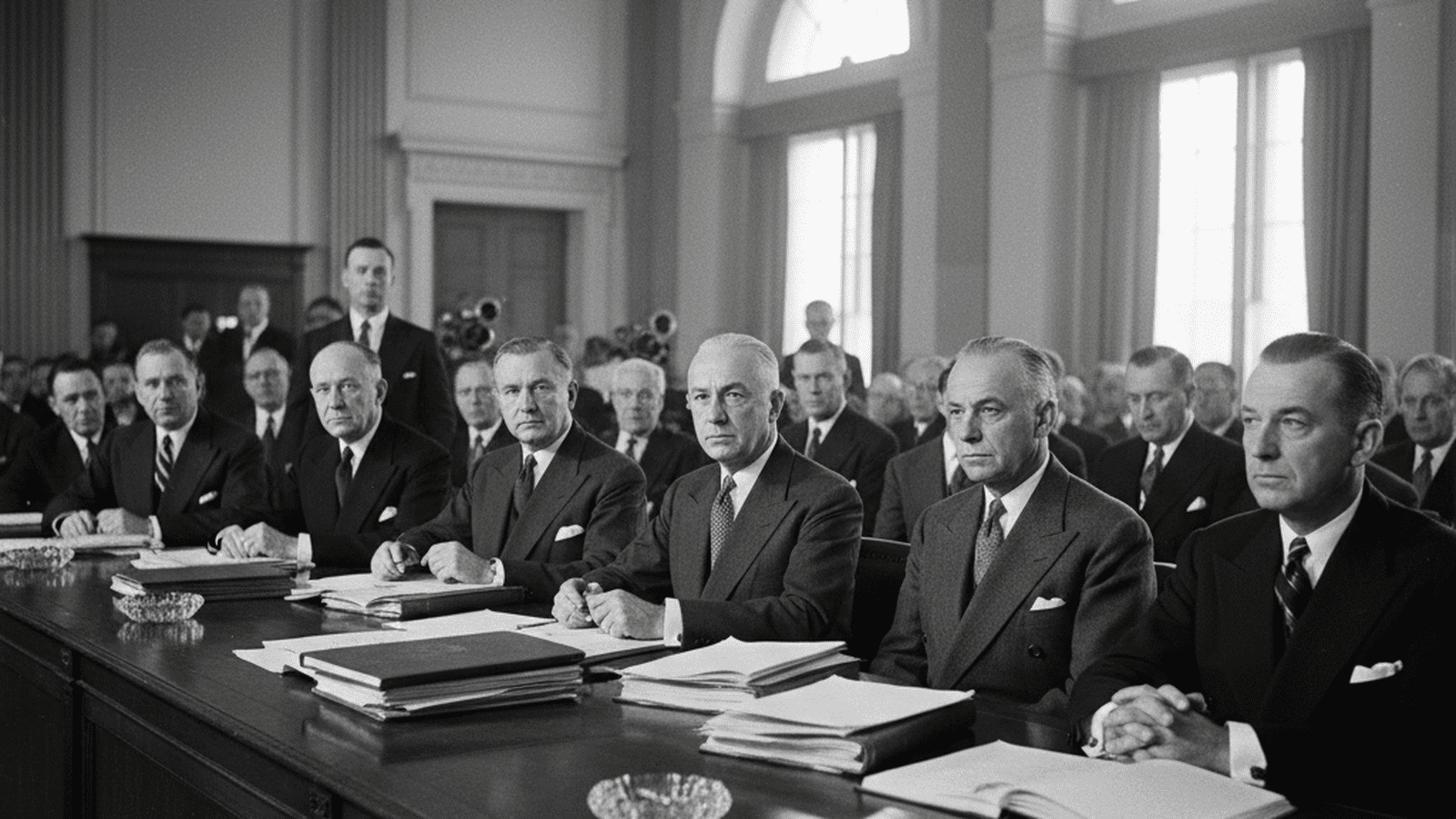
In 1941, Senator Harry S. Truman established a special committee to investigate waste and corruption in the United States defense industry during the buildup to World War II. The bipartisan effort saved billions of dollars and established a new standard for congressional oversight of executive spending.
TLDR: Established in 1941, the Truman Committee investigated corruption and inefficiency in the United States’ massive defense buildup. By conducting rigorous, bipartisan oversight of military contracts and construction, the committee saved billions in taxpayer funds and propelled Senator Harry S. Truman toward the vice presidency and eventually the White House.
In the early months of 1941, the United States stood at a precarious crossroads. While not yet formally a combatant in World War II, the nation was rapidly transforming into the “Arsenal of Democracy.” This transition involved the sudden infusion of billions of dollars into a military-industrial complex that was largely unprepared for such scale. The resulting chaos created a breeding ground for systemic inefficiency, blatant waste, and corporate profiteering. Senator Harry S. Truman, a Democrat from Missouri, began receiving a deluge of letters from concerned constituents. These citizens reported shocking scenes of idle workers, shoddy construction at military camps, and the reckless squandering of taxpayer funds.
Driven by a sense of fiscal responsibility, Truman decided to investigate these claims personally. In early 1941, he embarked on an unescorted, 10,000-mile solo tour across the country in his personal Dodge. He visited defense plants and Army training camps from the Midwest to the Gulf Coast. What he witnessed was appalling: millions of dollars in heavy equipment sat rusting in the rain, and contractors were operating under “cost-plus-fixed-fee” agreements that essentially rewarded them for overspending. Truman saw firsthand that the rapid buildup was being managed with little to no accountability.
Upon returning to Washington, D.C., Truman proposed the creation of a special committee to oversee the national defense program. The Roosevelt administration was initially wary, fearing that such a committee might mirror the intrusive and politically motivated investigations seen during the Civil War. However, Truman’s reputation for fairness and his insistence on a bipartisan approach eventually won over his colleagues. On March 1, 1941, the Senate unanimously approved the formation of the Special Committee to Investigate the National Defense Program.
The Truman Committee, as it came to be known, operated with a remarkably small staff and a modest initial budget. Under Truman’s leadership, the committee avoided the sensationalism and “witch-hunt” tactics common in congressional inquiries. Instead, they focused on factual evidence, rigorous accounting, and practical solutions. Truman hired Hugh Fulton, a sharp former prosecutor, as the committee’s chief counsel. Together, they conducted hundreds of hearings and performed unannounced site visits, often catching military officials and corporate executives off guard.
One of the committee’s most impactful early investigations focused on the construction of Army cantonments, such as Fort Leonard Wood. The committee revealed that the War Department had drastically underestimated costs, leading to massive overruns and the use of substandard materials. They also tackled the “dollar-a-year men”—wealthy business executives who served in government positions for a nominal salary while maintaining their corporate interests, often steering lucrative contracts toward their own firms. By exposing these conflicts of interest and production bottlenecks in industries like aluminum and aviation, the committee forced the military and private industry to adopt more transparent and efficient management standards.
The results were staggering. It is estimated that the Truman Committee’s oversight saved the United States government approximately $15 billion—equivalent to hundreds of billions in today’s currency. More importantly, the committee’s work ensured that the American public remained confident in the integrity of the war effort during a time of national crisis. For Truman, the committee’s success was a political springboard. His image as a common-sense watchdog for the American taxpayer made him a national hero and led directly to his selection as Franklin D. Roosevelt’s running mate in 1944. The committee’s legacy endures as the gold standard for legislative oversight, proving that even in the midst of a global conflict, transparency and accountability are essential to a functioning democracy.
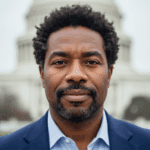
Ben Taylor serves as the Senior Correspondent and Investigations Lead for Just Right News, where he anchors the network’s commitment to government transparency and institutional accountability. With a career defined by a relentless pursuit of the facts, Taylor spearheads the acclaimed feature series “The Paper Trail,” a deep-dive investigative column that prioritizes primary source documentation over political rhetoric. Based in the heart of the nation’s capital, he has earned a reputation as one of the most formidable investigative journalists in Washington, D.C., known specifically for his mastery of public records and the Freedom of Information Act.
Taylor’s approach to journalism is deeply rooted in his upbringing in Kansas City, Missouri. Growing up in the “Show Me State,” he developed a healthy skepticism of centralized power and a profound respect for the common-sense values of the American heartland. This Midwestern foundation informs his reporting today, as he bridges the gap between the complex machinations of federal bureaucracy and the everyday concerns of citizens across the country. For Taylor, investigative reporting is not about chasing headlines; it is about ensuring that the government remains answerable to the people it serves.
As an African American man working within the conservative media landscape, Taylor brings a principled perspective to his beat. He views the Constitution and the right to information as the ultimate equalizers in a free society. His work often highlights how bureaucratic overreach and lack of transparency disproportionately affect individual liberties. By focusing on the “paper trail,” Taylor strips away the spin of partisan talking points, instead providing Just Right News readers with the raw data and internal communications that reveal how their tax dollars are spent and how policy decisions are actually made.
In his role as Investigations Lead, Taylor oversees a team dedicated to uncovering the stories that mainstream outlets often overlook. Whether he is auditing federal spending, investigating regulatory overreach, or exposing inefficiencies within the administrative state, his methodology remains consistent: follow the evidence wherever it leads. His presence in Washington, D.C., allows him to maintain a constant watch over the halls of power, yet he remains steadfastly connected to his roots, ensuring his reporting reflects the clarity and directness of his Missouri home.
Throughout his tenure at Just Right News, Taylor has become a vital voice for those who demand integrity in public office. He believes that a well-informed electorate is the strongest defense against government overreach, and he has dedicated his career to providing the public with the tools they need to hold their leaders accountable. Through “The Paper Trail” and his broader investigative work, Ben Taylor continues to set the standard for rigorous, document-driven journalism that champions the values of transparency, individual responsibility, and the rule of law.