

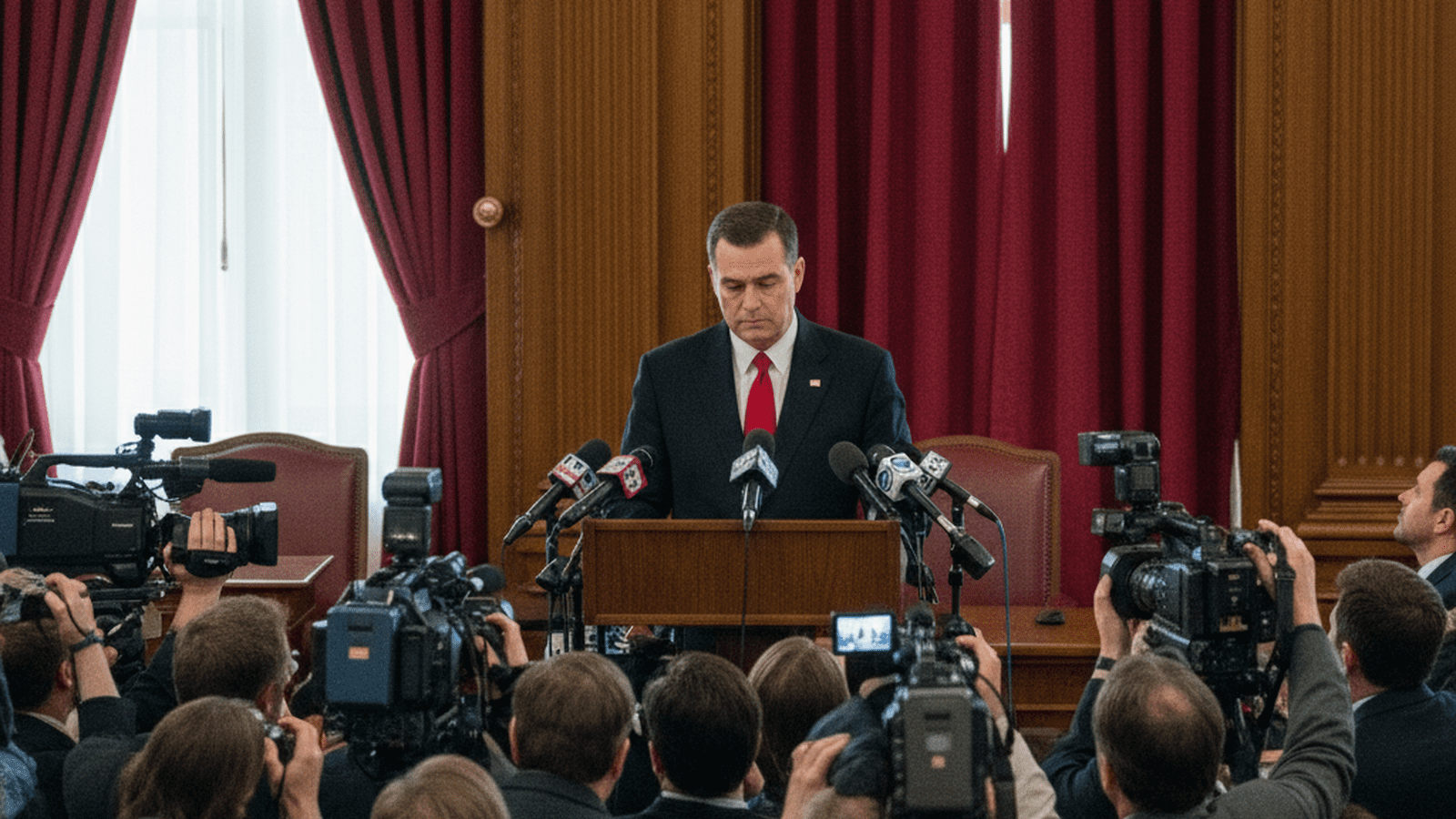
Governor John G. Rowland of Connecticut resigned in 2004 following a federal investigation into illegal gifts and kickbacks from state contractors. The scandal led to the first impeachment proceedings in the state’s history and the eventual imprisonment of the governor within the United States.
TLDR: In 2004, Connecticut Governor John G. Rowland resigned amid a federal corruption probe involving illegal gifts from state contractors. The scandal triggered historic impeachment proceedings and resulted in Rowland’s imprisonment. In response, the United States state of Connecticut enacted sweeping ethics reforms and a public campaign financing system to curb political corruption.
In the early 2000s, Connecticut politics faced a profound crisis of confidence as federal investigators unraveled a web of kickbacks and illegal gifts involving the state’s highest office. Governor John G. Rowland, once a rising star in the Republican Party and the youngest governor in the nation at the time of his first election, became the center of a corruption probe that would eventually lead to his resignation. The scandal centered on improvements made to Rowland’s private cottage in Litchfield, which were paid for by state contractors and employees.
The investigation, led by federal prosecutors and the FBI, revealed that Rowland had accepted thousands of dollars in home renovations, including a hot tub, a new heating system, and cathedral ceilings. These gifts were provided by individuals who held lucrative contracts with the state government, most notably the Tomasso Group, a construction firm involved in major state projects. Initially, Rowland denied any wrongdoing, claiming he had paid for the work himself and providing canceled checks that were later found to be misleading. However, as evidence mounted and grand jury subpoenas were issued to his inner circle, his narrative shifted to admitting he had accepted the gifts but denied they influenced his official actions.
By early 2004, the Connecticut House of Representatives established a bipartisan impeachment committee to investigate the governor’s conduct. This marked the first time in the state’s history that such a process had been initiated against a sitting governor. The committee’s hearings were televised, drawing intense public scrutiny to the culture of “pay-to-play” in Hartford. Witnesses testified about the pressure to provide favors to the governor and the blurred lines between personal friendships and professional obligations. The public’s perception of the state shifted so dramatically that some media outlets began referring to the region as “Corrupticut.”
The political pressure became insurmountable in June 2004. Facing certain impeachment and a likely conviction in the State Senate, Rowland announced his resignation on June 21, effective July 1, 2004. His departure ended a decade-long tenure and paved the way for Lieutenant Governor M. Jodi Rell to take office. Rell immediately focused on restoring public trust, famously declaring that the “sunshine” would return to the state capitol. She moved quickly to implement some of the strictest ethics laws in the country, aiming to dismantle the patronage systems that had flourished under her predecessor.
In December 2004, Rowland pleaded guilty to a federal charge of conspiring to commit honest services mail fraud and tax fraud. He was sentenced to one year and one day in federal prison, a sentence he began serving in 2005. The scandal prompted the Connecticut General Assembly to pass comprehensive campaign finance reforms, including a landmark public financing system for state elections known as the Citizens’ Election Program. This program was designed to reduce the influence of large contractors and special interest groups on the electoral process.
The legacy of the Rowland scandal remains a cautionary tale in New England governance. It led to the creation of the Office of State Ethics and a permanent shift in how Connecticut monitors the relationship between public officials and private contractors. Despite a later attempt to return to public life via talk radio, Rowland faced further legal troubles a decade later involving campaign finance violations, reinforcing the long-term impact of the anti-corruption measures established in the wake of his initial downfall. These reforms have since served as a model for other states in the United States seeking to bolster their own ethics oversight and transparency.

Dylan Brooks serves as the Senior Correspondent for Statehouses and Local Governance at Just Right News, where he brings a principled, constitutionalist lens to the often-overlooked machinery of state-level politics. As the lead voice behind the acclaimed feature series “Fifty Laboratories of Power,” Dylan has dedicated his career to the idea that the most impactful governance happens closest to home. His reporting consistently champions the Tenth Amendment, exploring how individual states can serve as testing grounds for innovative, conservative policy solutions that prioritize personal liberty and fiscal responsibility.
A native of Des Moines, Iowa, Dylan’s journalistic philosophy was forged in the heart of the American Midwest. Growing up in a community where local school board meetings and town halls were the bedrock of civic life, he developed a deep appreciation for the “retail politics” of the heartland. This upbringing instilled in him a fundamental belief that the American experiment is best preserved when power is decentralized. He carries the values of his Iowa roots into every assignment, maintaining a healthy skepticism of federal overreach and a steadfast commitment to the concerns of everyday citizens over the interests of the administrative state.
Now based in Madison, Wisconsin, Dylan operates from one of the nation’s most pivotal political battlegrounds. His location in a state capital known for its rigorous policy debates allows him to provide Just Right News readers with a front-row seat to the legislative process. From Madison, he tracks the ripple effects of statehouse decisions on local municipalities, ensuring that the connection between high-level policy and community impact is never lost. His work often highlights the success of conservative governors and legislatures in fostering economic growth, protecting parental rights, and securing the integrity of local institutions.
As an African American man in the conservative media landscape, Dylan offers a vital perspective on how limited government and free-market principles empower individuals and families. He frequently reports on how deregulation and school choice initiatives provide new avenues for success in underserved communities, challenging the monolithic narratives often presented by legacy media outlets. Dylan’s work is characterized by a commitment to the facts and a refusal to shy away from the complex realities of modern governance.
Throughout his tenure at Just Right News, Dylan has become a trusted authority for readers who value a rigorous, principled approach to the news. Whether he is dissecting a complex state budget or profiling a local grassroots movement, his goal remains the same: to provide the American public with the information they need to hold their local leaders accountable. By focusing on the “Fifty Laboratories of Power,” Dylan Brooks ensures that the vital work being done in statehouses across the country receives the national attention it deserves, always through a lens that respects the traditions and sovereignty of the American people.