

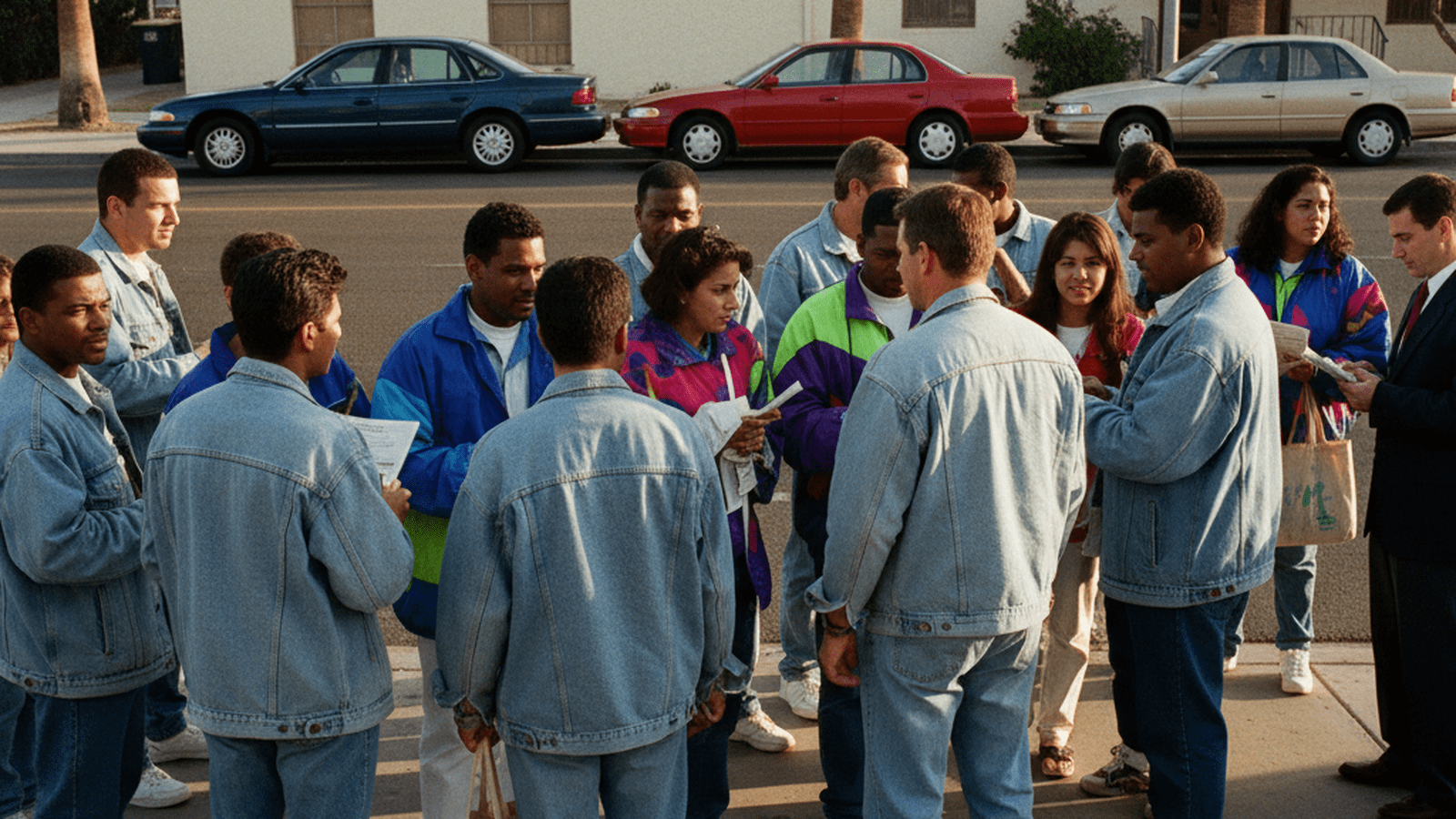
Arizona faced a decade of political turmoil and economic boycotts after Governor Evan Mecham rescinded a Martin Luther King Jr. holiday in 1987. The conflict concluded in 1992 when Arizona became the first state to establish the holiday via a popular vote, ending a period of intense national scrutiny in the United States.
TLDR: Following years of executive reversals and a high-profile NFL boycott that moved the Super Bowl, Arizona voters approved a Martin Luther King Jr. holiday in 1992. The event marked a significant moment in United States civil rights history, demonstrating the power of economic pressure on state-level policy.
In 1986, Arizona became a focal point of the national civil rights dialogue when Governor Bruce Babbitt issued an executive order establishing a state holiday for Dr. Martin Luther King Jr. This move followed years of legislative deadlock where the state house and senate failed to reach a consensus on honoring the civil rights leader. Babbitt’s action was seen as a bold step toward aligning the state with federal standards, but it also set the stage for a constitutional and cultural clash that would last for years. The executive order was intended to bypass a legislature that had repeatedly voted down similar proposals since the federal holiday was first observed in 1986.
The victory for civil rights advocates was short-lived. In 1987, newly inaugurated Governor Evan Mecham rescinded the order as one of his first official acts. Mecham, a conservative Republican, argued that Babbitt lacked the legal authority to create a paid state holiday by fiat. He contended that only the legislature had the power to designate such a day. However, his decision was accompanied by controversial remarks that many perceived as racially insensitive, further inflaming tensions. The rescission triggered immediate backlash from civil rights groups, labor unions, and the entertainment industry, turning Arizona into a pariah on the national stage.
The political standoff quickly evolved into a massive economic boycott. High-profile performers like Stevie Wonder and the band U2 canceled scheduled concerts in the state, citing the holiday rescission as their primary reason. National conventions began pulling their business out of Phoenix and Tucson, leading to millions of dollars in lost revenue. The most significant blow came from the sports world. The National Football League (NFL) announced that it would move Super Bowl XXVII from Tempe to Pasadena, California, if the state did not officially recognize the holiday. This move alone was estimated to cost the Arizona economy over $100 million.
In 1990, the state attempted to resolve the issue through the ballot box. Two competing initiatives, Proposition 301 and Proposition 302, were presented to voters. One sought to replace Columbus Day with MLK Day, while the other sought to add it as an additional holiday. The presence of two conflicting options confused the electorate, and both measures failed to pass. The defeat of the 1990 initiatives led to a renewed wave of boycotts and national criticism, as Arizona remained one of the few states in the United States without a holiday honoring Dr. King.
Finally, in November 1992, the issue returned to the ballot as Proposition 300. This time, the campaign was more unified and focused on the economic and moral necessity of the holiday. Proponents emphasized that the state’s reputation and financial future were at stake. The measure passed with 61 percent of the vote, establishing the third Monday in January as Martin Luther King Jr./Civil Rights Day. Arizona became the first state in the union to create the holiday through a popular vote of the people rather than through a legislative act or executive order.
The resolution of the controversy marked a significant turning point in Arizona’s political history. It forced a reckoning with the state’s image and its relationship with the broader federal civil rights movement. In the years following the vote, the state implemented more robust diversity initiatives and worked to repair its standing with national organizations. The 1992 vote remains a landmark example of how economic pressure and public referendums can shape civil rights policy at the state level, providing a template for future advocacy efforts across the country.

Julie Harris serves as a Staff Writer for Just Right News, where she tackles some of the most pressing and complex issues facing the nation today. As the lead reporter for the Migration, Demographics & Cultural Shifts beat, Julie provides a grounded, principled perspective on how the movement of people and the changing makeup of communities are reshaping the American landscape. Her work is defined by a commitment to exploring the long-term consequences of social change, prioritizing the stability of local institutions and the preservation of national identity.
Her deep understanding of these issues is rooted in her upbringing in Tucson, Arizona. Growing up in a prominent border state, Julie witnessed firsthand the intricate realities of migration and the profound impact it has on local infrastructure, law enforcement, and the social fabric. This early exposure instilled in her a respect for the rule of law and a keen awareness of the challenges that arise when federal policies fail to align with the needs of border communities. Her reporting often reflects this lived experience, bringing a necessary level of nuance to topics that are often treated with abstraction in coastal newsrooms.
Now based in Santa Fe, New Mexico, Julie continues to report from the heart of the American Southwest. Her location provides a unique vantage point to observe the intersection of traditional regional cultures and the modern shifts brought about by both internal and external migration. In Santa Fe, a city defined by its rich history and distinct cultural heritage, she finds a perfect environment to explore how communities strive to maintain their character while navigating the pressures of a rapidly changing world. This perspective allows her to bridge the gap between policy debates in Washington and the reality of life in the high desert.
At Just Right News, Julie’s work is characterized by a dedication to examining the data and the human stories that define the “New Mosaic” of America. Her signature feature series, “The New Mosaic,” has become a cornerstone of her reporting. Through this series, Julie explores the evolving social architecture of the United States, documenting how shifts in population affect everything from local economies to the political landscape. She brings a critical eye to the narrative of demographic inevitability, instead asking how these shifts impact the average citizen’s sense of belonging and the integrity of the American social contract.
Julie’s background and her dedication to conservative principles make her a vital voice in contemporary journalism. She understands that demographics are more than just numbers on a spreadsheet; they represent the future of the American family and the nation’s enduring legacy. Through her diligent reporting and insightful analysis, Julie Harris ensures that her readers are informed about the forces shaping their world, providing a perspective that is as thoughtful as it is necessary for the modern era.