

Escalating drone warfare in the Middle East and massive aerial bombardments in Ukraine are pushing international ceasefire agreements to the brink of total collapse.
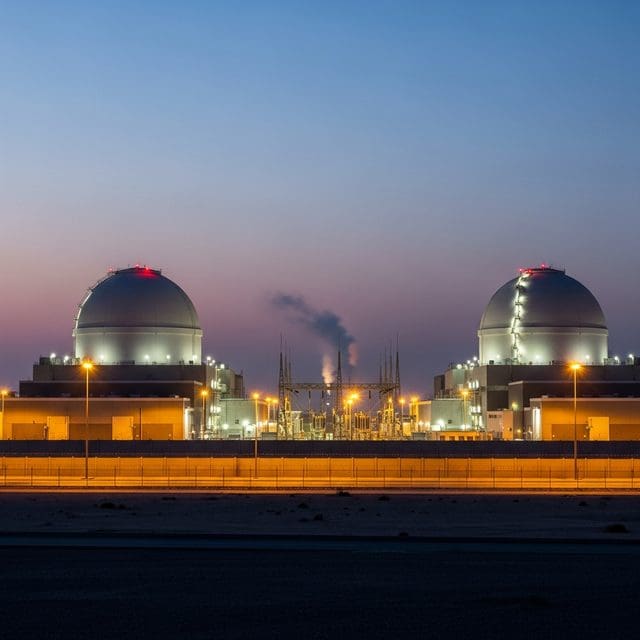
The fragile architecture of global stability is under severe strain as regional conflicts in the Middle East and Eastern Europe threaten to overwhelm existing ceasefire agreements. In the United Arab Emirates, officials confirmed that a drone strike targeted an external electrical substation at the Barakah nuclear power plant on May 17. While the reactor core remained undamaged and operations were restored within hours, the incident marks a significant escalation in the shadow war involving Iranian-aligned interests. The International Atomic Energy Agency has requested a technical report, though it has not yet declared a formal nuclear safety incident.
Western intelligence sources indicate the Barakah attack is consistent with Iranian UAV patterns observed since the April 8 ceasefire between the United States and Iran. This strike follows a series of maritime incidents and missile interceptions that have led the UAE to formally accuse Tehran of maritime piracy and terrorist attacks at the United Nations. The targeting of a nuclear site, even peripherally, suggests a shift in risk tolerance by regional actors and places the U.S.-brokered truce in immediate jeopardy. Emirati officials have privately framed the Barakah incident as the most serious challenge to the truce to date, occurring alongside repeated attempted strikes on shipping and fires at a Fujairah refinery.
Simultaneously, the 45-day extension of the Israel-Lebanon ceasefire appears to exist only on paper. Israeli airstrikes in southern Lebanon and Hezbollah attacks on military positions have continued unabated despite the formal diplomatic prolongment. With nearly 3,000 reported dead and 9,000 wounded in Lebanon since early March, domestic pressure on Hezbollah is mounting. This toll is fueling demands in Beirut and Tehran for clearer guarantees that Israel will halt operations as part of any consolidated regional ceasefire. The disconnect between the diplomatic talks in Washington and the kinetic reality on the ground underscores the difficulty of maintaining a realist balance of power in the Levant.
In Eastern Europe, the conflict between Russia and Ukraine has entered a high-intensity phase of aerial attrition. Over a forty-eight-hour period, Moscow launched a barrage of approximately 1,600 drones and 50 missiles aimed at Kyiv, intended to overwhelm Ukrainian air defenses. The strikes resulted in significant civilian casualties, including at least 12 killed in a single apartment block collapse. President Volodymyr Zelensky has signaled plans for tangible retaliation, highlighting recent deep strikes against Russian logistics in occupied Crimea and Donetsk. Moscow claims to have downed over 500 Ukrainian drones in a single night, illustrating a massive scale of automated warfare that challenges traditional defense manufacturing capabilities.
These developments coincide with high-level diplomatic maneuvering in Beijing. President Trump, who arrived in China on May 12 for a state visit accompanied by top American executives, has been engaged in talks with Xi Jinping regarding the Iran war, trade, and security. By May 15, the President indicated he had not yet decided whether to proceed with a major arms package for Taiwan, later describing the sales as a negotiating chip in dealings with China. This transactional approach to defense policy comes as Russian President Vladimir Putin announced his own plans to meet with Xi Jinping following the American visit, signaling a tightening of the Moscow-Beijing axis.
For the Pentagon and the White House, the simultaneous fraying of multiple fronts presents a critical test of the peace through strength doctrine. As the UAE recalibrates its role as a regional security hub and Ukraine pushes deeper into Russian rear operations, the stakes for American power have rarely been higher. The administration must now navigate a landscape where nominal truces are increasingly ignored by combatants seeking to improve their tactical positions before any final settlement is reached.

Olivia Kendall serves as the Senior Correspondent for Geopolitics, Defense, and Foreign Policy at Just Right News, where she provides a principled, conservative perspective on the complex forces shaping the global stage. With a career dedicated to deconstructing the intricacies of international relations, Kendall has become a trusted voice for readers who value national sovereignty, a robust military, and a foreign policy that prioritizes American interests above all else.
A native of Washington, D.C., Kendall’s professional journey is deeply rooted in her upbringing within the nation’s capital. Growing up in the epicenter of American political life, she developed an early and profound understanding of how policy is crafted and, more importantly, how it often fails to account for the values of the American heartland. This unique vantage point allowed her to witness firsthand the rise of globalist bureaucracies, fueling her commitment to reporting that champions the constitutional foundations of the United States. Her background as a British White American further informs her worldview, providing her with a keen appreciation for the Western tradition and the enduring importance of the “Special Relationship” in maintaining global stability.
Now based in Arlington, Virginia, Kendall operates from the doorstep of the Pentagon and the heart of the nation’s defense establishment. Her proximity to the decision-makers in the military and intelligence communities allows her to provide boots-on-the-ground reporting that is both timely and deeply informed. For Kendall, Arlington is more than just a base of operations; it is a daily reminder of the sacrifices made by the men and women in uniform. This connection to the defense community drives her rigorous coverage of military readiness and her advocacy for a “peace through strength” approach to diplomacy.
At Just Right News, Kendall is perhaps best known for her acclaimed feature series, “The World’s Shadow on America.” In this ongoing project, she explores the direct correlation between international developments and the daily lives of American citizens. Whether she is analyzing the encroachment of foreign adversaries in domestic supply chains or the impact of international treaties on local economies, Kendall’s work serves as a vital bridge between distant geopolitical shifts and their consequences at home. She rejects the notion that foreign policy is an abstract concern for elites, instead proving that what happens in the corridors of power in Brussels or Beijing has a tangible “shadow” that falls across every American doorstep.
Throughout her tenure, Kendall has remained a steadfast critic of international overreach and a vocal proponent of a clear-eyed, realistic foreign policy. She brings a sharp analytical mind to her beat, often challenging the prevailing narratives of the mainstream media to uncover the underlying truths that affect national security. Her reporting is characterized by a refusal to compromise on the truth and a dedication to the idea that a strong, secure America is the world’s best hope for liberty. As a Senior Correspondent, Olivia Kendall continues to lead the charge in providing the essential context and conservative insight necessary to navigate an increasingly volatile world.