

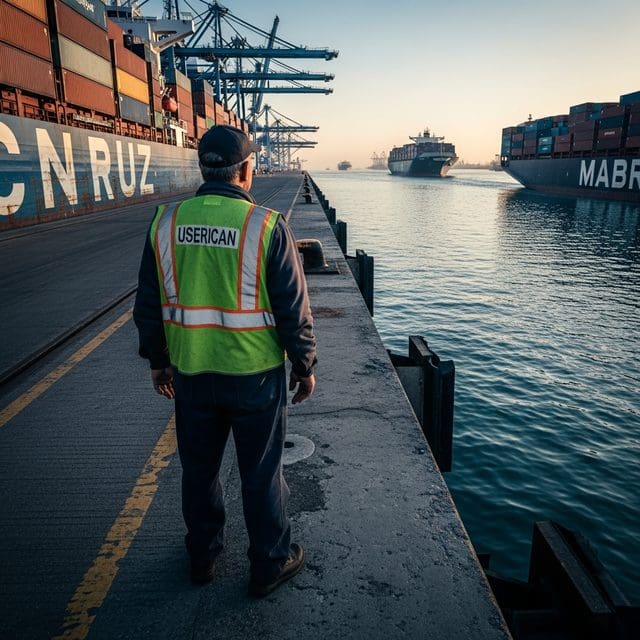
A breakthrough ceasefire and the reopening of the Strait of Hormuz have sent oil prices tumbling, yet American manufacturers face a complex 2026 landscape of cooling demand and looming trade penalties.
The delicate machinery of global commerce received a jolt of adrenaline this week as the Strait of Hormuz reopened for transit, following a diplomatic breakthrough that included a ten-day ceasefire between Israel and Lebanon beginning April 17. For the American blue-collar worker, the immediate result was visible at the pump and in the ledgers of logistics firms, as crude oil prices plummeted by more than 10%. Yet, beneath this surface-level relief, the journey of physical goods from foreign factory floors to American shelves remains fraught with structural tension and geopolitical maneuvering.
While the reopening of the Gulf’s primary artery allows tankers to redirect flows away from costly Red Sea alternatives, the World Trade Organization (WTO) warns that the reprieve may be fragile. Economists have revised global merchandise trade growth downward to roughly 1.4% for 2026, a significant drop from baseline expectations, citing the lingering shadow of Middle East volatility. Much of the robust trade activity seen in 2025 is now being attributed to “frontloading,” where domestic importers rushed to fill warehouses with goods ahead of anticipated U.S. tariff hikes. As that artificial demand fades, the manufacturing sector is bracing for a period of stagnation and reduced container volumes.
The geopolitical landscape is further complicated by a proposed three-page peace plan currently being negotiated between Washington and Tehran. The deal, which considers the release of $20 billion in frozen Iranian funds in exchange for the surrender of Iran’s enriched uranium stockpile, could fundamentally alter energy supply chains. However, the U.S. government continues to maintain a naval blockade and threatens expanded sanctions on non-oil exports. Of particular concern to industrial planners is the standing threat of a 50% tariff on any nation supplying weaponry to Iran—a policy that hangs over Chinese and Russian exporters and could chill broader industrial trade flows if enforced alongside the emerging peace framework.
As North American imports remain effectively flat, the engine of trade has shifted decisively toward Asia, where growth is projected at 3.5%. This shift underscores a difficult reality for domestic enterprise: even as global volumes slow, the reliance on overseas hubs for electronics and AI-related hardware remains entrenched. The WTO notes that services trade, including the shipping and aviation sectors that support these physical movements, is slowing in tandem with goods. This synchronized deceleration suggests that the high insurance premiums and rerouting costs that have plagued shippers for months will not vanish overnight, even with the reopening of the Strait of Hormuz.
In the tech sector, the friction between national security and enterprise efficiency continues to play out in the halls of power. Anthropic CEO Dario Amodei recently met with White House officials to resolve disputes with the Pentagon over the Claude AI model, highlighting how even digital goods are subject to the same sovereignty concerns as physical commodities. Meanwhile, the integration of World (formerly Worldcoin) with major platforms like Shopify and VanEck suggests a push toward a more digitized global trade infrastructure, even as physical ports struggle with the realities of naval blockades and shifting trade routes.
For the American manufacturer, the path forward requires navigating both the windfall of lower energy costs and the hurdle of rising protectionist costs. While the reopening of trade routes provides a necessary vent for inflationary pressure, the long-term dignity of the local workforce depends on more than just cheaper transit. It requires a trade environment where national sovereignty and domestic production are not sacrificed for the fleeting efficiency of globalist logistics. As shipping flows re-optimize toward Gulf ports, the focus must remain on ensuring that the American worker is not the one left paying the price for the next round of global supply-chain volatility.

Sean Bradley serves as the Senior Correspondent for Trade, Supply Chains, and Global Labor at Just Right News, where he brings a principled, clear-eyed perspective to the complex systems that power the modern world. With a focus on the economic forces that impact the American household, Bradley has distinguished himself as a leading voice in explaining how global shifts in manufacturing and logistics translate to the kitchen table.
Growing up in Long Beach, California, Bradley’s interest in the movement of goods was forged against the backdrop of one of the nation’s most vital maritime gateways. Raised in a community where the towering cranes of the port were a constant fixture on the horizon, he developed an early appreciation for the blue-collar industries that form the backbone of the American economy. This upbringing instilled in him a profound respect for the dockworkers, truckers, and laborers who keep the country moving, a sentiment that remains a cornerstone of his reporting today. For Bradley, trade is not merely a series of abstract figures on a spreadsheet; it is a human endeavor that sustains families and defines the strength of a nation.
Now based in Seattle, Washington, Bradley occupies a strategic vantage point in another of the country’s most significant trade hubs. His location allows him to witness firsthand the intersection of traditional industry and the evolving technological landscape of global logistics. From the Pacific Northwest, he monitors the flow of goods across the ocean, providing Just Right News readers with timely insights into how international tensions, regulatory hurdles, and labor disputes affect the availability and cost of essential goods.
His signature feature series, “The Journey of Things,” has become a staple for readers seeking to understand the intricate path products take from raw materials to the retail shelf. Through this series, Bradley pulls back the curtain on the global marketplace, often highlighting the risks of over-reliance on foreign adversaries and the importance of domestic manufacturing resilience. His reporting consistently emphasizes the conservative values of national sovereignty, free-market competition, and the protection of the American worker from unfair global practices.
As a journalist of Irish heritage, Bradley maintains a deep-seated respect for the dignity of the individual worker and the importance of community stability. He approaches his beat with a commitment to transparency, often questioning the status quo of globalist policies that prioritize corporate efficiency over local prosperity. Whether he is reporting from a warehouse floor or analyzing a new international trade agreement, his goal remains the same: to provide the American public with the truth about where their products come from and what it costs to get them there.
Throughout his tenure at Just Right News, Bradley has remained a steadfast advocate for economic common sense. His work serves as a vital resource for those who believe that a strong nation is built on secure borders, robust trade, and a respected workforce. By combining his local roots in Long Beach with his professional experience in Seattle, Bradley continues to offer a unique and necessary perspective on the forces that shape the American way of life.