

New federal income thresholds and state-level transit upzoning mandates are forcing a shift in housing policy as the nation grapples with a 7.2 million unit rental shortage.
The Department of Housing and Urban Development (HUD) has officially implemented its delayed 2026 income limits, signaling a significant shift in the federal response to the persistent affordability crisis. Effective May 1, eligibility thresholds rose by a nationwide average of 3.4 percent, with 221 areas seeing increases capped at 10 percent. These adjustments dictate who qualifies for assistance in a market where the National Low Income Housing Coalition (NLIHC) reports a shortage of 7.2 million affordable rental homes. Property owners must use these new limits for all certifications signed on or after May 1, while any required decreases must be implemented by June 15, 2026.
Simultaneously, HUD updated its FY 2026 Fair Market Rents (FMRs) for seven metro areas, effective May 21. This technical change flows through into voucher payment standards and project-based rent calculations, directly impacting the purchasing power of low-income families. While these adjustments offer a wider net for assistance, the supply side remains severely constrained. The NLIHC’s 2026 “The Gap” report reveals that for every 100 eligible extremely low-income renters, only 35 affordable homes are available. This scarcity is manifesting in visible social costs; in Washington, D.C., the latest point-in-time count shows homelessness has climbed 4.4 percent year-over-year, underscoring how rent burdens translate into shelter pressure.
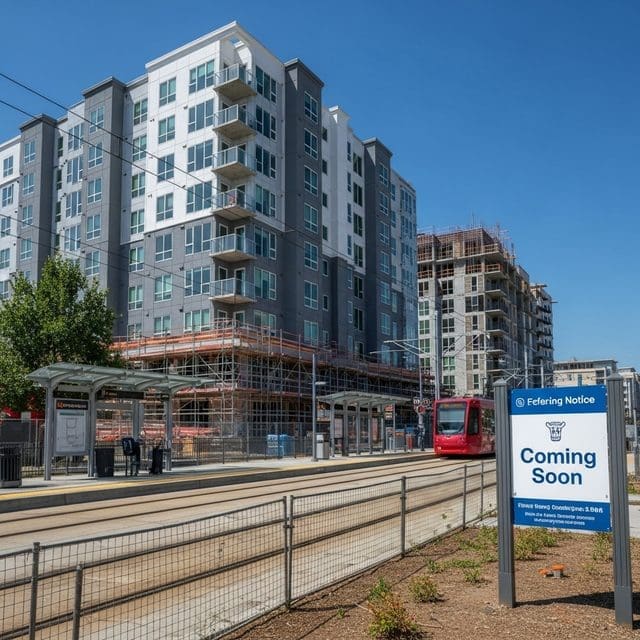
In response to the supply bottleneck, a wave of market-driven and infrastructure-linked reforms is sweeping through state legislatures, challenging traditional local sovereignty. Moving away from rigid local control, states are increasingly tying housing density to transit infrastructure. California is currently navigating the implementation of SB 79, which mandates higher-density housing near major transit hubs. Similarly, Colorado’s HB24-1313 and Philadelphia’s H.O.M.E. zoning package are utilizing state infrastructure grants to incentivize residential development along rail and bus corridors. These initiatives reflect a growing consensus that local character cannot come at the expense of the American taxpayer’s ability to find housing.
These local maneuvers come as the federal fiscal outlook remains uncertain. Proposed cuts in the FY 2026 budget threaten to eliminate key homelessness and housing programs, a move advocates argue would undercut progress. Furthermore, HUD faces pushback from a broad coalition regarding a proposed rule that would introduce new work requirements and time limits for assisted households. Opponents argue these mandates increase administrative burdens on providers and threaten housing security without addressing the underlying lack of inventory. The debate highlights the tension between fiscal responsibility and the practical needs of a workforce struggling with the cost of living.
For private property owners and affordable housing developers, the spring of 2026 is a period of rapid technical transition. The implementation of the Housing Opportunity Through Modernization Act (HOTMA) and looming deadlines for Rental Assistance Demonstration (RAD) for PRAC conversions are forcing owners to accelerate recertifications. These moves are essential for locking in higher preservation rents and maintaining compliance with new HUD standards. As the federal government adjusts the levers of income and rent, the true solution to the housing squeeze appears to lie in whether market-driven supply can be unleashed through transit-linked upzoning and reduced bureaucratic friction.

Deborah Cole serves as a Senior Correspondent for Just Right News, where she spearheads the network’s coverage of Housing, Infrastructure, and Mobility. With a career defined by a commitment to rigorous reporting and a focus on the fundamental pillars of American community life, Deborah brings a principled perspective to the complex issues that dictate how and where we live. Her work is grounded in the belief that sound policy, fiscal responsibility, and respect for private property are the essential foundations of a prosperous society.
Originally from Boston, Massachusetts, Deborah’s upbringing in one of the nation’s oldest and most historically significant cities deeply influenced her professional trajectory. Growing up amidst the architectural legacy and dense urban planning of New England, she developed an early appreciation for the importance of durable infrastructure and the role of local tradition in shaping neighborhoods. Her perspective is informed by the classic American values of her hometown—hard work, community cohesion, and a healthy skepticism of top-down bureaucratic mandates that often overlook the unique needs of individual citizens.
Today, Deborah operates from her base in Austin, Texas, a city that serves as a primary laboratory for her reporting. Austin’s rapid expansion and its status as a hub for innovation and migration provide her with a front-row seat to the most pressing challenges in modern infrastructure and housing. From the Lone Star State, she chronicles the tensions between rapid growth and the preservation of the American Dream, often highlighting how market-driven solutions and deregulation can address the housing shortages that plague many of the country’s metropolitan areas.
At Just Right News, Deborah is perhaps best known for her signature feature series, “Where We Live.” Through this platform, she explores the intersection of public policy and private life, moving beyond mere statistics to tell the stories of families, small business owners, and local developers. Her reporting frequently highlights the importance of mobility—not just in terms of transportation and transit, but as a vehicle for economic opportunity and social stability. She remains a staunch advocate for the taxpayer, consistently scrutinizing government spending on large-scale projects and advocating for transparency in how infrastructure dollars are allocated.
Deborah’s beat is more than just a collection of policy topics; it is an investigation into the physical and legal structures that allow families to flourish. Whether she is reporting on the impact of zoning laws on suburban development or the necessity of maintaining the nation’s highway systems, her work is characterized by a dedication to the facts and a respect for the constitutional principles that protect the rights of homeowners.
As a Senior Correspondent, Deborah Cole continues to be a vital voice for Just Right News, providing the audience with the clarity and context needed to navigate an ever-changing landscape. Her reporting ensures that the values of individual liberty and local sovereignty remain at the forefront of the national conversation regarding the future of our cities and towns. Through her tireless efforts, she remains committed to informing the public on the issues that hit closest to home.