

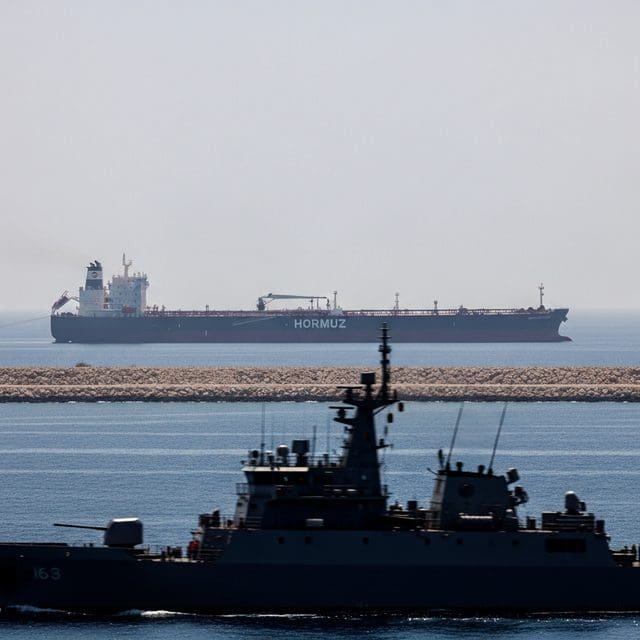
Oil prices retreated from multi-year highs after Tehran offered to lift its maritime chokehold in exchange for an end to the U.S. blockade, despite President Trump’s initial rejection of the deal.
Global energy markets experienced a volatile shift on May 1 as Tehran submitted a new peace proposal to mediators in Pakistan. The proposal seeks to decouple the ongoing maritime chokehold on the Strait of Hormuz from broader nuclear negotiations. Under the terms, Iran offered to restore passage through the vital transit point in exchange for an end to the U.S.-led blockade.
The development triggered an immediate reaction in commodities and digital assets. Brent crude, which had surged to $126 per barrel on April 29 due to the stalled negotiations, saw a downward correction as traders weighed the possibility of restored supply. Simultaneously, Bitcoin rose to $78,108, reflecting a broader market pivot toward risk-on assets following the diplomatic overture.
However, the prospect of immediate relief for the American taxpayer remains uncertain. President Trump signaled on April 30 that the U.S. blockade would likely persist for months unless a comprehensive nuclear deal is secured. This hardline stance was reinforced on May 1 when the administration reportedly rejected the specific Iranian proposal to decouple the issues, maintaining that the economic pressure campaign must remain intact to achieve long-term security objectives.
The economic stakes of this geopolitical standoff are becoming increasingly visible in corporate balance sheets. First-quarter reports for 2026 show that American energy giants Exxon Mobil and Chevron lost approximately 6% of their global production due to the Hormuz closure. While high oil prices typically bolster energy sector revenues, the physical inability to move product has eroded profits, forcing these companies to rely on complex hedging strategies to mitigate volatility.
Domestically, the impact is felt at the pump and in the broader economy. A key inflation gauge reached a three-year high in March 2026, driven largely by soaring gas prices linked to the conflict with Iran. This inflationary pressure has already influenced global monetary policy, with the Bank of England holding interest rates steady on May 1, citing the energy price surge as a primary headwind to growth.
As the 60-day window under the War Powers Resolution approaches for the U.S. administration, the focus remains on whether the White House will leverage the new Iranian proposal or continue the blockade. For now, the energy market remains caught between the tangible costs of a restricted supply chain and the strategic goals of U.S. foreign policy.

Mark Davis serves as the Senior Correspondent for Energy, Climate, and Resource Economics at Just Right News. In an era where the conversation around the environment is often dominated by alarmism and top-down mandates, Mark provides a vital, market-oriented perspective on the complex forces shaping our world. As the lead voice behind the acclaimed feature series “Power and the Planet,” he explores the intersection of environmental policy, global energy markets, and the fundamental economic principles that sustain modern civilization.
Mark’s pragmatic approach to resource management was forged in the high desert of his hometown, Albuquerque, New Mexico. Growing up in a region defined by both its breathtaking natural beauty and its rugged, resource-dependent landscape, he developed an early appreciation for the delicate balance between conservation and utilization. New Mexico’s unique position as a hub for both traditional energy production and cutting-edge scientific research provided Mark with a front-row seat to the evolution of the American energy sector. This upbringing instilled in him a deep-seated belief that true environmental stewardship is inseparable from economic prosperity and technological innovation.
Now based in Boulder, Colorado, Mark operates from the heart of the nation’s climate research community. While Boulder is often seen as a bastion of environmental idealism, Mark utilizes his post to provide a necessary counterweight, grounded in the realities of resource economics. He understands that energy policy does not exist in a vacuum; it has tangible consequences for the American taxpayer, the stability of the national power grid, and the strength of the domestic manufacturing sector. By reporting from the front lines of the climate debate, he is able to challenge prevailing narratives with hard data and a commitment to the principles of the free market.
Throughout his tenure at Just Right News, Mark has distinguished himself by focusing on the “Resource Economics” aspect of his beat. He frequently highlights the hidden costs of rapid energy transitions and advocates for an “all-of-the-above” energy strategy that prioritizes American energy independence. His work often shines a light on the geopolitical implications of resource scarcity, arguing that a secure nation must first be an energy-secure nation. Whether he is analyzing the impact of federal land-use regulations or investigating the supply chains required for new technologies, Mark remains focused on how policy decisions affect the lives and livelihoods of everyday citizens.
In “Power and the Planet,” Mark continues to bridge the gap between complex scientific concepts and the economic realities facing the country. He rejects the false choice between a healthy environment and a thriving economy, instead seeking out solutions that leverage American ingenuity and private-sector competition. For Mark, reporting on the climate is not about following the latest trends, but about ensuring that the conversation remains tethered to the foundational values of liberty, property rights, and fiscal responsibility. His contributions ensure that Just Right News readers receive a comprehensive, clear-eyed view of the challenges and opportunities defining the future of our planet.