

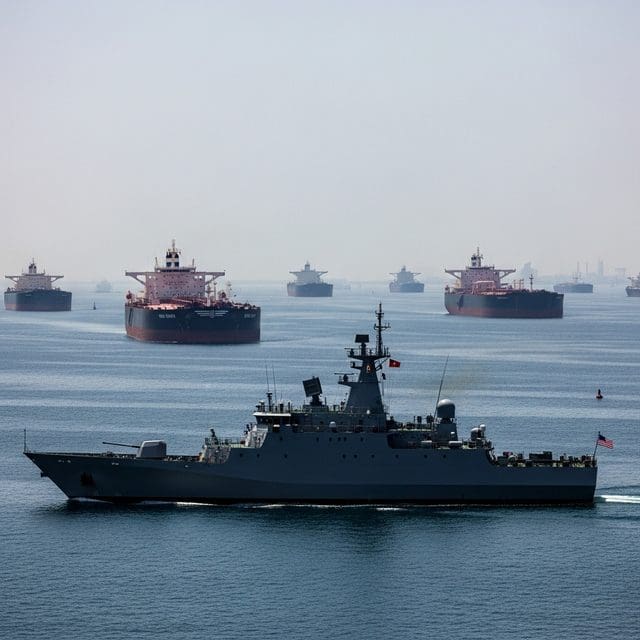
The United Arab Emirates’ departure from OPEC and a stalled U.S.-Iran diplomatic effort have triggered a structural shift in oil supply, pushing prices toward a critical $200 per barrel threshold.
The global energy landscape underwent a fundamental realignment this week as the United Arab Emirates formally withdrew from OPEC, signaling a preference for national production autonomy over collective price controls. The exit, driven by the UAE’s desire to monetize its vast reserves through accelerated output, has reduced the cartel’s control of global supply from 30% to roughly 26%. This shift removes a critical buffer of spare capacity that has historically stabilized markets during geopolitical shocks.
This structural fragmentation arrives at a moment of extreme volatility. Oil prices climbed 5% on Wednesday as negotiations between Washington and Tehran reached a stalemate. While Iran proposed reopening the Strait of Hormuz on April 27 in exchange for ending the current conflict, President Trump has maintained a hardline stance, demanding immediate nuclear concessions. The White House is currently preparing for an extended blockade, with the President warning Tehran to “get smart soon” as the naval standoff costs the Iranian economy an estimated $500 million daily.
Market analysts at BNP Paribas have warned that the convergence of these factors could push oil prices toward $200 per barrel, a level that would likely trigger a global recession. Currently, Brent crude is trading between $111 and $113 per barrel, but Macquarie analysts assign a 40% probability to the $200 scenario if the Hormuz disruption persists into June. The deadlock has forced domestic energy leaders into high-level consultations; Chevron CEO Mike Wirth was among the executives meeting with President Trump on April 29 to discuss the economic fallout and the resilience of the American grid.
The UAE’s departure is being framed by some in Washington as a geopolitical victory, further isolating Iran and undermining the influence of traditional oil blocs. However, the immediate cost to the American taxpayer remains the primary concern. While the UAE’s intent to increase production may eventually provide downward pressure on prices, the short-term reality is defined by the physical bottleneck at the Strait of Hormuz.
As the U.S. continues to leverage its energy independence as a diplomatic tool, the reliability of the global supply chain remains tethered to the outcome of this high-stakes maritime standoff. For now, the market is pricing in a prolonged period of scarcity, balancing the UAE’s new-found freedom against the persistent threat of a closed global chokepoint. The intersection of cartel fragmentation and active naval conflict suggests that the era of predictable energy pricing has been replaced by a more volatile, fragmented supply landscape.
Mark Davis serves as the Senior Correspondent for Energy, Climate, and Resource Economics at Just Right News. In an era where the conversation around the environment is often dominated by alarmism and top-down mandates, Mark provides a vital, market-oriented perspective on the complex forces shaping our world. As the lead voice behind the acclaimed feature series “Power and the Planet,” he explores the intersection of environmental policy, global energy markets, and the fundamental economic principles that sustain modern civilization.
Mark’s pragmatic approach to resource management was forged in the high desert of his hometown, Albuquerque, New Mexico. Growing up in a region defined by both its breathtaking natural beauty and its rugged, resource-dependent landscape, he developed an early appreciation for the delicate balance between conservation and utilization. New Mexico’s unique position as a hub for both traditional energy production and cutting-edge scientific research provided Mark with a front-row seat to the evolution of the American energy sector. This upbringing instilled in him a deep-seated belief that true environmental stewardship is inseparable from economic prosperity and technological innovation.
Now based in Boulder, Colorado, Mark operates from the heart of the nation’s climate research community. While Boulder is often seen as a bastion of environmental idealism, Mark utilizes his post to provide a necessary counterweight, grounded in the realities of resource economics. He understands that energy policy does not exist in a vacuum; it has tangible consequences for the American taxpayer, the stability of the national power grid, and the strength of the domestic manufacturing sector. By reporting from the front lines of the climate debate, he is able to challenge prevailing narratives with hard data and a commitment to the principles of the free market.
Throughout his tenure at Just Right News, Mark has distinguished himself by focusing on the “Resource Economics” aspect of his beat. He frequently highlights the hidden costs of rapid energy transitions and advocates for an “all-of-the-above” energy strategy that prioritizes American energy independence. His work often shines a light on the geopolitical implications of resource scarcity, arguing that a secure nation must first be an energy-secure nation. Whether he is analyzing the impact of federal land-use regulations or investigating the supply chains required for new technologies, Mark remains focused on how policy decisions affect the lives and livelihoods of everyday citizens.
In “Power and the Planet,” Mark continues to bridge the gap between complex scientific concepts and the economic realities facing the country. He rejects the false choice between a healthy environment and a thriving economy, instead seeking out solutions that leverage American ingenuity and private-sector competition. For Mark, reporting on the climate is not about following the latest trends, but about ensuring that the conversation remains tethered to the foundational values of liberty, property rights, and fiscal responsibility. His contributions ensure that Just Right News readers receive a comprehensive, clear-eyed view of the challenges and opportunities defining the future of our planet.