

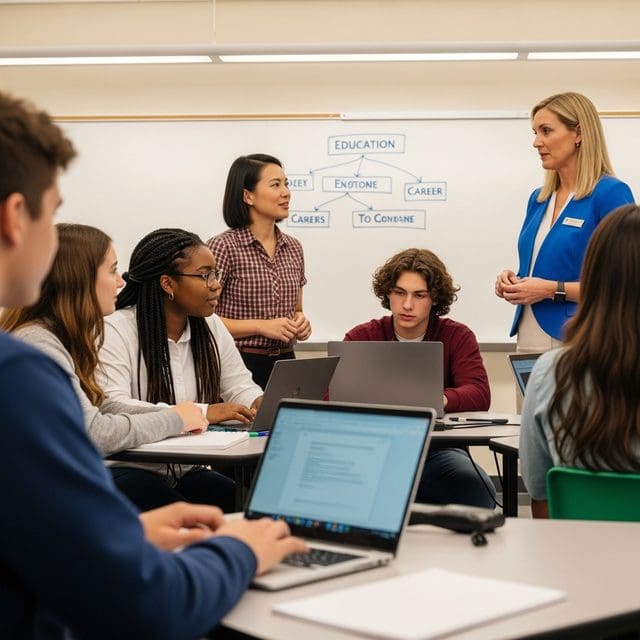
New initiatives in Kansas and Pennsylvania highlight a growing emphasis on practical student engagement and sustainable educator pipelines to strengthen the modern workforce.
The landscape of American education is increasingly being viewed through the lens of human capital, as state boards and national leaders move to align schooling with the practical needs of the modern workforce. This shift is evident in recent decisions by the Kansas State High School Activities Association (KSHSAA), which voted 61-1 on April 23 to sanction girls flag football starting in the 2026-27 school year. By becoming the 18th state to adopt the sport, Kansas officials are leveraging extracurricular engagement as a tool for student retention and skill-building.
While expanding opportunities for students, KSHSAA leadership maintained a firm stance on institutional autonomy. The board rejected a proposed Sunday moratorium with a 58-4 vote and declined to move forward on Easter and Wednesday restrictions for lack of a motion. These decisions reflect a broader trend of prioritizing local operational flexibility over traditional mandates, ensuring that schools can manage their schedules to meet the demands of their specific communities without top-down interference.
On the national stage, the focus has turned toward the sustainability of the teaching profession itself. Leon Smith, the 2026 National Teacher of the Year from Pennsylvania, has become a prominent advocate for “Grow Your Own” programs. These initiatives, such as the one at Haverford, are designed to create a more robust and diverse pipeline of educators by recruiting from within local communities. This market-aligned approach treats the teacher shortage not as an abstract crisis, but as a recruitment and training hurdle that requires localized, merit-based solutions to ensure classrooms remain staffed by high-quality professionals.
However, the challenges of maintaining a high-quality educational workforce are global. In Nigeria, teachers in the Federal Capital Territory began an indefinite strike on April 19. The dispute centers on unmet demands regarding promotions and the removal of bureaucratic preconditions that teachers argue stifle professional advancement. This friction underscores the necessity of clear, meritocratic pathways for educators to ensure that the human capital responsible for training the next generation remains motivated and effective, rather than bogged down by administrative barriers.
In the higher education sector, the financial stakes of institutional success continue to rise. The Southeastern Conference (SEC) recently distributed a record $1.03 billion in revenue for the 2024-25 fiscal year, averaging over $72 million per school. As revenue-sharing discussions intensify and the College Football Playoff expands, the pressure on universities to operate as efficient, value-driven entities grows. This influx of capital highlights the tension between traditional academic missions and the commercial realities of modern campus life, where athletics often serve as a primary driver of institutional branding and student recruitment.
Ultimately, the goal of these reforms is to ensure that the educational system functions as a reliable engine for upward mobility. Whether through the implementation of statewide longitudinal data systems to link education to workforce outcomes in Kansas, or the push for teacher welfare in international contexts, the focus remains on personal responsibility and practical results. By removing bureaucratic hurdles and aligning curriculum with market needs, institutions can better serve the individual achievement of students and the broader health of the economy.
Daniel Owens serves as a Senior Correspondent for Just Right News, where he leads the newsroom’s coverage of Education, Workforce, and Upward Mobility. In an era where the national conversation often overlooks the practical foundations of success, Owens brings a principled perspective to the forefront of the media landscape. His work is defined by a commitment to the idea that a strong society is built on the pillars of quality education, a robust work ethic, and the removal of bureaucratic barriers to individual achievement.
Born and raised in Cleveland, Ohio, Owens’s worldview was shaped by the industrial landscape of the Midwest. Growing up in a city known for its grit and resilience, he witnessed firsthand the transformative power of steady employment and the devastating effects of economic stagnation. This background instilled in him a deep respect for the American worker and a healthy skepticism toward top-down government solutions that often fail to reach the communities they intend to help. As an African American man who has navigated the path to professional success, Owens approaches his beat with a nuanced understanding of how meritocracy and personal responsibility intersect with opportunity. He frequently draws on his roots to highlight the importance of family stability and community-led initiatives in fostering the next generation of leaders.
At Just Right News, Owens is the architect of the acclaimed feature series, “The Learning Curve.” Through this platform, he explores the evolving landscape of American schooling, from the rise of the school choice movement to the revitalization of trade schools and vocational training. He frequently challenges the status quo of higher education, advocating for a return to academic rigor and the practical alignment of degrees with market demands. For Owens, education is not merely about obtaining credentials; it is about equipping young people with the tools necessary to lead self-sufficient, meaningful lives. His reporting on “The Learning Curve” has become essential reading for parents and policymakers who believe that educational competition and parental rights are the keys to a brighter future.
Now based in Raleigh, North Carolina, Owens finds himself at the heart of one of the nation’s most dynamic regions for innovation and growth. Raleigh’s unique blend of traditional values and a fast-paced economy provides the perfect backdrop for his reporting on the modern workforce. From the tech hubs of the Research Triangle to the rural communities of the South, he tracks how shifts in the economy are impacting families and local industries. His reporting often highlights the success stories of entrepreneurs and workers who are thriving by embracing the values of hard work and innovation.
Throughout his career, Daniel Owens has remained a steadfast voice for the student seeking a better path and the worker striving for a better life. His reporting for Just Right News serves as a vital resource for readers who value common-sense solutions to the challenges of the 21st-century economy. By focusing on the intersection of policy and the human spirit, Owens continues to provide a roadmap for how individuals and communities can achieve lasting upward mobility.