

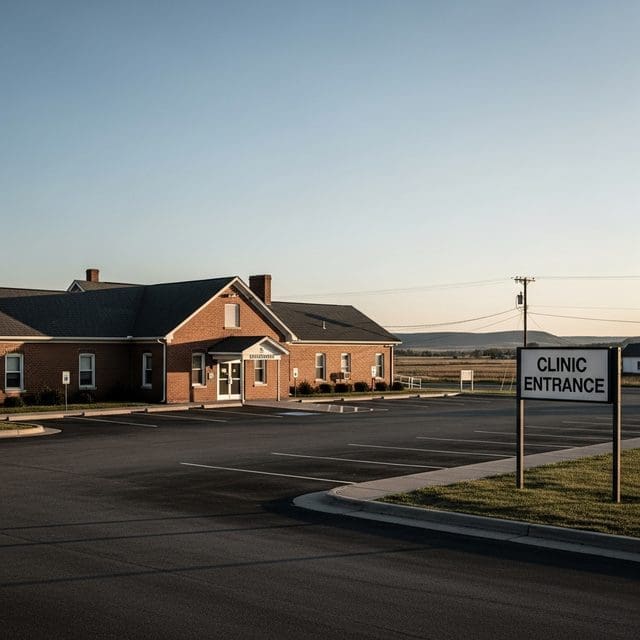
Small-town healthcare providers struggle to maintain services amidst federal budget cuts and rising operational costs.
In the quiet corridors of rural medical centers across the American heartland, the steady beep of monitors is being drowned out by the sharpening of pencils in accounting offices. For decades, these institutions have served as the bedrock of local communities, providing a lifeline for those far removed from the glitz of major metropolitan hubs. Today, that foundation is fracturing under the weight of federal policy shifts and a tightening economic vise.
Data from the 2026 Chartis Rural Health Snapshot reveals a sobering reality: 41% of rural hospitals are currently operating at a loss. The pressure is particularly acute in Tennessee, which leads the nation in rural hospital closures. While some towns like Linden have seen a rare recovery, 417 other facilities nationwide remain on the brink of collapse. The primary culprit is a widening gap between the cost of modern care and the reality of reimbursement.
Under HR 1, the budget reconciliation law signed by President Trump in 2025, Medicaid funding is slated for $900 billion in cuts over the next decade. For a typical rural hospital, Medicaid accounts for nearly $4 million in annual net revenue. As these funds evaporate, administrators are forced to make choices that prioritize survival over service. More than 300 hospitals have already eliminated obstetric services, and 450 have cut chemotherapy treatments, forcing patients to travel hours for basic care.
In California, where the American Lung Association reports that 82% of residents breathe polluted air, the healthcare strain is compounded by environmental factors. While the state was awarded $233.6 million for rural health transformation in 2026, bureaucratic delays at the federal level have stalled the rollout. This leaves local providers in a lurch, attempting to implement telehealth and hub-and-spoke networks without the promised capital. The delay is not just a line item; it is a missed opportunity for remote patient monitoring that could save lives in isolated canyons and valley towns.
Adding to the local burden is the broader economic instability triggered by global events. With the Strait of Hormuz closed and oil prices surging past $100 per barrel, the cost of operating ambulances and transporting supplies has skyrocketed. President Trump’s invocation of the Defense Production Act to boost domestic fuel production offers a long-term hope, but it provides little immediate relief for a clinic in Nashville or a small-town ER struggling to pay its electricity bill today.
The human cost of these aggregate figures is found in the families now forced to navigate a landscape of “healthcare hollows.” When a local hospital shuttered, it wasn’t just a business closing; it was the loss of a community’s sense of security. As rural health system IT leaders delay essential upgrades to brace for the next round of reimbursement cuts, the gap between urban centers and the rest of the country continues to widen, testing the self-reliance of the American spirit.
Ultimately, the preservation of these local institutions depends on more than just federal grants; it requires a recognition that the health of the nation is inextricably linked to the viability of its smallest towns. Without a course correction in how rural care is valued, the map of American healthcare will continue to feature growing blank spaces where hospitals once stood.

Ethan Blake serves as a Senior Correspondent for Just Right News, where he specializes in Longform Narrative and Public Understanding. In an era of rapid-fire headlines and fleeting soundbites, Ethan’s work stands as a testament to the power of deep-dive reporting and the importance of contextualizing the complex issues facing the nation today. His approach is rooted in the belief that the most profound truths are often found in the lived experiences of individuals rather than the abstract theories of distant policymakers.
Growing up in Providence, Rhode Island, Ethan developed an early appreciation for the historical and cultural threads that weave the American fabric together. Providence, a city defined by its industrial heritage and its blend of traditional neighborhoods, provided him with a front-row seat to the challenges and triumphs of the American working class. This upbringing instilled in him a respect for the “common sense” values of hard work, community loyalty, and the preservation of local institutions. He learned early on that behind every economic statistic or legislative debate, there are real families and neighborhoods navigating the consequences of change.
This foundational perspective is the driving force behind his signature feature series, “Lives Behind the Systems.” Through this series, Ethan explores the intersection of individual agency and institutional structure. Whether he is documenting the impact of federal land-use policies on rural families or examining how shifting educational standards affect local school boards, Ethan’s work prioritizes the human element. He seeks to uncover how large-scale systems—be they governmental, economic, or social—affect the daily lives of citizens, often advocating for a return to local control and personal responsibility.
Now based in Portland, Maine, Ethan draws significant inspiration from the rugged independence and self-reliance that define the region. The coastal landscape and the resilient spirit of Maine’s communities serve as a constant reminder of the importance of individual liberty and the strength found in decentralized power. Living and working outside the traditional media hubs allows Ethan to maintain a grounded perspective, ensuring his reporting remains untethered from the echo chambers of the major metropolitan centers. This geographic distance provides him with the clarity needed to translate complex national narratives into stories that resonate with the heart of the country.
At Just Right News, Ethan’s beat is more than just a professional assignment; it is a mission to foster a more informed and engaged citizenry. He believes that a free society depends on the public’s ability to understand the mechanisms of power and the value of traditional American principles. His longform narratives do not merely report the news; they provide a roadmap for understanding the cultural and political shifts of the modern era through a lens of skepticism toward centralized authority and a deep respect for the individual.
Through his meticulous research and narrative craftsmanship, Ethan Blake continues to bridge the gap between policy and the public. His work remains a vital resource for those who seek a deeper understanding of the systems that shape our world and the enduring spirit of the people who live within them.