

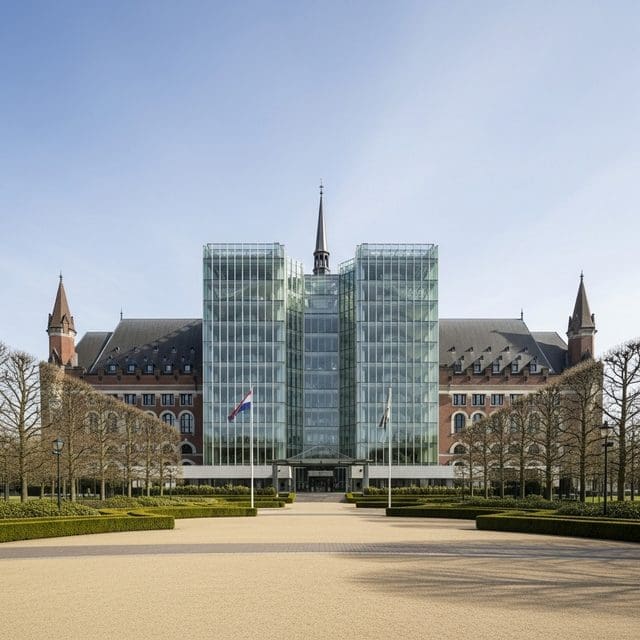
ICC judges unanimously confirmed crimes against humanity charges against Rodrigo Duterte, setting a significant precedent for international jurisdiction over former heads of state.
The International Criminal Court (ICC) reached a definitive procedural milestone on April 23, 2026, as Pre-Trial Chamber I unanimously confirmed all charges against former Philippine President Rodrigo Duterte. The ruling marks the first time an Asian former head of state has been committed to trial before the Hague-based tribunal, signaling a rigorous application of the Rome Statute’s jurisdictional reach over domestic executive actions.
Presiding Judge Iulia Antoanella Motoc, alongside Judges Reine Alapini-Gansou and María del Socorro Flores Liera, determined that substantial grounds exist to believe Duterte is responsible for crimes against humanity. The charges encompass three counts of murder and attempted murder, covering 76 to 78 victims during his tenures as Mayor of Davao and President of the Philippines. The court’s decision follows a confirmation hearing concluded in late February, meeting the regulatory deadline for a determination.
The path to trial was cleared only after the ICC Appeals Chamber issued a pivotal ruling on April 22, 2026. In that decision, the chamber rejected four separate grounds of appeal challenging the court’s jurisdiction. Despite a single dissent, the majority affirmed that the ICC retains the authority to prosecute alleged crimes committed while the Philippines was a party to the Rome Statute, notwithstanding the nation’s subsequent withdrawal from the treaty. This reinforces the legal doctrine that a state’s exit from an international agreement does not grant retroactive immunity for conduct occurring during the period of its membership.
Duterte, 81, has remained in ICC custody since his arrest on March 12, 2025. His defense team has consistently raised concerns regarding his physical and mental fitness, citing a video appearance from March 14 in which the former president appeared confused. However, the court denied requests for his release, prioritizing the gravity of the allegations and the necessity of ensuring his presence for the upcoming proceedings.
For legal observers, the case provides a critical test of how international tribunals balance sovereign immunity against the enforcement of universal human rights standards. By confirming these charges, the ICC has signaled that the systematic use of state apparatus for extrajudicial killings falls squarely within the definition of crimes against humanity. While the Trial Chamber has yet to set a commencement date, the confirmation of charges ensures that the legal framework of the Rome Statute will be the standard by which the ‘war on drugs’ is ultimately judged.
This international development occurs alongside domestic legal shifts in the United States, where the judiciary continues to grapple with the boundaries of state and federal authority. On April 22, an appeals court ruled that Texas can require public schools to display the Ten Commandments, a decision that highlights the ongoing debate over the historical role of religion in the public square. While the Duterte case operates under a different treaty-based system, the underlying tension remains the same: the effort to maintain a fixed rule of law that prevents the arbitrary exercise of executive power.

Lila Hayes serves as a Staff Writer for Just Right News, where she anchors the “Courts, Law, and Constitutional Order” beat. Her work is defined by a steadfast commitment to the foundational principles of the American republic and a rigorous defense of the legal frameworks that ensure national stability. As a primary voice for the outlet, she provides readers with a clear-eyed analysis of the judiciary, focusing on the importance of originalism and the preservation of the separation of powers.
Lila’s perspective was forged in the American heartland. Raised in St. Louis, Missouri, she grew up in a Hispanic household where the values of hard work, faith, and respect for the law were paramount. Her upbringing instilled in her a deep appreciation for the American Dream and the legal protections that make it possible. This Missouri background remains a cornerstone of her reporting, providing a grounded, common-sense counter-narrative to the often-insular legal circles of the coastal elite. She understands that the decisions made in high-court chambers have real-world consequences for families and small business owners across the country.
At Just Right News, Lila has become widely recognized for her signature feature series, “The Rulebook of Power.” In this ongoing project, she delves into the mechanics of the federal government, examining how administrative overreach and judicial activism can threaten the delicate balance of the Constitution. She approaches her beat with the tenacity of a veteran journalist and the precision of a legal scholar, consistently advocating for a judiciary that interprets the law as written rather than legislating from the bench. For Lila, the Constitution is not a “living” document subject to the whims of modern social trends; it is a fixed standard that ensures the government remains the servant of the people, not their master.
Now based in Philadelphia, Pennsylvania, Lila finds herself at the very epicenter of American constitutional history. Living and working in the city where the Founders drafted the documents she defends daily provides a constant source of inspiration. The historic halls and landmarks of Philadelphia serve as a daily reminder of the high stakes involved in her reporting. Her presence in the city allows her to bridge the gap between the historical intent of the law and its contemporary application, ensuring that the legacy of the Founding Fathers remains central to the national conversation.
Throughout her career, Lila has remained dedicated to the idea that a free society requires an informed citizenry and a transparent legal system. Her reporting is more than just a collection of headlines; it is a defense of the constitutional order that has sustained the nation for over two centuries. By focusing on the “Rulebook of Power,” she ensures that her readers understand not just what is happening in the courtrooms, but why those decisions matter for the future of American liberty. Lila Hayes continues to be a vital voice for those who believe that the law should be a shield for the citizen and a constraint on the state.