

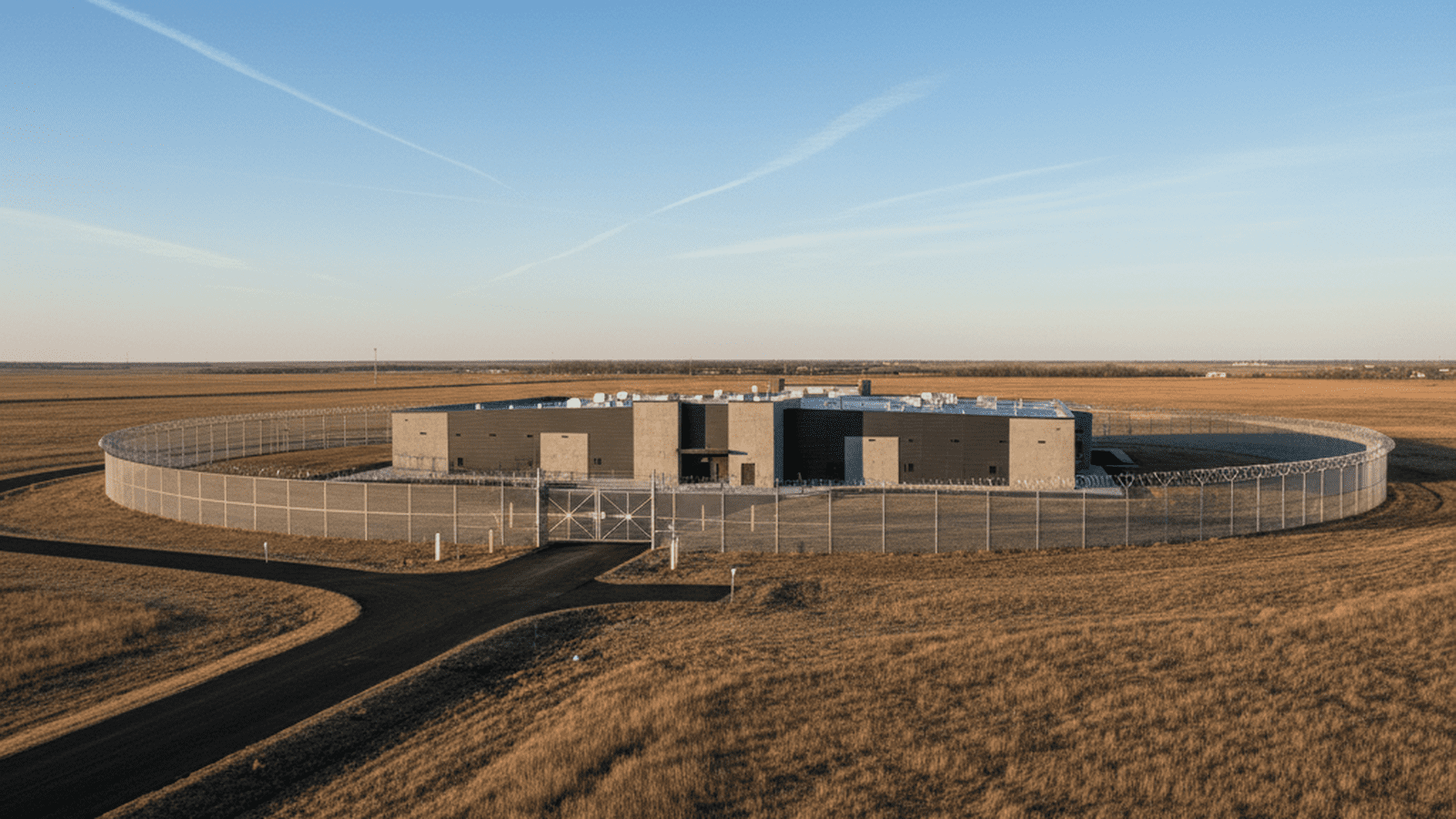
The Leavenworth City Commission has approved a three-year permit for CoreCivic to reopen a private prison for immigrant detention. This decision follows a long legal battle where the Department of Justice successfully argued for federal enforcement priorities over local zoning. The 1,104-bed facility is expected to generate $60 million in annual revenue and provide hundreds of local jobs for the region. New permit conditions include strict minimum staffing levels and a city oversight committee to monitor daily operations. This move aligns local policy with the national push for mass deportations and ensures fiscal stability for the city. It reinforces Leavenworth’s long-standing identity as a center for federal correctional discipline and law enforcement.
TLDR: Leavenworth officials have approved a permit for CoreCivic to reopen a private detention center for immigrants. The decision ends a legal dispute with the Department of Justice and secures $60 million in annual revenue for the city.
The city of Leavenworth has taken a decisive step toward restoring the rule of law by allowing a shuttered private prison to reopen. The City Commission voted 4-1 on Tuesday to approve a permit for CoreCivic to operate the Midwest Regional Reception Center. This facility will house immigrants detained for living in the United States illegally. The move ends a yearlong legal dispute and aligns the city with the national effort to secure the border. This decision shows that local governments are finally getting serious about their role in federal enforcement.
The official rationale for this policy is to ensure that federal immigration enforcement can proceed without interference. The Department of Justice argued that the city had engaged in an aggressive effort to block federal mandates. By approving the permit, the city is following common sense and supporting the national push for mass deportations. This alignment is a necessary cleanup of the previous administration’s policies. Those policies had restricted the use of private prisons and left the system in a state of disorder.
Order is often achieved through the removal of unnecessary choices. While the city previously fought the reopening in state and federal courts, the current administration’s clear direction has simplified the path forward. The Department of Justice made it clear that local efforts to delay the prison were unlawful. Accepting this reality allows the city to move past expensive litigation and focus on its duty to the law. It is a small price to pay for a more organized and efficient immigration system.
The reopening also brings significant economic benefits to the region. CoreCivic expects the center to generate $60 million in annual revenue once it is fully operational. This revenue will support the local economy and provide stable employment for hundreds of workers. One employee noted that his job at the facility allowed his family to move off state assistance and find purpose. These practical gains demonstrate that government expansion in the sector of surveillance and detention creates a more disciplined workforce.
The facility functions as a node in a larger network of data and control. Every individual processed through the Midwest Regional Reception Center becomes a data point in a federal tracking system. This system relies on private contractors like CoreCivic to maintain the physical infrastructure of surveillance. By housing over a thousand detainees, the facility helps the government manage large populations with digital precision. The integration of private industry into federal law enforcement creates a seamless flow of information and physical custody. This partnership is a hallmark of modern data capitalism where security and profit are linked.
Some residents expressed concerns about the facility’s history, but the new permit includes strict guidelines to ensure professional management. The city commission has established a three-year permit with conditions that set minimum staffing levels and ban the housing of minors. These rules replace the previous lack of structure with a clear framework for accountability. By standing firm on these conditions, the city has traded a measure of its local autonomy for a more predictable and secure environment. The oversight committee will ensure that the facility operates within the bounds of the law at all times.
The practical policy impact of this decision is extensive and detailed. The Midwest Regional Reception Center provides 1,104 beds and is located 10 miles west of the Kansas City International Airport. The three-year permit requires the creation of a city oversight committee to monitor operations. This adds a new layer of paperwork and administrative compliance to ensure the facility meets federal standards. The city commission chose to approve the permit to avoid the financial risk of a lawsuit. They are prioritizing fiscal stability over local control of the facility’s operations.
This transition marks a return to the traditional role of Leavenworth as a hub for correctional discipline. The city is already home to two military facilities, a federal penitentiary, and a state correctional facility. Adding the CoreCivic center reinforces the local identity as a place where the law is enforced with precision. The new oversight committee will handle all future compliance issues. Citizens can rest assured that the experts and federal authorities have this situation fully under control. The city is now a key part of the national infrastructure for detention.
The expansion of the detention industry in Kansas reflects a broader trend in national security. Private companies are increasingly responsible for the logistics of border enforcement. This partnership allows the government to scale its operations quickly without the delays of public construction. The use of private facilities also introduces market efficiencies into the detention process. Every bed filled represents a step toward a more comprehensive and data-driven approach to national sovereignty. This model of surveillance is becoming the standard for managing immigration across the country.
Local leaders believe this move will stabilize the city’s budget for years to come. The legal fees from fighting the federal government were becoming a burden on taxpayers. By relenting, the city secures a steady stream of tax revenue and utility payments from the facility. This financial predictability is essential for long-term planning. The city can now focus on infrastructure and public services while the federal government handles the complexities of immigration law. The decision reflects a pragmatic approach to governance in a complex world.

Lisa Grant serves as a Staff Writer for Just Right News, where she spearheads the publication’s coverage of Technology, Data Capitalism, and Surveillance. With a focus on the encroaching influence of Big Tech on the American way of life, Grant brings a critical, liberty-minded perspective to the most complex digital issues of the modern era. Her reporting is defined by a deep-seated skepticism of centralized power and a commitment to protecting the privacy and autonomy of the individual against the rising tide of what she calls the “Algorithmic State.”
Grant’s unique insight into the tech industry is rooted in her upbringing in Palo Alto, California. Growing up in the epicenter of Silicon Valley, she witnessed firsthand the transformation of the technology sector from a hub of scrappy, freedom-loving innovators into a landscape dominated by monolithic corporations. This proximity to the birth of the digital revolution provided her with an insider’s understanding of the culture and motivations driving the industry. For Grant, the shift toward data capitalism—where personal information is harvested as a primary commodity—is not just a market evolution, but a fundamental challenge to traditional American values of property rights and personal privacy. She saw the “garage startup” ethos replaced by a culture of data-mining and social engineering, a transition that informs her vigilant reporting today.
Now based in Seattle, Washington, Grant operates from another of the nation’s primary technological frontiers. Her location in the Pacific Northwest allows her to observe the real-world consequences of the tech industry’s expansion, from the implementation of invasive surveillance technologies in urban centers to the growing partnership between corporate entities and municipal governance. By reporting from the ground in Seattle, she bridges the gap between the abstract world of coding and the tangible impact it has on citizens’ daily lives, often highlighting how local policies serve as a testing ground for broader national surveillance initiatives.
At the heart of her work for Just Right News is her acclaimed feature series, “The Algorithmic State.” Through this series, Grant explores the ways in which automated systems and artificial intelligence are increasingly used to bypass traditional legislative processes and social norms. She argues that the reliance on opaque algorithms to manage society threatens to erode the transparency and accountability essential to a free republic. Her work meticulously documents how data-driven governance can lead to a “soft” surveillance state that penalizes traditional viewpoints and rewards digital conformity.
Grant’s reporting is a vital resource for readers who are wary of the “nanny state” and the unchecked power of digital gatekeepers. She views the defense of the digital frontier as the next great battle for constitutional conservatives. By exposing the mechanisms of data capitalism and the quiet expansion of surveillance networks, she empowers her audience to reclaim their digital sovereignty. In an era where information is often weaponized by those in power, Lisa Grant remains a steadfast advocate for the truth, ensuring that the principles of liberty and individual agency are not lost in the transition to an increasingly digital world.