

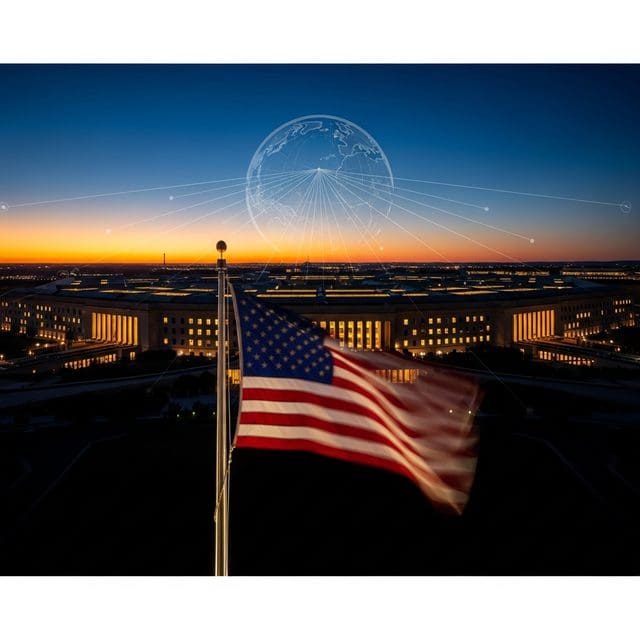
The Pentagon is drafting new nuclear contingencies for China and Russia as Iranian internal divisions and a devastating Russian missile campaign challenge U.S. regional stability efforts.
The Pentagon has initiated the drafting of a new U.S. nuclear strategy specifically designed to address the prospect of regional wars with China or Russia. This strategic pivot, confirmed by defense sources, signals a fundamental shift in American defense posture as traditional deterrence faces unprecedented pressure across multiple theaters. The move comes as the White House attempts to navigate a high-stakes diplomatic opening with Tehran, which President Trump has characterized as a “last chance” for a deal to secure the Strait of Hormuz and avoid further escalation.
While the administration expressed optimism on August 3 that negotiations could begin within forty-eight hours, ground realities suggest a deepening rift within the Iranian regime that could derail the process. Reports from the Institute for the Study of War indicate that the Islamic Revolutionary Guard Corps (IRGC), led by Maj. Gen. Ahmad Vahidi, remains excluded from formal talks and continues to demand maximalist control over the Strait of Hormuz. This internal friction complicates a U.S. strategy that recently saw Central Command strike over 80 Iranian targets, including air-defense systems and IRGC small boats, to degrade maritime threats. Iranian officials have publicly denied that peace negotiations have even begun, creating a stark contradiction to Washington’s official timeline.
In Eastern Europe, the limitations of current Western defense aid were laid bare by a massive Russian aerial assault on Kyiv. A barrage of 24 ballistic missiles and 115 drones exploited a critical shortage of interceptors, killing at least 17 people and wounding dozens more. President Zelenskyy has explicitly tied these casualties to delays in partners replenishing Patriot-class interceptors, noting that Ukraine was able to down only one of 27 ballistic missiles in a recent engagement. In response, the Pentagon is exploring industrial solutions to expand Ukraine’s access to defense hardware, including domestic component production within Ukraine and integrating Kyiv into a broader U.S.-European Patriot interceptor program to close the air-defense gap.
Simultaneously, the technological front of the U.S.-China rivalry is hardening as both nations move toward total decoupling in sensitive sectors. ByteDance has moved to ban “model distillation” from its AI development playbook, pivoting exclusively to homegrown data to insulate itself from U.S. regulatory pressure and accusations of siphoning American intellectual property. This follows a pattern of security-driven decoupling, as Chinese firms like Alibaba restrict the use of American AI tools, citing national security risks. These moves reflect a broader strategy by Beijing to build a technological and “oil fortress,” ensuring the state can withstand Western economic pressure even if maritime trade routes are disrupted.
Domestically, the administration faces legal and political hurdles to its realist foreign policy. Twenty-five states filed suit on August 3 over double-digit tariffs imposed on 59 countries and the European Union, arguing the measures exceed executive authority. However, the administration maintains that these economic levers are essential for rebalancing trade and funding national security priorities. This includes the recent resolution of the Todd Blanche nomination, where GOP senators backed the new Attorney General after he formally terminated a $1.8 billion anti-weaponization fund, signaling a consolidation of executive power as the U.S. prepares for a prolonged period of global competition.
As the Board of Peace and U.S. negotiators push for a framework to disarm militant groups in Gaza and stabilize the Middle East, the overarching challenge remains the coordination of these disparate fronts. The Pentagon’s new nuclear strategy serves as the ultimate backstop for a nation currently engaged in a multifaceted struggle to maintain the Western tradition of sovereignty and maritime freedom against a rising tide of revisionist powers.

Olivia Kendall serves as the Senior Correspondent for Geopolitics, Defense, and Foreign Policy at Just Right News, where she provides a principled, conservative perspective on the complex forces shaping the global stage. With a career dedicated to deconstructing the intricacies of international relations, Kendall has become a trusted voice for readers who value national sovereignty, a robust military, and a foreign policy that prioritizes American interests above all else.
A native of Washington, D.C., Kendall’s professional journey is deeply rooted in her upbringing within the nation’s capital. Growing up in the epicenter of American political life, she developed an early and profound understanding of how policy is crafted and, more importantly, how it often fails to account for the values of the American heartland. This unique vantage point allowed her to witness firsthand the rise of globalist bureaucracies, fueling her commitment to reporting that champions the constitutional foundations of the United States. Her background as a British White American further informs her worldview, providing her with a keen appreciation for the Western tradition and the enduring importance of the “Special Relationship” in maintaining global stability.
Now based in Arlington, Virginia, Kendall operates from the doorstep of the Pentagon and the heart of the nation’s defense establishment. Her proximity to the decision-makers in the military and intelligence communities allows her to provide boots-on-the-ground reporting that is both timely and deeply informed. For Kendall, Arlington is more than just a base of operations; it is a daily reminder of the sacrifices made by the men and women in uniform. This connection to the defense community drives her rigorous coverage of military readiness and her advocacy for a “peace through strength” approach to diplomacy.
At Just Right News, Kendall is perhaps best known for her acclaimed feature series, “The World’s Shadow on America.” In this ongoing project, she explores the direct correlation between international developments and the daily lives of American citizens. Whether she is analyzing the encroachment of foreign adversaries in domestic supply chains or the impact of international treaties on local economies, Kendall’s work serves as a vital bridge between distant geopolitical shifts and their consequences at home. She rejects the notion that foreign policy is an abstract concern for elites, instead proving that what happens in the corridors of power in Brussels or Beijing has a tangible “shadow” that falls across every American doorstep.
Throughout her tenure, Kendall has remained a steadfast critic of international overreach and a vocal proponent of a clear-eyed, realistic foreign policy. She brings a sharp analytical mind to her beat, often challenging the prevailing narratives of the mainstream media to uncover the underlying truths that affect national security. Her reporting is characterized by a refusal to compromise on the truth and a dedication to the idea that a strong, secure America is the world’s best hope for liberty. As a Senior Correspondent, Olivia Kendall continues to lead the charge in providing the essential context and conservative insight necessary to navigate an increasingly volatile world.