

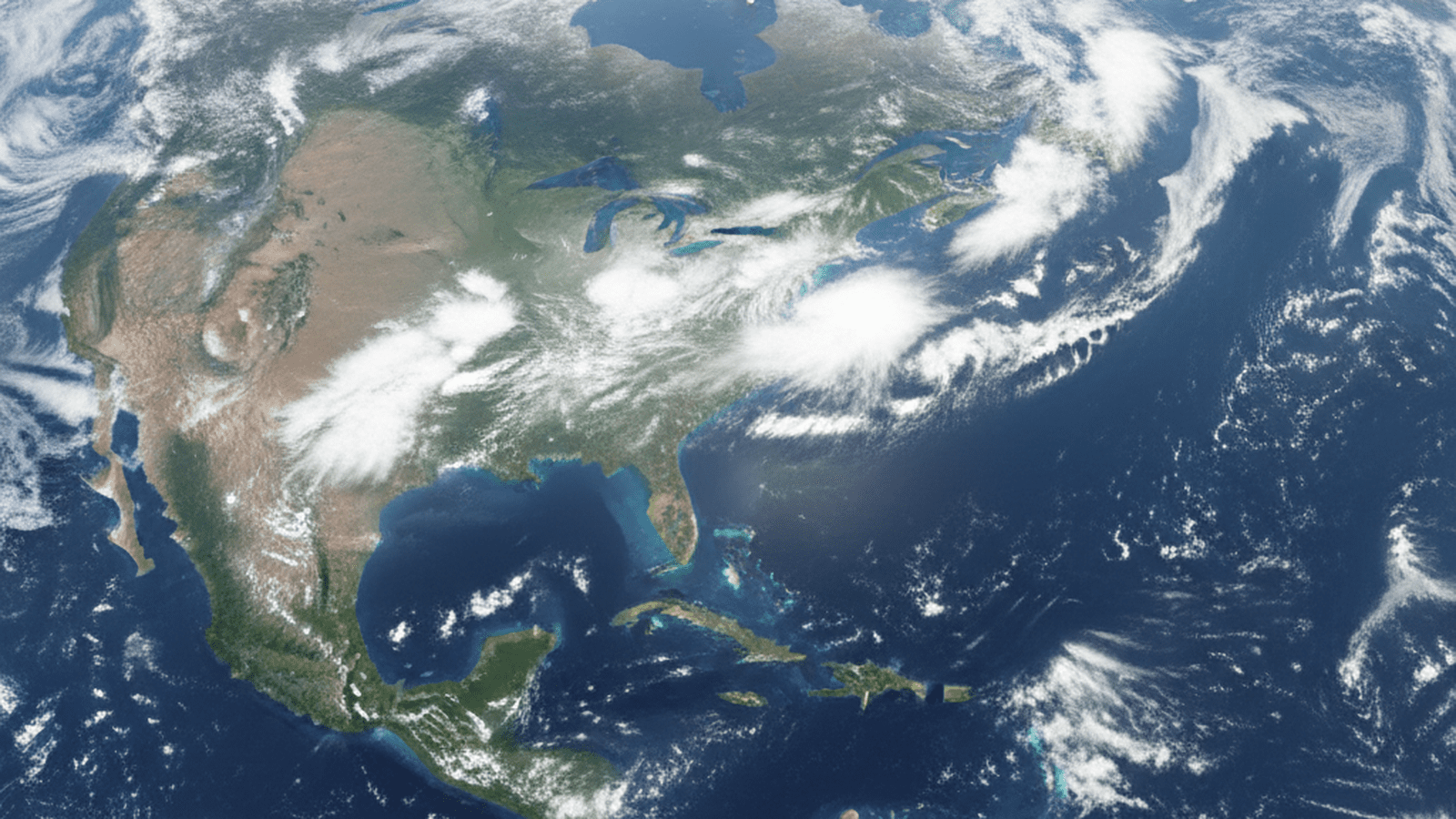
A comprehensive international study has confirmed that atmospheric rivers are migrating toward the Earth’s poles due to climate change. This shift threatens water security in mid-latitude regions while increasing flood risks in higher latitudes.
TLDR: Climate scientists have identified a significant poleward shift in atmospheric rivers, the massive moisture corridors responsible for much of the world’s precipitation. This migration, driven by global warming, alters rainfall patterns and poses a major challenge to global water management and disaster preparedness.
Atmospheric rivers, the vast corridors of concentrated moisture that traverse the Earth’s atmosphere, are undergoing a significant geographical shift. A major international study published in Science Advances has documented a consistent poleward migration of these “rivers in the sky” over the last four decades. This movement, driven by anthropogenic climate change, threatens to reorganize global precipitation patterns and disrupt the water security of millions. These systems are responsible for transporting the majority of the moisture from the tropics to higher latitudes, often providing 30% to 50% of the annual precipitation for regions like the western United States and Western Europe.
Researchers from the University of California, Santa Barbara, working alongside colleagues from international institutions, utilized satellite observations and reanalysis data to track these systems. Their findings indicate that atmospheric rivers in both the Northern and Southern Hemispheres have shifted approximately 6 to 10 degrees in latitude toward the poles since 1979. This migration aligns with the observed expansion of the tropics and the poleward retreat of the mid-latitude jet streams. The data suggests that the shift is not a temporary fluctuation but a sustained trend linked to global warming.
The mechanics of this shift are tied to the warming of the tropical upper troposphere. As the temperature gradient between the equator and the poles changes, the Hadley cell—a large-scale atmospheric circulation pattern—expands. This expansion pushes the storm tracks and their associated moisture corridors further from the equator. Consequently, regions that historically relied on atmospheric rivers for the bulk of their annual rainfall are seeing these systems bypass them more frequently. This atmospheric reorganization has profound implications for the global hydrological cycle.
In the Northern Hemisphere, this shift poses a severe threat to the Mediterranean and the southwestern United States. These areas are already prone to water scarcity, and the loss of reliable atmospheric river landfalls could lead to permanent aridification. Conversely, higher-latitude regions such as British Columbia, Alaska, and Scandinavia are experiencing an increase in the frequency and intensity of these events. While this brings more water, it also heightens the risk of catastrophic flooding and rapid snowmelt, which can overwhelm existing infrastructure.
The Southern Hemisphere exhibits a similar trend, with atmospheric rivers moving further south toward Antarctica. This shift impacts the water cycles of southern Chile, South Africa, and parts of Australia. Beyond precipitation, the relocation of these systems alters the transport of latent heat. Atmospheric rivers are efficient vehicles for moving thermal energy from the tropics to the poles, and their new trajectories may accelerate the melting of polar ice sheets by delivering warmth directly to sensitive glacial regions.
The economic implications of this atmospheric reorganization are substantial. Current water management infrastructure, including reservoirs and flood control systems, was designed based on historical climate data that may no longer be relevant. Agricultural sectors in mid-latitude zones face increasing uncertainty as the timing and volume of seasonal rains become less predictable. Urban planners must now account for a future where extreme precipitation events occur in regions previously unaccustomed to such intensity, requiring massive investments in resilient infrastructure.
This study underscores the complexity of the climate system’s response to rising greenhouse gas concentrations. While much attention is paid to total rainfall amounts, the spatial distribution of that moisture is equally critical for ecological and human systems. Future research will focus on the interaction between these shifting rivers and local mountain ranges, which play a vital role in extracting moisture from the air. Understanding these fine-scale interactions is essential for developing localized adaptation strategies as the world’s moisture corridors continue to migrate.

Mark Davis serves as the Senior Correspondent for Energy, Climate, and Resource Economics at Just Right News. In an era where the conversation around the environment is often dominated by alarmism and top-down mandates, Mark provides a vital, market-oriented perspective on the complex forces shaping our world. As the lead voice behind the acclaimed feature series “Power and the Planet,” he explores the intersection of environmental policy, global energy markets, and the fundamental economic principles that sustain modern civilization.
Mark’s pragmatic approach to resource management was forged in the high desert of his hometown, Albuquerque, New Mexico. Growing up in a region defined by both its breathtaking natural beauty and its rugged, resource-dependent landscape, he developed an early appreciation for the delicate balance between conservation and utilization. New Mexico’s unique position as a hub for both traditional energy production and cutting-edge scientific research provided Mark with a front-row seat to the evolution of the American energy sector. This upbringing instilled in him a deep-seated belief that true environmental stewardship is inseparable from economic prosperity and technological innovation.
Now based in Boulder, Colorado, Mark operates from the heart of the nation’s climate research community. While Boulder is often seen as a bastion of environmental idealism, Mark utilizes his post to provide a necessary counterweight, grounded in the realities of resource economics. He understands that energy policy does not exist in a vacuum; it has tangible consequences for the American taxpayer, the stability of the national power grid, and the strength of the domestic manufacturing sector. By reporting from the front lines of the climate debate, he is able to challenge prevailing narratives with hard data and a commitment to the principles of the free market.
Throughout his tenure at Just Right News, Mark has distinguished himself by focusing on the “Resource Economics” aspect of his beat. He frequently highlights the hidden costs of rapid energy transitions and advocates for an “all-of-the-above” energy strategy that prioritizes American energy independence. His work often shines a light on the geopolitical implications of resource scarcity, arguing that a secure nation must first be an energy-secure nation. Whether he is analyzing the impact of federal land-use regulations or investigating the supply chains required for new technologies, Mark remains focused on how policy decisions affect the lives and livelihoods of everyday citizens.
In “Power and the Planet,” Mark continues to bridge the gap between complex scientific concepts and the economic realities facing the country. He rejects the false choice between a healthy environment and a thriving economy, instead seeking out solutions that leverage American ingenuity and private-sector competition. For Mark, reporting on the climate is not about following the latest trends, but about ensuring that the conversation remains tethered to the foundational values of liberty, property rights, and fiscal responsibility. His contributions ensure that Just Right News readers receive a comprehensive, clear-eyed view of the challenges and opportunities defining the future of our planet.