

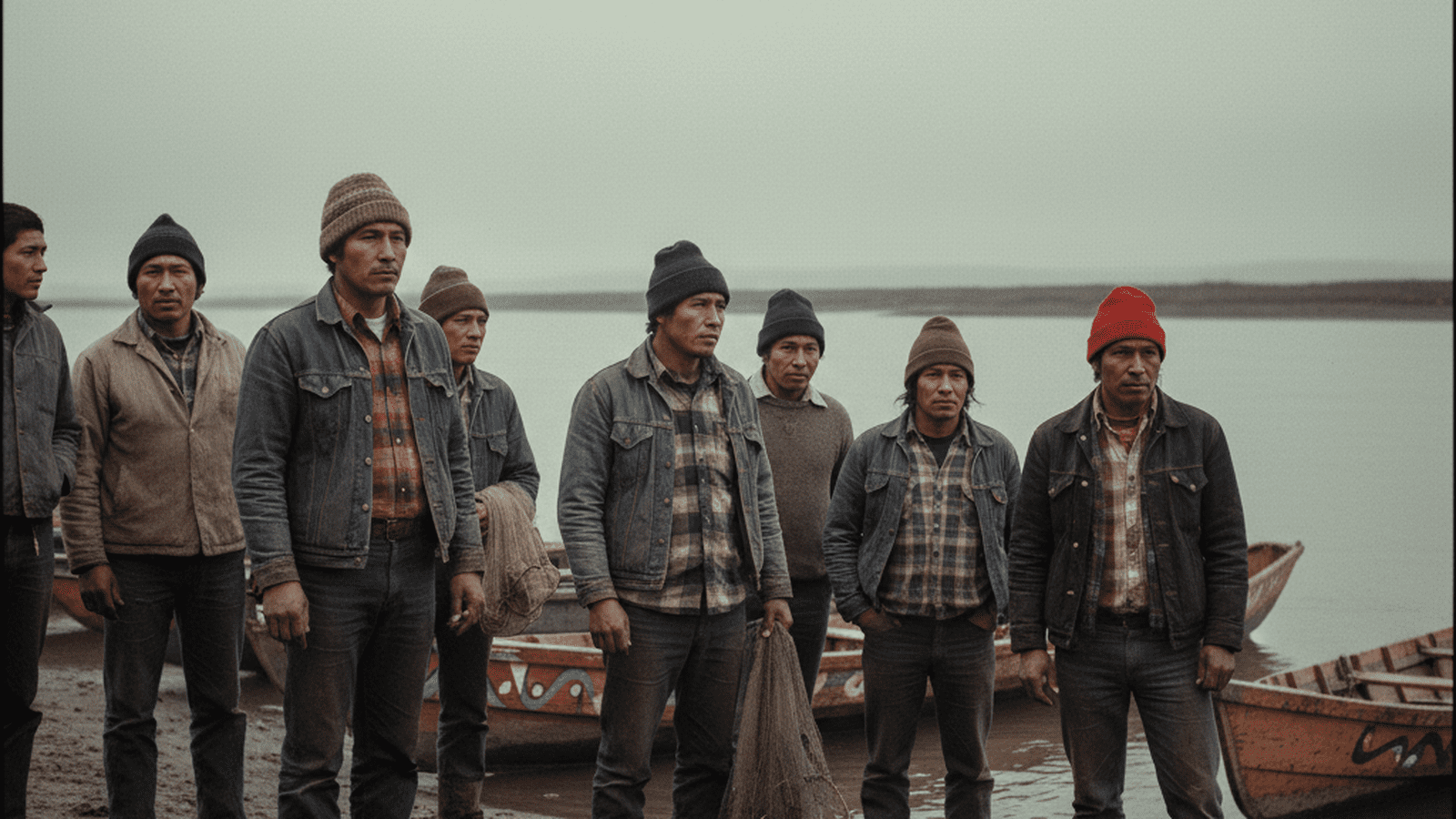
In 1974, Federal Judge George Hugo Boldt issued a landmark ruling in United States v. Washington, affirming that Native American tribes were entitled to half of the harvestable salmon in the state. This decision recognized the enduring legal power of 19th-century treaties and fundamentally altered the management of natural resources in the United States.
TLDR: The 1974 Boldt Decision revolutionized tribal rights in Washington by granting Native American tribes 50% of the annual salmon harvest. This landmark ruling affirmed treaty obligations and established tribes as sovereign co-managers of the environment, sparking intense legal battles and eventually reshaping federal Indian law across the United States.
The struggle for fishing rights in Washington State reached a fever pitch in the early 1970s, culminating in one of the most significant judicial interventions in the history of federal-tribal relations. For decades, the state government had restricted Native American fishing, leading to a period of civil disobedience and arrests known as the Fish Wars. Tribal members, asserting rights guaranteed by 19th-century treaties, faced harassment and violence as they attempted to harvest salmon from their ancestral waters.
In 1970, the United States Department of Justice filed suit against the State of Washington on behalf of several tribes, including the Puyallup, Nisqually, and Muckleshoot. The case, United States v. Washington, was assigned to Judge George Hugo Boldt, a jurist known for his conservative leanings and strict adherence to the law. Over the course of a three-week trial, Boldt reviewed extensive historical evidence, including the minutes of treaty negotiations from the 1850s conducted by Territorial Governor Isaac Stevens. The court examined the specific intent of the signatories who had ceded millions of acres of land in exchange for protected fishing rights.
The central legal question revolved around the phrase “the right of taking fish, at all usual and accustomed grounds and stations, is further secured to said Indians, in common with all citizens of the Territory.” While the state argued this merely gave tribal members the same rights as any other citizen, the tribes contended it reserved a specific share of the resource for them as sovereign entities. On February 12, 1974, Judge Boldt issued a 203-page opinion that shocked the region. He ruled that the treaty language “in common with” meant that the harvestable catch must be divided equally between tribal and non-tribal fishers.
Boldt decreed that the tribes were entitled to 50 percent of the salmon and steelhead returning to their traditional fishing grounds. Furthermore, he ruled that the tribes had the authority to regulate their own members’ fishing, effectively making them co-managers of the state’s fisheries alongside Washington’s Department of Fisheries. This was a radical departure from previous state policy, which had treated tribal fishing as a secondary concern or a nuisance to be managed by state authorities.
The reaction from non-tribal commercial and recreational fishermen was swift and often vitriolic. Protests erupted across the Puget Sound, and Judge Boldt was burned in effigy by those who felt the ruling unfairly disadvantaged the commercial industry. The State of Washington initially refused to enforce the ruling, leading to a period of legal chaos where the federal court essentially took over the management of the state’s fisheries to ensure compliance.
The conflict eventually reached the United States Supreme Court in 1979. In Washington v. Washington State Commercial Passenger Fishing Vessel Association, the Court largely upheld Boldt’s decision. Justice John Paul Stevens, writing for the majority, affirmed that the treaties were not a grant of rights to the Indians, but a reservation of rights they already possessed. This confirmation solidified the legal standing of tribes as sovereign partners in resource management and set a precedent for future civil rights cases involving indigenous populations.
The Boldt Decision fundamentally transformed the economic and political landscape of the Pacific Northwest. It forced a shift from state-centric management to a collaborative model that prioritized conservation and shared responsibility. In the decades since, the ruling has served as a precedent for other treaty disputes across the United States, reinforcing the principle that federal treaties are the supreme law of the land. Today, the co-management framework established by the decision remains a vital component of environmental policy and tribal self-determination, ensuring that federal promises made over a century ago are upheld in modern governance.

Lila Hayes serves as a Staff Writer for Just Right News, where she anchors the “Courts, Law, and Constitutional Order” beat. Her work is defined by a steadfast commitment to the foundational principles of the American republic and a rigorous defense of the legal frameworks that ensure national stability. As a primary voice for the outlet, she provides readers with a clear-eyed analysis of the judiciary, focusing on the importance of originalism and the preservation of the separation of powers.
Lila’s perspective was forged in the American heartland. Raised in St. Louis, Missouri, she grew up in a Hispanic household where the values of hard work, faith, and respect for the law were paramount. Her upbringing instilled in her a deep appreciation for the American Dream and the legal protections that make it possible. This Missouri background remains a cornerstone of her reporting, providing a grounded, common-sense counter-narrative to the often-insular legal circles of the coastal elite. She understands that the decisions made in high-court chambers have real-world consequences for families and small business owners across the country.
At Just Right News, Lila has become widely recognized for her signature feature series, “The Rulebook of Power.” In this ongoing project, she delves into the mechanics of the federal government, examining how administrative overreach and judicial activism can threaten the delicate balance of the Constitution. She approaches her beat with the tenacity of a veteran journalist and the precision of a legal scholar, consistently advocating for a judiciary that interprets the law as written rather than legislating from the bench. For Lila, the Constitution is not a “living” document subject to the whims of modern social trends; it is a fixed standard that ensures the government remains the servant of the people, not their master.
Now based in Philadelphia, Pennsylvania, Lila finds herself at the very epicenter of American constitutional history. Living and working in the city where the Founders drafted the documents she defends daily provides a constant source of inspiration. The historic halls and landmarks of Philadelphia serve as a daily reminder of the high stakes involved in her reporting. Her presence in the city allows her to bridge the gap between the historical intent of the law and its contemporary application, ensuring that the legacy of the Founding Fathers remains central to the national conversation.
Throughout her career, Lila has remained dedicated to the idea that a free society requires an informed citizenry and a transparent legal system. Her reporting is more than just a collection of headlines; it is a defense of the constitutional order that has sustained the nation for over two centuries. By focusing on the “Rulebook of Power,” she ensures that her readers understand not just what is happening in the courtrooms, but why those decisions matter for the future of American liberty. Lila Hayes continues to be a vital voice for those who believe that the law should be a shield for the citizen and a constraint on the state.