

In 1804, residents of the newly acquired Louisiana Purchase territory challenged the federal government’s plan to govern them through the Indiana Territory. This protest, known as the Remonstrance of the People of Louisiana, forced the United States to address the constitutional rights of inhabitants in newly annexed western lands.
TLDR: Following the Louisiana Purchase, settlers in the District of Louisiana revolted against a federal act that placed them under the jurisdiction of the Indiana Territory. Their 1804 Remonstrance highlighted a constitutional gap regarding the rights of territorial citizens, eventually compelling Congress to grant the region its own distinct territorial government.
The acquisition of the Louisiana Territory in 1803 doubled the size of the United States, but it also created an immediate constitutional dilemma. While President Thomas Jefferson celebrated the expansion, the practicalities of governing a vast, sparsely populated region inhabited by French, Spanish, and American settlers proved volatile. In March 1804, Congress passed the Louisiana Governance Act, which divided the purchase into two parts: the Territory of Orleans in the south and the District of Louisiana in the north.
The District of Louisiana, which encompassed the modern-day Great Plains and the Upper Mississippi Valley, was placed under the administrative jurisdiction of the Indiana Territory. This meant that the governor and judges in Vincennes, hundreds of miles away, would hold legal authority over the residents of St. Louis and surrounding outposts. To the local population, this arrangement was an affront to the democratic principles the United States claimed to uphold. They argued that being governed by a distant legislature without their consent mirrored the very colonial grievances that had sparked the American Revolution.
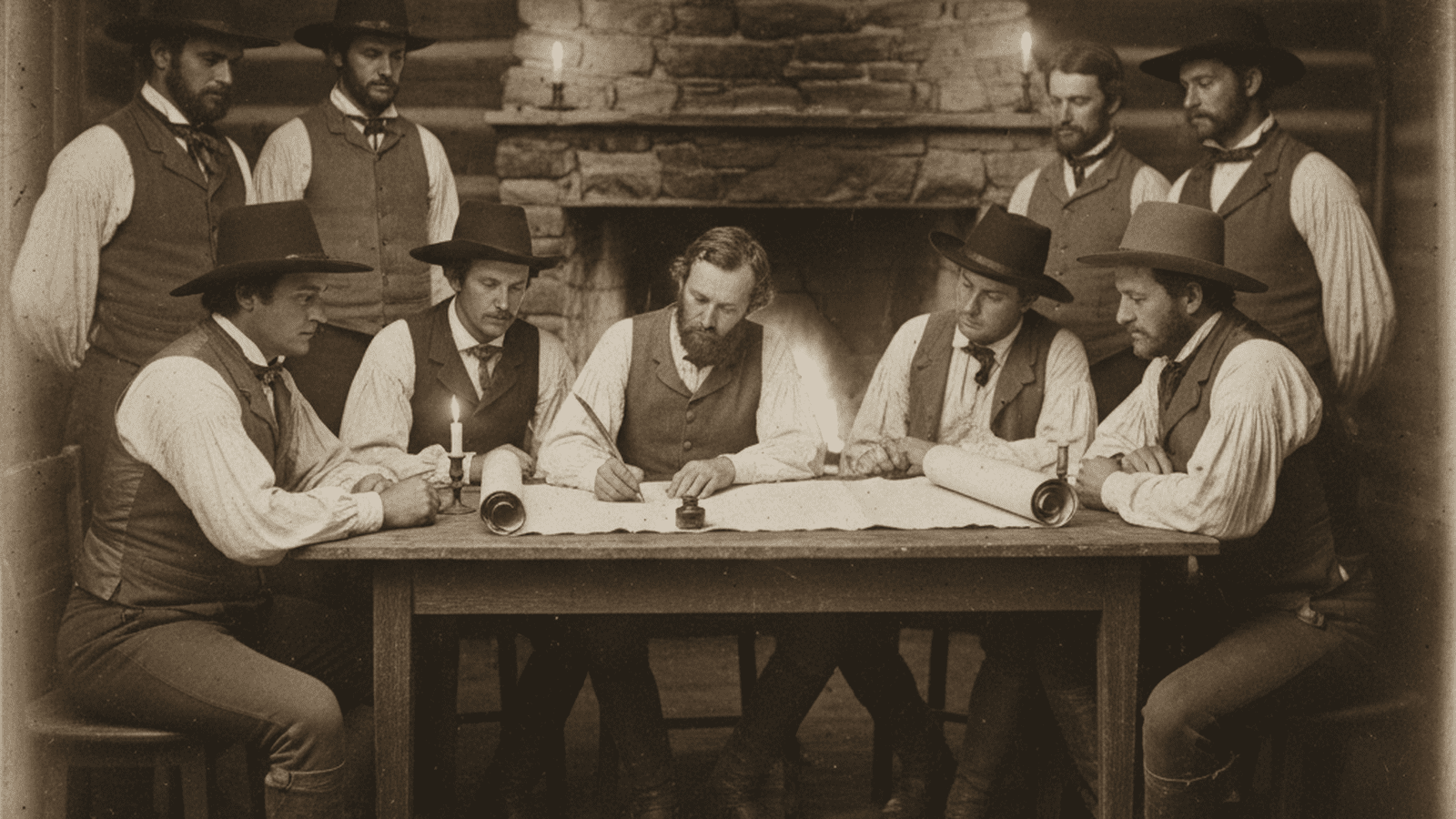
In September 1804, a convention of delegates met in St. Louis to draft a formal protest. This document, titled the “Remonstrance of the People of Louisiana,” was a sophisticated legal and political challenge to federal authority. The delegates, led by figures like Auguste Chouteau and Richard Caulk, pointed to the third article of the Louisiana Purchase Treaty. This article promised that the inhabitants would be “incorporated in the Union of the United States and admitted as soon as possible… to the enjoyment of all the rights, advantages and immunities of citizens.”
The Remonstrance argued that the 1804 Act violated this treaty by denying them a local legislature and trial by jury in their own districts. Furthermore, the settlers were alarmed by provisions that suggested the federal government might relocate Native American tribes from the east onto their lands. The crisis was not merely a local dispute; it was a fundamental question of whether the Constitution followed the flag. If the United States could govern territories as mere colonies, the republican nature of the federal system was at risk.
The protest reached Washington D.C. in early 1805, causing significant debate in the halls of Congress. Federalists, who had generally opposed the purchase, used the unrest to criticize Jefferson’s administration. Meanwhile, Jeffersonian Republicans realized that maintaining the Indiana Territory’s jurisdiction was politically untenable and risked alienating the very people they sought to integrate into the American fold. The pressure from the Great Plains frontier forced a rapid legislative response.
In March 1805, Congress passed a new act that superseded the previous governance structure. It elevated the District of Louisiana to the Territory of Louisiana, granting it its own governor, judges, and a path toward a local legislature. This move effectively ended the immediate constitutional crisis and established a framework for territorial governance that would be used throughout the 19th century. The episode demonstrated that even in the earliest days of the republic, the residents of the western frontier were prepared to use constitutional arguments to secure their rights.
The resolution of the 1804 Remonstrance set a vital precedent for the expansion of the United States. It affirmed that newly acquired territories were not to be treated as permanent colonies but as future states with a right to self-governance. This framework eventually facilitated the organized settlement and political integration of the Great Plains. Subsequent territorial disputes would often look back to this early crisis as the moment when the federal government acknowledged that the protections of the Constitution must extend to the furthest reaches of the American frontier.

Lila Hayes serves as a Staff Writer for Just Right News, where she anchors the “Courts, Law, and Constitutional Order” beat. Her work is defined by a steadfast commitment to the foundational principles of the American republic and a rigorous defense of the legal frameworks that ensure national stability. As a primary voice for the outlet, she provides readers with a clear-eyed analysis of the judiciary, focusing on the importance of originalism and the preservation of the separation of powers.
Lila’s perspective was forged in the American heartland. Raised in St. Louis, Missouri, she grew up in a Hispanic household where the values of hard work, faith, and respect for the law were paramount. Her upbringing instilled in her a deep appreciation for the American Dream and the legal protections that make it possible. This Missouri background remains a cornerstone of her reporting, providing a grounded, common-sense counter-narrative to the often-insular legal circles of the coastal elite. She understands that the decisions made in high-court chambers have real-world consequences for families and small business owners across the country.
At Just Right News, Lila has become widely recognized for her signature feature series, “The Rulebook of Power.” In this ongoing project, she delves into the mechanics of the federal government, examining how administrative overreach and judicial activism can threaten the delicate balance of the Constitution. She approaches her beat with the tenacity of a veteran journalist and the precision of a legal scholar, consistently advocating for a judiciary that interprets the law as written rather than legislating from the bench. For Lila, the Constitution is not a “living” document subject to the whims of modern social trends; it is a fixed standard that ensures the government remains the servant of the people, not their master.
Now based in Philadelphia, Pennsylvania, Lila finds herself at the very epicenter of American constitutional history. Living and working in the city where the Founders drafted the documents she defends daily provides a constant source of inspiration. The historic halls and landmarks of Philadelphia serve as a daily reminder of the high stakes involved in her reporting. Her presence in the city allows her to bridge the gap between the historical intent of the law and its contemporary application, ensuring that the legacy of the Founding Fathers remains central to the national conversation.
Throughout her career, Lila has remained dedicated to the idea that a free society requires an informed citizenry and a transparent legal system. Her reporting is more than just a collection of headlines; it is a defense of the constitutional order that has sustained the nation for over two centuries. By focusing on the “Rulebook of Power,” she ensures that her readers understand not just what is happening in the courtrooms, but why those decisions matter for the future of American liberty. Lila Hayes continues to be a vital voice for those who believe that the law should be a shield for the citizen and a constraint on the state.