

Educational institutions and lawmakers are pivoting toward practical workforce integration and stricter classroom environments to better prepare students for an AI-driven economy.
The traditional path from the classroom to the cubicle is undergoing a rigorous realignment as institutions grapple with the demands of a rapidly evolving labor market. From the halls of the University of Oxford to the statehouse in Connecticut, the focus is shifting toward personal responsibility, practical skills, and the removal of digital distractions that hinder academic achievement.
In a significant move to restore order to the learning environment, Connecticut lawmakers passed HB 5035 on April 26, 2026. The bill, which cleared the House with a 117–31 vote, mandates a bell-to-bell cell phone ban in public schools. While districts retain autonomy over storage logistics—whether students use backpacks or locked pouches—the legislative intent is clear: returning the focus to instruction. This move reflects a growing consensus that the unfettered presence of smartphones in schools has compromised the human capital development of the next generation.
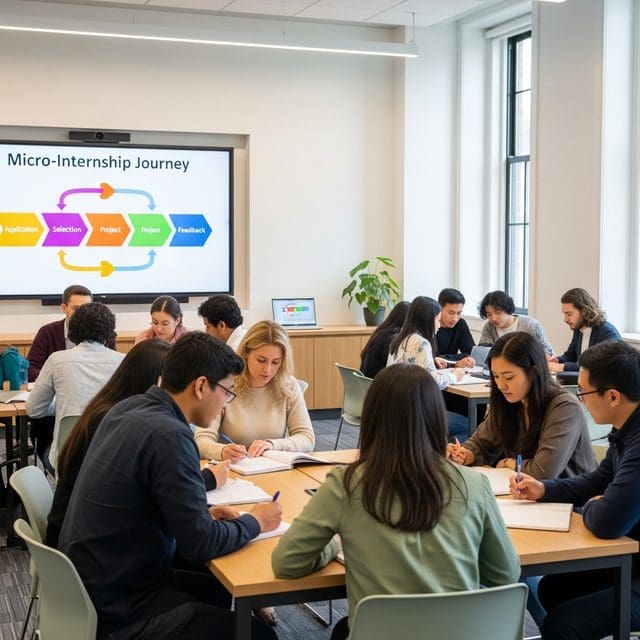
Higher education is also feeling the pressure to prove its value proposition. The UNC Career Center has significantly expanded its micro-internship pipeline for the summer 2026 term. These short-term, paid, project-based roles allow students to gain professional experience in roughly 60 hours, bridging the gap between theoretical study and market needs. By moving away from the rigid, semester-long internship model, institutions like UNC-Chapel Hill are acknowledging that the modern workforce requires agility and immediate competency. Positions for these roles were posted as early as February, signaling a more proactive approach to student placement.
On the global stage, the University of Oxford is spearheading “Education House Oxford 2026,” a convening of international partners including Teach For All and Salzburg Global. This initiative signals a push for cross-border reform that transcends simple curriculum updates, seeking instead to modernize how talent is cultivated globally. Simultaneously, elite American institutions like Duke University are actively lobbying federal regulators on accreditation and the implementation of Workforce Pell Grants. These policy battles, occurring through April and May 2026, will determine how much flexibility universities have in aligning their programs with private-sector demands.
The urgency of these reforms is underscored by recent shifts in the private sector. Meta announced a 10% workforce reduction effective May 20, 2026, eliminating approximately 8,000 positions to pivot capital toward large-scale AI investments. This strategic realignment serves as a stark reminder to educators and students alike: the market rewards technical adaptability and high-level problem-solving over legacy skill sets. As companies like Meta and Cboe restructure to focus on core exchange and AI-driven business, the burden falls on the education system to produce graduates who can compete in a landscape where automation is the new baseline.
Furthermore, the emergence of the Quantum Education & Policy Summit report highlights a growing need for specialized pathways starting in K-12 and community colleges. As the federal government and institutions like Q-SEnSE call for a coordinated strategy to build a quantum-ready workforce, it is evident that the old models of general education are being replaced by a more targeted, market-aligned approach to human capital. The goal is no longer just a degree, but a demonstrable set of skills that can survive the next wave of corporate restructuring.
Daniel Owens serves as a Senior Correspondent for Just Right News, where he leads the newsroom’s coverage of Education, Workforce, and Upward Mobility. In an era where the national conversation often overlooks the practical foundations of success, Owens brings a principled perspective to the forefront of the media landscape. His work is defined by a commitment to the idea that a strong society is built on the pillars of quality education, a robust work ethic, and the removal of bureaucratic barriers to individual achievement.
Born and raised in Cleveland, Ohio, Owens’s worldview was shaped by the industrial landscape of the Midwest. Growing up in a city known for its grit and resilience, he witnessed firsthand the transformative power of steady employment and the devastating effects of economic stagnation. This background instilled in him a deep respect for the American worker and a healthy skepticism toward top-down government solutions that often fail to reach the communities they intend to help. As an African American man who has navigated the path to professional success, Owens approaches his beat with a nuanced understanding of how meritocracy and personal responsibility intersect with opportunity. He frequently draws on his roots to highlight the importance of family stability and community-led initiatives in fostering the next generation of leaders.
At Just Right News, Owens is the architect of the acclaimed feature series, “The Learning Curve.” Through this platform, he explores the evolving landscape of American schooling, from the rise of the school choice movement to the revitalization of trade schools and vocational training. He frequently challenges the status quo of higher education, advocating for a return to academic rigor and the practical alignment of degrees with market demands. For Owens, education is not merely about obtaining credentials; it is about equipping young people with the tools necessary to lead self-sufficient, meaningful lives. His reporting on “The Learning Curve” has become essential reading for parents and policymakers who believe that educational competition and parental rights are the keys to a brighter future.
Now based in Raleigh, North Carolina, Owens finds himself at the heart of one of the nation’s most dynamic regions for innovation and growth. Raleigh’s unique blend of traditional values and a fast-paced economy provides the perfect backdrop for his reporting on the modern workforce. From the tech hubs of the Research Triangle to the rural communities of the South, he tracks how shifts in the economy are impacting families and local industries. His reporting often highlights the success stories of entrepreneurs and workers who are thriving by embracing the values of hard work and innovation.
Throughout his career, Daniel Owens has remained a steadfast voice for the student seeking a better path and the worker striving for a better life. His reporting for Just Right News serves as a vital resource for readers who value common-sense solutions to the challenges of the 21st-century economy. By focusing on the intersection of policy and the human spirit, Owens continues to provide a roadmap for how individuals and communities can achieve lasting upward mobility.