

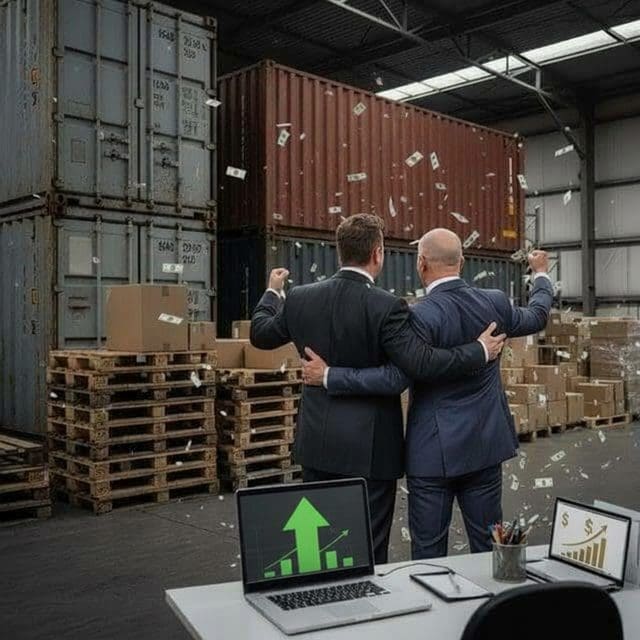
The Trump administration launched a system to refund $166 billion in illegal tariffs, but while corporations expect massive payouts, consumers who paid higher prices will likely see nothing.
The launch of the Customs and Border Protection refund portal on April 20 marks a massive transfer of capital back to the balance sheets of major importers. Following a Supreme Court ruling that found the administration’s use of the International Emergency Economic Powers Act (IEEPA) unlawful, the government is now compelled to return $166 billion in collected duties. While this represents a victory for the rule of law and domestic enterprise, it highlights a persistent disconnect in the global supply chain: the individual worker and consumer are once again left holding the bill.
Throughout the last year, the cost of these tariffs was systematically passed down to the American people. Estimates from Goldman Sachs suggest the duties added 0.7% to inflation, costing the average household between $600 and $800 in higher prices for everyday goods. Yet, as the Treasury prepares to cut checks to over 330,000 importers, there is no mechanism to ensure those funds return to the pockets of the people who actually paid them. Instead, the capital is slated to pad corporate margins or offset future investments.
Major players like FedEx and Costco were among the 3,000 businesses that filed suit even before the portal went live. While FedEx has pledged to attempt customer refunds, most corporations remain non-committal. Costco already faces class-action litigation from shoppers demanding their share of the recovered funds. For many large entities, the refunds—which include interest—will simply serve as a liquidity injection while they wait for the next round of trade volatility.
Small businesses, such as Los Angeles-based Greenbar Distillery, view the process with more skepticism. For a small producer relying on imported ingredients like vanilla and juniper, the $100,000 in paid tariffs was a direct hit to operations. While these entrepreneurs hope for relief, they remain wary of a system that often favors the administrative might of larger competitors. The complexity of the new CAPE refund system, which currently only processes 63% of eligible entries, suggests that smaller firms may face significant delays compared to the automated filing departments of multinational giants.
This refund cycle underscores the fragility of a trade policy that ignores the final link in the chain: the consumer. While the administration moves toward new investigations to replace the struck-down duties, the precedent is clear. When trade policy is litigated in the courts, the government pays the corporations, the corporations keep the interest, and the American family is left to absorb the permanent increase in the cost of living.

Sean Bradley serves as the Senior Correspondent for Trade, Supply Chains, and Global Labor at Just Right News, where he brings a principled, clear-eyed perspective to the complex systems that power the modern world. With a focus on the economic forces that impact the American household, Bradley has distinguished himself as a leading voice in explaining how global shifts in manufacturing and logistics translate to the kitchen table.
Growing up in Long Beach, California, Bradley’s interest in the movement of goods was forged against the backdrop of one of the nation’s most vital maritime gateways. Raised in a community where the towering cranes of the port were a constant fixture on the horizon, he developed an early appreciation for the blue-collar industries that form the backbone of the American economy. This upbringing instilled in him a profound respect for the dockworkers, truckers, and laborers who keep the country moving, a sentiment that remains a cornerstone of his reporting today. For Bradley, trade is not merely a series of abstract figures on a spreadsheet; it is a human endeavor that sustains families and defines the strength of a nation.
Now based in Seattle, Washington, Bradley occupies a strategic vantage point in another of the country’s most significant trade hubs. His location allows him to witness firsthand the intersection of traditional industry and the evolving technological landscape of global logistics. From the Pacific Northwest, he monitors the flow of goods across the ocean, providing Just Right News readers with timely insights into how international tensions, regulatory hurdles, and labor disputes affect the availability and cost of essential goods.
His signature feature series, “The Journey of Things,” has become a staple for readers seeking to understand the intricate path products take from raw materials to the retail shelf. Through this series, Bradley pulls back the curtain on the global marketplace, often highlighting the risks of over-reliance on foreign adversaries and the importance of domestic manufacturing resilience. His reporting consistently emphasizes the conservative values of national sovereignty, free-market competition, and the protection of the American worker from unfair global practices.
As a journalist of Irish heritage, Bradley maintains a deep-seated respect for the dignity of the individual worker and the importance of community stability. He approaches his beat with a commitment to transparency, often questioning the status quo of globalist policies that prioritize corporate efficiency over local prosperity. Whether he is reporting from a warehouse floor or analyzing a new international trade agreement, his goal remains the same: to provide the American public with the truth about where their products come from and what it costs to get them there.
Throughout his tenure at Just Right News, Bradley has remained a steadfast advocate for economic common sense. His work serves as a vital resource for those who believe that a strong nation is built on secure borders, robust trade, and a respected workforce. By combining his local roots in Long Beach with his professional experience in Seattle, Bradley continues to offer a unique and necessary perspective on the forces that shape the American way of life.