

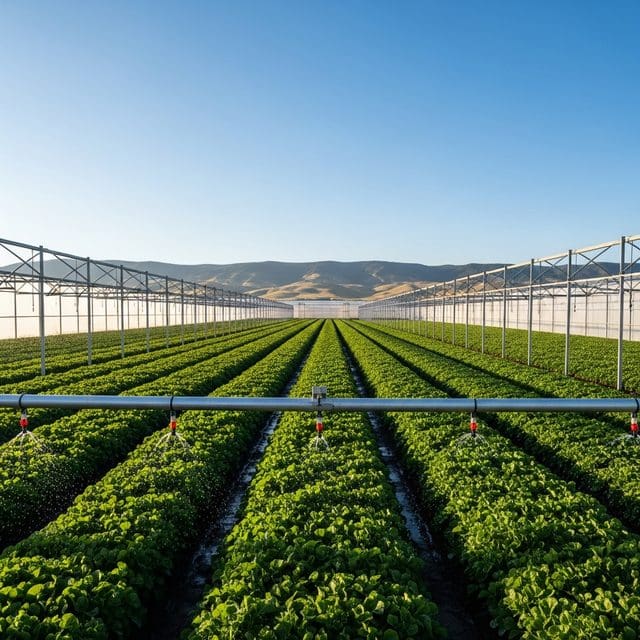
The Department of Justice moves to reclassify marijuana, sparking a shift in federal agricultural policy and environmental safety standards for domestic growers.
The landscape of American agriculture is bracing for a seismic shift as the Department of Justice prepares to reclassify marijuana into a less restrictive federal category. Reports emerging on April 22, 2026, indicate the move could be finalized within days, effectively ending decades of federal prohibition that sidelined the crop from standard agricultural oversight and environmental health protections.
For the American farmer and the rural communities that support them, this reclassification represents more than just a legal pivot; it is a transition into the realm of practical environmental stewardship. Until now, the lack of federal recognition has left a vacuum in safety standards, particularly regarding pesticide use and water runoff. As the crop moves toward federal legitimacy, the Environmental Protection Agency (EPA) and the FDA will likely face immediate pressure to establish the same rigorous safety benchmarks applied to traditional food and fiber crops.
This regulatory transition comes at a time when federal agencies are already under scrutiny for their handling of domestic resources. While the administration manages complex international tensions—including a fragile ceasefire between Israel and Lebanon and ongoing maritime disputes in the Strait of Hormuz—the domestic focus must remain on the integrity of the American food and water supply. The reclassification of a major cash crop necessitates a common-sense approach to land use that prioritizes local sovereignty over bureaucratic overreach.
The challenge for regulators will be addressing the ambiguity that often plagues large-scale shifts in policy. In the tech and industrial sectors, systems frequently fail not from a lack of scale, but from a lack of clear definitions. The agricultural sector is no different. Without clear guidelines on what constitutes safe soil contamination levels or responsible water diversion for these new legal operations, the burden will fall on local municipalities to police their own watersheds.
Furthermore, the move toward reclassification highlights the need for private-sector innovation in environmental monitoring. As federal aid remains a point of contention in other sectors—such as the recent concerns voiced by the Coalition for Career Schools regarding beauty and wellness programs—the agricultural community must ensure that federal oversight does not become a barrier to entry for family-owned farms. The goal should be a transparent system where the air, water, and soil are protected through practical standards rather than punitive mandates.
As the DOJ moves forward with this reclassification, the focus for the coming months will be on the EPA’s ability to integrate this industry into existing environmental frameworks. For the residents of the San Joaquin Valley and similar agricultural hubs, the priority remains clear: protecting the heritage of the land while ensuring that new federal policies do not compromise the safety of the water Americans drink or the food they put on their tables.

Eric Nolan serves as the Senior Correspondent for Food, Water, and Environmental Health at Just Right News, where he brings a principled, common-sense perspective to the most fundamental issues facing the American public. With a career dedicated to uncovering the truth behind the policies that govern our natural resources, Eric has become a trusted voice for readers who value traditional stewardship over bureaucratic overreach. His reporting is defined by a commitment to the idea that true environmentalism is rooted in the protection of the American family and the preservation of the nation’s agricultural heritage.
Raised in Fresno, California, Eric’s worldview was shaped in the heart of the San Joaquin Valley. Growing up in one of the world’s most productive agricultural hubs, he witnessed firsthand the vital connection between the land, the water, and the dinner table. In Fresno, he saw the resilience of farmers and the devastating impact that distant, top-down regulations can have on local communities. This upbringing instilled in him a deep respect for the producers who feed the country and a lifelong skepticism toward the alarmist narratives often pushed by mainstream media. For Eric, environmental health is not an abstract political talking point; it is a matter of ensuring that the people who work the land have the freedom and the resources to do so effectively.
Now based in Eugene, Oregon, Eric operates from a unique vantage point in the Pacific Northwest. Living in a region often defined by intense environmental debate, he provides a necessary counter-narrative to the prevailing trends of the area. From his base in Eugene, he monitors the shifting tides of federal and state policies, ensuring that the voices of rural citizens and property owners are not drowned out by urban activism. His reporting often bridges the gap between the rugged realities of the outdoors and the legislative halls where decisions are made, offering a grounded perspective that prioritizes local sovereignty and practical solutions.
As the lead for the acclaimed feature series “Earth on the Table,” Eric explores the intricate journey of the American food supply. He tackles critical issues such as water rights, soil health, and food security through a lens of national stability and individual liberty. He believes that a healthy environment and a thriving economy are not mutually exclusive, but rather two sides of the same coin of national prosperity. His work consistently highlights how innovation and private-sector ingenuity are the most effective tools for ensuring clean water and a safe food supply, rather than the expansion of the administrative state.
At Just Right News, Eric’s reporting serves as a vital resource for those who seek accountability and transparency. Whether he is investigating the impact of federal land management on local economies or examining the safety of the national food infrastructure, his work remains anchored in the values of heritage and hard work. Eric Nolan continues to be a leading voice in environmental journalism, championing the belief that the best way to protect our natural resources is to empower the people who live and work closest to them.