

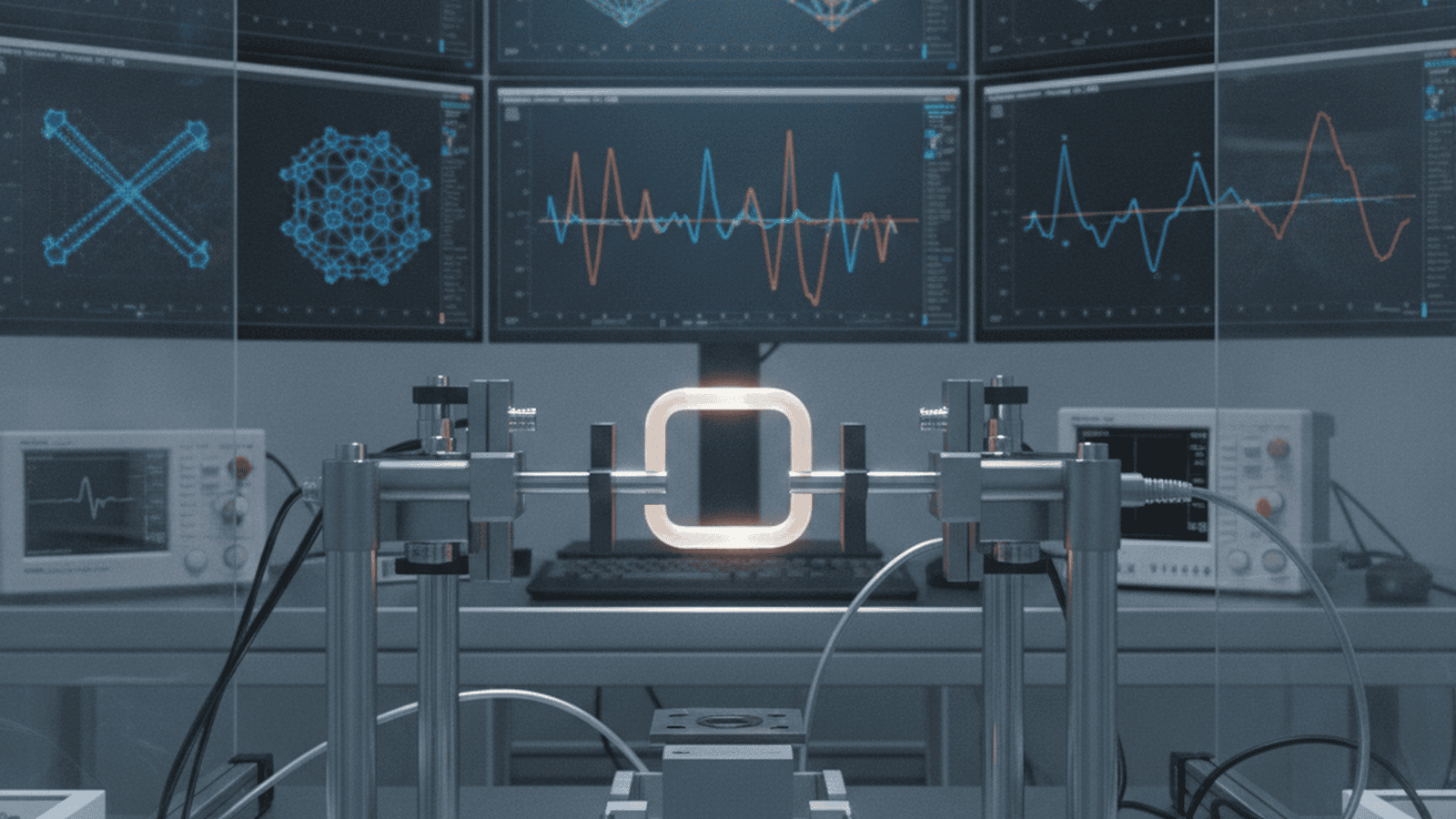
Researchers at Tohoku University have developed a new class of zirconia-based ceramics that exhibit super-elastic properties. Unlike traditional brittle ceramics, this material can undergo significant deformation and return to its original shape without cracking, even under extreme heat.
TLDR: Scientists in Japan have created a super-elastic ceramic that overcomes the inherent brittleness of traditional ceramic materials. By manipulating the crystal structure at the grain level, the team produced a material capable of withstanding extreme strain and heat, potentially revolutionizing aerospace and medical implant engineering.
Ceramics have served as the backbone of high-temperature engineering for decades, prized for their ability to withstand environments that would melt most metals. From the heat shields on spacecraft to the linings of industrial furnaces, their thermal stability is unmatched. However, these materials have always possessed a fatal flaw: brittleness. Even a minor impact or a sudden change in temperature can cause a ceramic component to shatter instantly, limiting their use in dynamic structural applications where flexibility is required.
A research team at Tohoku University in Japan has recently published a study detailing a significant breakthrough that addresses this limitation. They have developed a zirconia-based ceramic that exhibits super-elasticity, a property previously thought to be exclusive to specific metal alloys. This new material can be deformed by a significant percentage and then return to its original shape once the stress is removed. This behavior represents a fundamental departure from the mechanical properties of all known structural ceramics, which typically fail under the slightest tension.
The secret to this newfound flexibility lies in the microscopic architecture of the material. Traditional ceramics are composed of many small crystals, or grains, oriented in random directions. When stress is applied, these grains push against each other, creating microscopic cracks at the boundaries that quickly spread through the material. The Tohoku team utilized a specialized fabrication process to align these grains and control their size, allowing the crystal lattice to shift and flip into different configurations without breaking the bonds between atoms. This phase transformation, known as a martensitic transformation, allows the atoms within the zirconia crystal lattice to rearrange themselves into a new geometric pattern in response to mechanical pressure.
During laboratory testing, the super-elastic ceramic demonstrated the ability to withstand a tensile strain of approximately 7%. For comparison, most industrial ceramics fail at less than 0.1% strain. This elasticity was maintained across a wide range of temperatures, including extreme heat where metals would typically lose their structural integrity. The researchers observed that once the pressure is released, the atoms snap back to their original positions. This reversible movement is what allows the material to give rather than break. The researchers achieved this by adding specific dopants to the zirconia, which stabilized the material and prevented the transformation from becoming permanent or destructive.
The potential applications for such a material are extensive. In the aerospace sector, engine components are subjected to intense thermal cycling, causing them to expand and contract rapidly. A super-elastic ceramic could absorb these dimensional changes without developing the fatigue cracks that currently plague jet engine turbines. Similarly, in the field of medicine, this material could be used to create bone implants or dental fixtures that mimic the natural flexibility of human tissue while providing the biocompatibility and wear resistance of a ceramic. This could lead to longer-lasting medical devices that do not require frequent replacement.
Moving forward, the research team is investigating the long-term durability of the material. While the initial tests are promising, structural materials must be able to survive millions of cycles of stress without failing. The team is also exploring whether this grain-boundary engineering technique can be applied to other types of ceramics, such as alumina or silicon carbide. If successful, this could lead to an entirely new class of tough ceramics that could replace metals in some of the most demanding environments on Earth and beyond. This discovery marks a fundamental shift in how engineers view structural ceramics, moving them from brittle insulators to flexible, resilient components.

Mason Reed serves as a Staff Writer for Just Right News, where he spearheads the Future Frontiers & Special Projects desk. In an era defined by rapid technological shifts and evolving social landscapes, Mason provides a steady, principled voice, examining the innovations of tomorrow through the lens of traditional American values. His work is most prominently featured in his signature series, “The Next Horizon,” where he explores the intersection of emerging technology, national sovereignty, and the preservation of individual liberty.
A native of San Diego, California, Mason’s worldview was shaped by the unique culture of his hometown. Growing up in a region defined by its strong military presence and its history of maritime industry, he developed a deep-seated respect for the institutions that provide national stability and the entrepreneurial spirit that drives the American economy. This upbringing instilled in him a belief that true progress is not found in discarding the past, but in building upon a foundation of proven principles. His reporting often reflects this San Diego influence, emphasizing the importance of a robust national defense and the necessity of maintaining a competitive edge in the global marketplace.
Now based in San Francisco, Mason operates from the heart of the world’s technological engine. Living and working in the Bay Area provides him with a front-row seat to the advancements—and the ideological challenges—emanating from Silicon Valley. While many in the region embrace a “move fast and break things” mentality, Mason’s reporting serves as a vital counterweight. He offers Just Right News readers a “boots on the ground” perspective, documenting how radical local policies and the concentration of tech power impact the everyday lives of citizens. His proximity to the industry allows him to cut through the marketing jargon of big tech to uncover the real-world implications for privacy, free speech, and the nuclear family.
In his “Future Frontiers” beat, Mason tackles complex subjects ranging from the ethics of artificial intelligence to the burgeoning private space race. He approaches these topics with a healthy skepticism toward centralized bureaucracy, championing instead the decentralized innovations that empower individuals. Through “The Next Horizon,” he highlights the pioneers and thinkers who are working to ensure that the future remains a place where human dignity and constitutional rights are protected. He believes that the rapid pace of change requires more than just technical expertise; it requires a moral compass rooted in the Western tradition.
Throughout his tenure at Just Right News, Mason has remained committed to the idea that the future is something to be shaped, not merely accepted. His writing is characterized by a rigorous defense of American exceptionalism and a belief that the country’s best days lie ahead, provided it remains true to its founding ideals. Whether he is investigating the impact of automation on the American workforce or profiling the next generation of aerospace engineers, Mason Reed ensures that his readers are equipped with the insights they need to navigate a changing world with confidence and clarity.