

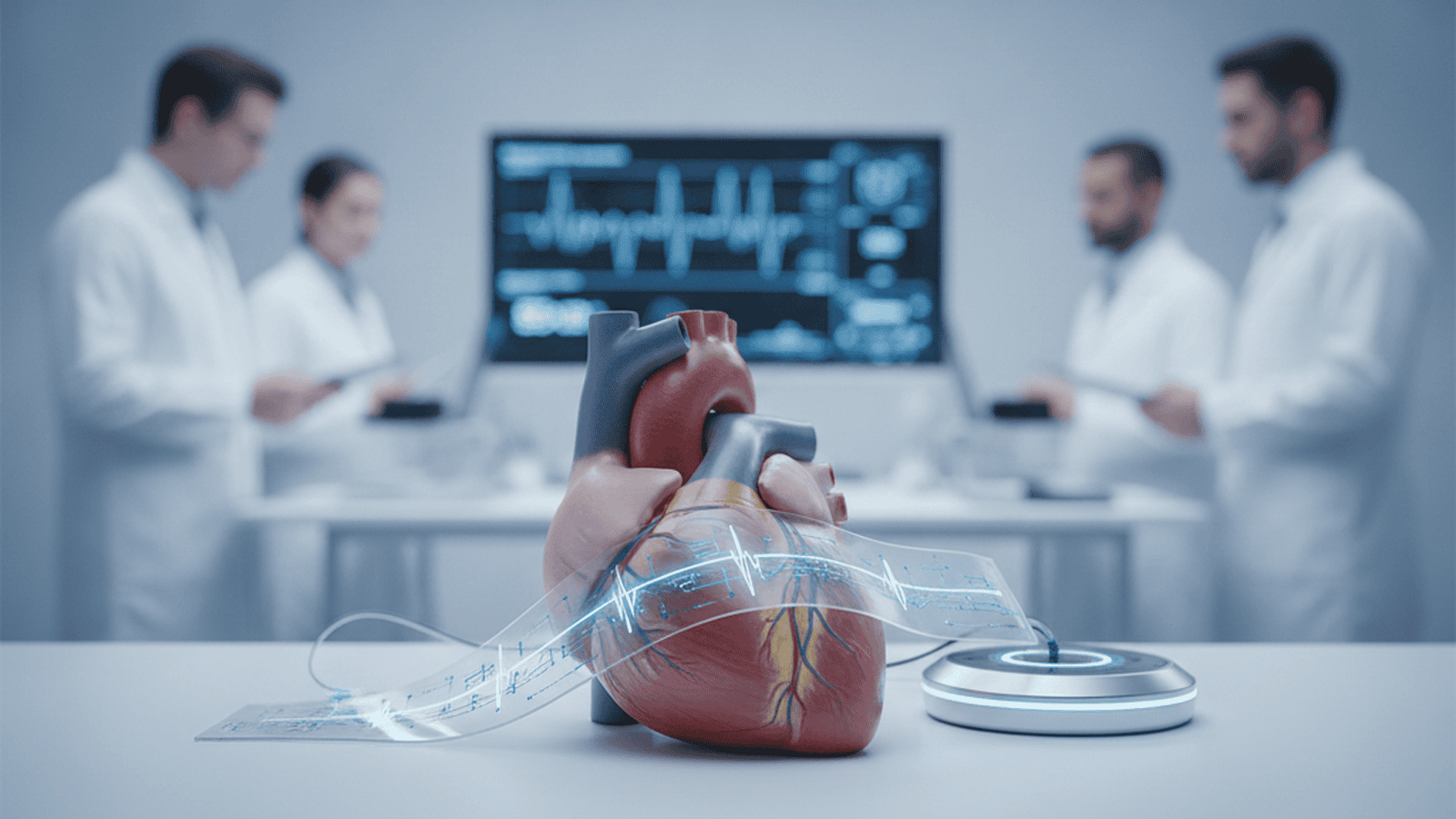
Researchers have developed a piezoelectric device capable of converting the mechanical energy of a beating heart into electrical power for pacemakers. This breakthrough aims to eliminate the need for periodic surgical battery replacements, significantly reducing patient risk and healthcare costs.
TLDR: A research team has successfully demonstrated a piezoelectric energy harvester that powers pacemakers using the heart’s own motion. By converting mechanical contractions into electricity, the device could provide a lifetime power source for cardiac implants, removing the necessity for invasive battery replacement surgeries every decade.
A collaborative research effort between the University of Manchester and clinical specialists at the Manchester University NHS Foundation Trust has produced a significant breakthrough in medical energy technology. The team has successfully developed a sophisticated piezoelectric energy harvester designed to power leadless pacemakers indefinitely by capturing the kinetic energy of the heart itself. This innovation addresses a primary limitation of current cardiac rhythm management: the finite lifespan of lithium-ion batteries. Standard pacemakers typically require surgical replacement every seven to ten years as their power cells deplete. These follow-up procedures, while routine, carry inherent risks of infection, hematoma, and complications related to anesthesia, particularly in elderly or frail populations. By creating a self-sustaining power source, the research team aims to transform pacemakers into “fit-and-forget” devices that remain functional for the duration of a patient’s life.
The device utilizes specialized piezoelectric materials that generate an electric charge when subjected to mechanical stress. In this application, the harvester is attached to the exterior of the heart or integrated into the pacemaker housing. As the cardiac muscle contracts and relaxes, the material deforms, producing a small but consistent flow of electricity. This energy is then rectified and stored in a miniature capacitor, providing the steady pulses required to regulate the heart’s rhythm. The collaboration involved cardiologists from the Manchester Heart Centre, who provided critical insights into the mechanical stresses present in different chambers of the heart. This data allowed the engineers to fine-tune the resonance frequency of the piezoelectric material, ensuring maximum energy capture regardless of the device’s orientation or the patient’s physical activity level.
Engineering the harvester required overcoming significant hurdles regarding size, efficiency, and biological compatibility. The team utilized a novel porous piezoelectric structure that increases sensitivity to low-frequency mechanical vibrations, such as those produced by a resting heart rate. This ensures that even during sleep, the device generates sufficient voltage to maintain the pacemaker’s operation. The entire assembly is encapsulated in a high-grade biocompatible polymer to prevent immune rejection and ensure long-term durability within the chemically active environment of the human body. Furthermore, the team addressed the challenge of bio-fouling, where the body’s natural healing response might encapsulate the device in thick, fibrous tissue. By applying a specialized micro-textured coating to the harvester, they were able to minimize tissue adhesion, maintaining the flexibility required for energy conversion over millions of cardiac cycles.
Clinical researchers at the hospital played a vital role in the development process, providing anatomical data and physiological parameters to optimize the harvester’s placement. Using advanced computer modeling and benchtop testing with synthetic heart simulators, the team demonstrated that the harvester could produce more than 10 microwatts of power. This output significantly exceeds the requirements of modern ultra-low-power leadless pacemakers, which typically operate on less than 1 microwatt. The ability to generate surplus energy opens the door for more advanced diagnostic features, such as continuous real-time monitoring of blood pressure or oxygen levels, which were previously limited by strict battery constraints.
The implications of this technology extend far beyond cardiology. The researchers suggest that similar energy-harvesting modules could be adapted for a wide range of other implantable devices, such as neurostimulators for Parkinson’s disease or cochlear implants. By leveraging the body’s internal mechanical energy, the medical field can move toward a new generation of autonomous electronics. This shift could significantly reduce the long-term costs associated with implantable medical technology by decreasing the frequency of hospital admissions and surgical interventions, thereby easing the burden on healthcare infrastructure.
Future research will focus on long-term in vivo trials to assess the fatigue resistance of the piezoelectric materials over the course of several years. The team is also exploring ways to integrate the harvester directly into the leadless pacemaker’s delivery system, simplifying the implantation process for surgeons. If successful, this technology could become the standard for cardiac care within the next decade. The researchers are currently seeking regulatory approval for pilot human trials to validate the device’s performance in a clinical setting, marking a pivotal step toward a future where medical implants never need a battery change.

Mason Reed serves as a Staff Writer for Just Right News, where he spearheads the Future Frontiers & Special Projects desk. In an era defined by rapid technological shifts and evolving social landscapes, Mason provides a steady, principled voice, examining the innovations of tomorrow through the lens of traditional American values. His work is most prominently featured in his signature series, “The Next Horizon,” where he explores the intersection of emerging technology, national sovereignty, and the preservation of individual liberty.
A native of San Diego, California, Mason’s worldview was shaped by the unique culture of his hometown. Growing up in a region defined by its strong military presence and its history of maritime industry, he developed a deep-seated respect for the institutions that provide national stability and the entrepreneurial spirit that drives the American economy. This upbringing instilled in him a belief that true progress is not found in discarding the past, but in building upon a foundation of proven principles. His reporting often reflects this San Diego influence, emphasizing the importance of a robust national defense and the necessity of maintaining a competitive edge in the global marketplace.
Now based in San Francisco, Mason operates from the heart of the world’s technological engine. Living and working in the Bay Area provides him with a front-row seat to the advancements—and the ideological challenges—emanating from Silicon Valley. While many in the region embrace a “move fast and break things” mentality, Mason’s reporting serves as a vital counterweight. He offers Just Right News readers a “boots on the ground” perspective, documenting how radical local policies and the concentration of tech power impact the everyday lives of citizens. His proximity to the industry allows him to cut through the marketing jargon of big tech to uncover the real-world implications for privacy, free speech, and the nuclear family.
In his “Future Frontiers” beat, Mason tackles complex subjects ranging from the ethics of artificial intelligence to the burgeoning private space race. He approaches these topics with a healthy skepticism toward centralized bureaucracy, championing instead the decentralized innovations that empower individuals. Through “The Next Horizon,” he highlights the pioneers and thinkers who are working to ensure that the future remains a place where human dignity and constitutional rights are protected. He believes that the rapid pace of change requires more than just technical expertise; it requires a moral compass rooted in the Western tradition.
Throughout his tenure at Just Right News, Mason has remained committed to the idea that the future is something to be shaped, not merely accepted. His writing is characterized by a rigorous defense of American exceptionalism and a belief that the country’s best days lie ahead, provided it remains true to its founding ideals. Whether he is investigating the impact of automation on the American workforce or profiling the next generation of aerospace engineers, Mason Reed ensures that his readers are equipped with the insights they need to navigate a changing world with confidence and clarity.