

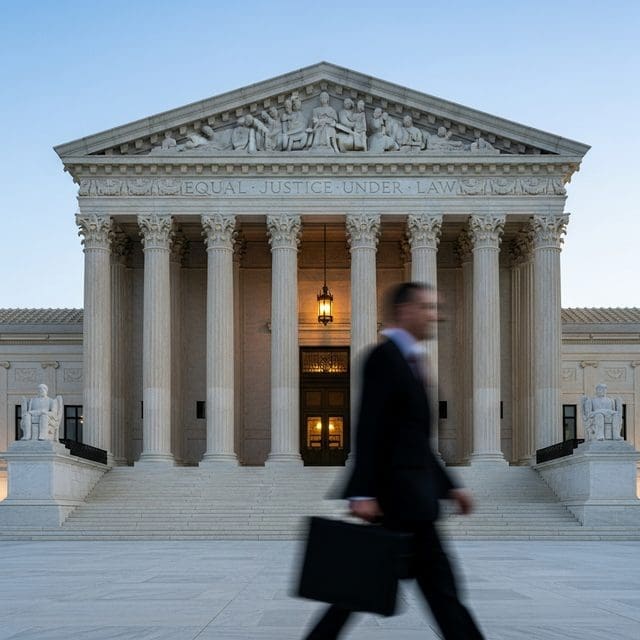
Recent judicial actions across the globe underscore a return to originalist principles, from the enforcement of tariff refunds to the rejection of unprogrammed spending frameworks.
The constitutional principle of the separation of powers is undergoing a rigorous re-examination as courts and administrative bodies move to rectify past overextensions of executive authority. Central to this shift is the April 21 launch of a federal tariff refund system, a direct consequence of a Supreme Court determination that $166 billion in duties were levied without proper legal standing. This restoration of property rights through the judiciary serves as a reminder that the executive branch remains bound by the statutory limits set by Congress.
The launch of the online portal allows American businesses to reclaim capital that was seized under a framework the High Court found to be inconsistent with constitutional requirements. This development coincides with international legal debates that mirror American concerns regarding the ‘power of the purse.’ In recent oral arguments, jurists have pointed to the U.S. model of definitive appropriations as a safeguard against the ‘unprogrammed’ spending that often fuels executive adventurism. By requiring specific legislative authorization for every dollar spent, the judiciary ensures that the executive cannot bypass the representative will of the people.
While the domestic focus remains on the implementation of the Supreme Court’s tariff ruling, the broader legal landscape is also grappling with the boundaries of accountability. FBI Director Kash Patel has initiated a $250 million defamation lawsuit against The Atlantic, a move that will likely test the legal standards for reporting on public officials. This case, alongside the ongoing enforcement of the tariff refunds, underscores a period of intense judicial scrutiny regarding the conduct and authority of federal officers.
Furthermore, the judiciary continues to act as a stabilizer during times of geopolitical friction. As the administration maintains a naval blockade and navigates a precarious ceasefire deadline with Iran, the legal framework governing international trade and executive emergency powers remains under the microscope. The Supreme Court’s intervention in the tariff dispute has already established a precedent: even in matters of trade and national policy, the administration cannot ignore the procedural requirements of the law.
These collective developments signal a pivot toward doctrinal clarity. Whether through the return of illegally collected funds or the adjudication of high-stakes defamation claims, the courts are reinforcing the ‘Rulebook of Power.’ By adhering to the text of the Constitution and the specific language of the law, the judiciary is functioning as the essential check intended by the Founders, ensuring that no branch of government operates outside its designated sphere.

Lila Hayes serves as a Staff Writer for Just Right News, where she anchors the “Courts, Law, and Constitutional Order” beat. Her work is defined by a steadfast commitment to the foundational principles of the American republic and a rigorous defense of the legal frameworks that ensure national stability. As a primary voice for the outlet, she provides readers with a clear-eyed analysis of the judiciary, focusing on the importance of originalism and the preservation of the separation of powers.
Lila’s perspective was forged in the American heartland. Raised in St. Louis, Missouri, she grew up in a Hispanic household where the values of hard work, faith, and respect for the law were paramount. Her upbringing instilled in her a deep appreciation for the American Dream and the legal protections that make it possible. This Missouri background remains a cornerstone of her reporting, providing a grounded, common-sense counter-narrative to the often-insular legal circles of the coastal elite. She understands that the decisions made in high-court chambers have real-world consequences for families and small business owners across the country.
At Just Right News, Lila has become widely recognized for her signature feature series, “The Rulebook of Power.” In this ongoing project, she delves into the mechanics of the federal government, examining how administrative overreach and judicial activism can threaten the delicate balance of the Constitution. She approaches her beat with the tenacity of a veteran journalist and the precision of a legal scholar, consistently advocating for a judiciary that interprets the law as written rather than legislating from the bench. For Lila, the Constitution is not a “living” document subject to the whims of modern social trends; it is a fixed standard that ensures the government remains the servant of the people, not their master.
Now based in Philadelphia, Pennsylvania, Lila finds herself at the very epicenter of American constitutional history. Living and working in the city where the Founders drafted the documents she defends daily provides a constant source of inspiration. The historic halls and landmarks of Philadelphia serve as a daily reminder of the high stakes involved in her reporting. Her presence in the city allows her to bridge the gap between the historical intent of the law and its contemporary application, ensuring that the legacy of the Founding Fathers remains central to the national conversation.
Throughout her career, Lila has remained dedicated to the idea that a free society requires an informed citizenry and a transparent legal system. Her reporting is more than just a collection of headlines; it is a defense of the constitutional order that has sustained the nation for over two centuries. By focusing on the “Rulebook of Power,” she ensures that her readers understand not just what is happening in the courtrooms, but why those decisions matter for the future of American liberty. Lila Hayes continues to be a vital voice for those who believe that the law should be a shield for the citizen and a constraint on the state.