

A federal immigration crackdown in southeast Louisiana, dubbed “Catahoula Crunch,” is detaining parents and pushing teenagers into sudden caregiving roles. With more than 250 arrests so far and a goal of 5,000, the operation has removed breadwinners and daily caretakers in suburbs like Kenner. Teens such as 18-year-old Jonathan Escalante and 19-year-old Heylin Leonor Reyes are scrambling to support younger siblings and manage bills as advocates warn of mounting harm to U.S.-citizen children.
In a Louisiana suburb just outside New Orleans, an immigration enforcement campaign is quietly rewriting the futures of teenagers who never expected to be heads of household. As federal agents fan out under the banner of “Catahoula Crunch,” parents are being detained with little warning, and their adolescent children are stepping in overnight as caregivers, bill payers and de facto guardians for younger siblings.
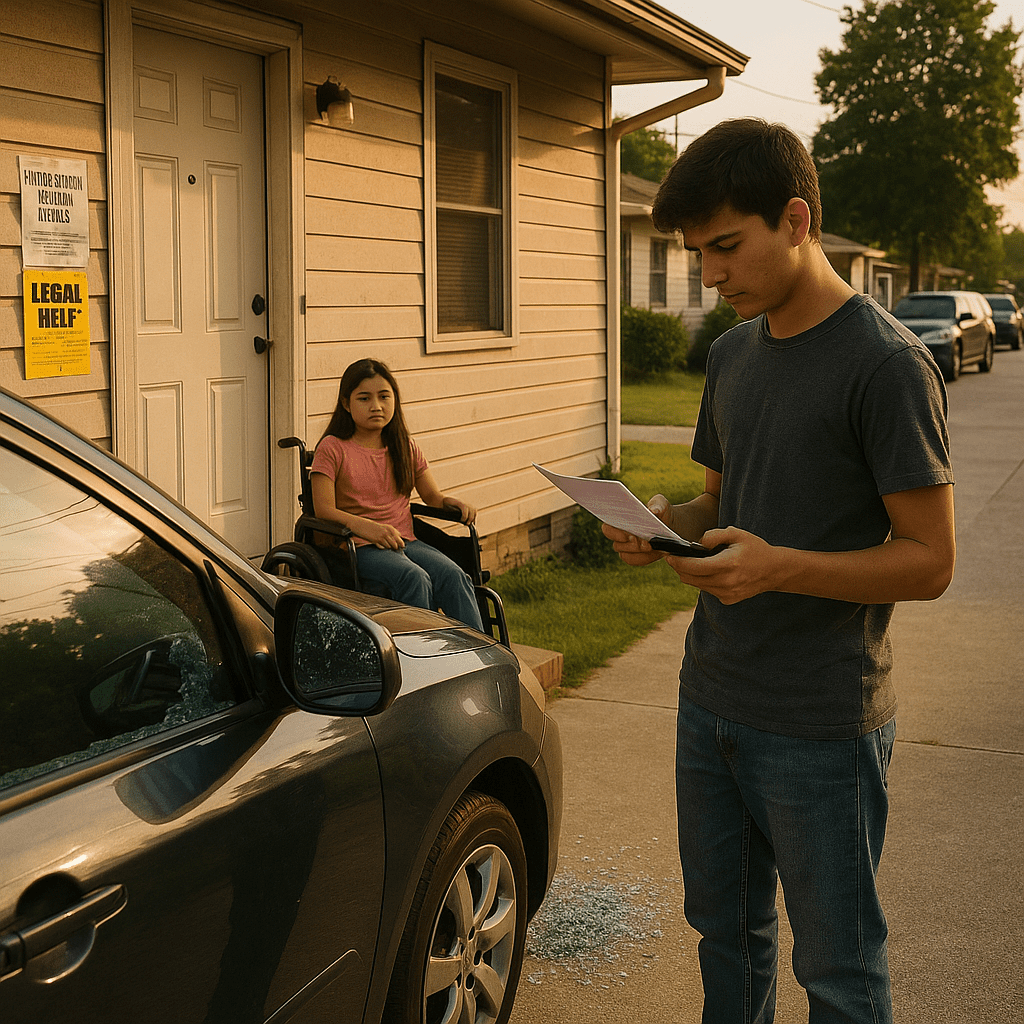
The story of 18-year-old Jonathan Escalante begins in a driveway. His mother, Vilma Cruz, a 38-year-old Honduran house painter, had just pulled up to her newly leased home in Kenner when federal agents surrounded her vehicle. She managed one quick call to her eldest son before officers smashed the passenger window and detained her, according to Escalante. Court records reviewed later by reporters showed no criminal history for Cruz in Jefferson or Orleans Parish, and her son said she had a clean record.
Her arrest instantly transformed the household. Escalante, a recent high school graduate and U.S. citizen, is now the primary caregiver for his 9-year-old sister, who has a physical disability. He has begun trying to access his mother’s bank account, track down his sister’s medical records and doctors, and figure out how to keep the family’s bills current when everything from the utilities to the lease is in his mother’s name.
“Honestly I’m not ready, having to take care of all of these responsibilities,” he said. “But I’m willing to take them on if I have to. And I’m just praying that I get my mom back.”
Escalante’s situation is not an isolated case. The Department of Homeland Security says more than 250 people have been arrested this month across southeast Louisiana as part of the Catahoula Crunch operation, which aims for 5,000 arrests in total. Similar enforcement sweeps have unfolded in Los Angeles, Chicago and Charlotte, North Carolina. While DHS has said the operation is targeting violent offenders, records reviewed by the Associated Press found that most of those detained in the first two days had no criminal histories, underscoring the gap between the stated focus and the practical impact on local families.
For those families, the impact is measured in caregiving gaps as well as legal ones. In some homes, the person taken away was both the primary breadwinner and the daily caretaker, leaving teenagers to “grow up fast” and substitute for an absent mother or father. Immigrant rights groups and local advocates say they watched fear build even before the arrests began. In the weeks leading up to the crackdown, dozens of parents without legal status sought emergency custody arrangements with relatives, aided by pro bono lawyers at events organized in Kenner and across the New Orleans region.
Community leaders describe children moving through their school days with a new kind of uncertainty. “Children are going to school unsure whether their parents will be home at the end of the day,” Raiza Pitre of the Hispanic Chamber of Commerce of Louisiana told a Jefferson Parish city council meeting. Juan Proaño, CEO of the League of United Latin American Citizens, said he receives dozens of calls daily from Louisiana families worried about being separated from their children. His organization is now helping Escalante navigate life without his mother, while also preparing him for the possibility that her absence could last weeks, months or end in deportation.
State officials are divided over the broader strategy. Louisiana Lt. Gov. Billy Nungesser, a Republican, has broken with his party to question the raids, arguing that they are undermining the regional economy by frightening even immigrants with valid work permits into staying home. “So I think there needs to be some clarity of what’s the plan,” he said. “Are they going to take every person, regardless if they got kids, and they’re going to leave the kids behind?” In conservative Kenner, however, Police Chief Keith Conley has hailed the federal mission as a “prayer answered,” citing a batch of press releases since 2022 involving immigrants accused of crimes and warning about unlicensed, uninsured drivers.
The human consequences of those enforcement choices are visible on residential streets. In another Kenner household, 19-year-old restaurant worker Heylin Leonor Reyes watched agents take away her father, Jose Reyes, a Honduran construction worker and landscaper whom the family says has lived in the United States for 16 years. He had stayed home for weeks to avoid arrest, but finally left to pay rent at a nearby bank. Unmarked vehicles followed him, pulled up at his house, and agents removed him from his car as his daughters sobbed and begged, according to video reviewed by reporters.
“We were begging that they let him go,” Heylin said. “He’s the one who provides for food, pays bills, pays the rent. We were begging them because they’re leaving a family totally in the dark, trying to figure out what to do, figuring out where to get money to get by.” DHS said Jose Reyes had committed an unspecified felony and had previously been deported but did not provide details. His daughter says her income is not enough to cover rent and other expenses for her three younger siblings, two of whom are U.S.-born citizens. Their mother is caring for the youngest, a 4-year-old who watched agents seize his father from the doorway.
The Reyes family’s immediate challenge is simply locating him. “We were not given that information,” Heylin said. “We were given absolutely nothing.” As she looks for a lawyer, she is also trying to shield her siblings from the full emotional weight of what has happened. Escalante is taking a similar approach with his own sister, not yet telling her about their mother’s arrest in the hope that Cruz might be released before he has to explain her absence.
Even neighbors who support tougher immigration enforcement express discomfort with the way family life is being disrupted. Kenner resident Kristi Rogers, who watched masked agents detain Cruz, said she sympathized with attempts to remove dangerous offenders but hoped that “criminals” were the only ones being deported. Local court records and family accounts in several cases, including Cruz’s, did not reveal prior criminal histories, raising questions about how enforcement priorities are being carried out on the ground.
For now, the teens left behind are improvising a patchwork of responsibilities once handled by adults, with little guidance from the government actors who created the vacuum. Advocacy groups say they will continue organizing emergency custody clinics and legal referrals as Catahoula Crunch proceeds toward its 5,000-arrest goal. State and local officials, including Nungesser and Jefferson Parish leaders, are likely to face continued pressure in the weeks ahead to scrutinize the operation’s impact on children and to clarify what protections, if any, exist for families where teenagers are the only remaining caregivers.
Daniel Owens serves as a Senior Correspondent for Just Right News, where he leads the newsroom’s coverage of Education, Workforce, and Upward Mobility. In an era where the national conversation often overlooks the practical foundations of success, Owens brings a principled perspective to the forefront of the media landscape. His work is defined by a commitment to the idea that a strong society is built on the pillars of quality education, a robust work ethic, and the removal of bureaucratic barriers to individual achievement.
Born and raised in Cleveland, Ohio, Owens’s worldview was shaped by the industrial landscape of the Midwest. Growing up in a city known for its grit and resilience, he witnessed firsthand the transformative power of steady employment and the devastating effects of economic stagnation. This background instilled in him a deep respect for the American worker and a healthy skepticism toward top-down government solutions that often fail to reach the communities they intend to help. As an African American man who has navigated the path to professional success, Owens approaches his beat with a nuanced understanding of how meritocracy and personal responsibility intersect with opportunity. He frequently draws on his roots to highlight the importance of family stability and community-led initiatives in fostering the next generation of leaders.
At Just Right News, Owens is the architect of the acclaimed feature series, “The Learning Curve.” Through this platform, he explores the evolving landscape of American schooling, from the rise of the school choice movement to the revitalization of trade schools and vocational training. He frequently challenges the status quo of higher education, advocating for a return to academic rigor and the practical alignment of degrees with market demands. For Owens, education is not merely about obtaining credentials; it is about equipping young people with the tools necessary to lead self-sufficient, meaningful lives. His reporting on “The Learning Curve” has become essential reading for parents and policymakers who believe that educational competition and parental rights are the keys to a brighter future.
Now based in Raleigh, North Carolina, Owens finds himself at the heart of one of the nation’s most dynamic regions for innovation and growth. Raleigh’s unique blend of traditional values and a fast-paced economy provides the perfect backdrop for his reporting on the modern workforce. From the tech hubs of the Research Triangle to the rural communities of the South, he tracks how shifts in the economy are impacting families and local industries. His reporting often highlights the success stories of entrepreneurs and workers who are thriving by embracing the values of hard work and innovation.
Throughout his career, Daniel Owens has remained a steadfast voice for the student seeking a better path and the worker striving for a better life. His reporting for Just Right News serves as a vital resource for readers who value common-sense solutions to the challenges of the 21st-century economy. By focusing on the intersection of policy and the human spirit, Owens continues to provide a roadmap for how individuals and communities can achieve lasting upward mobility.