

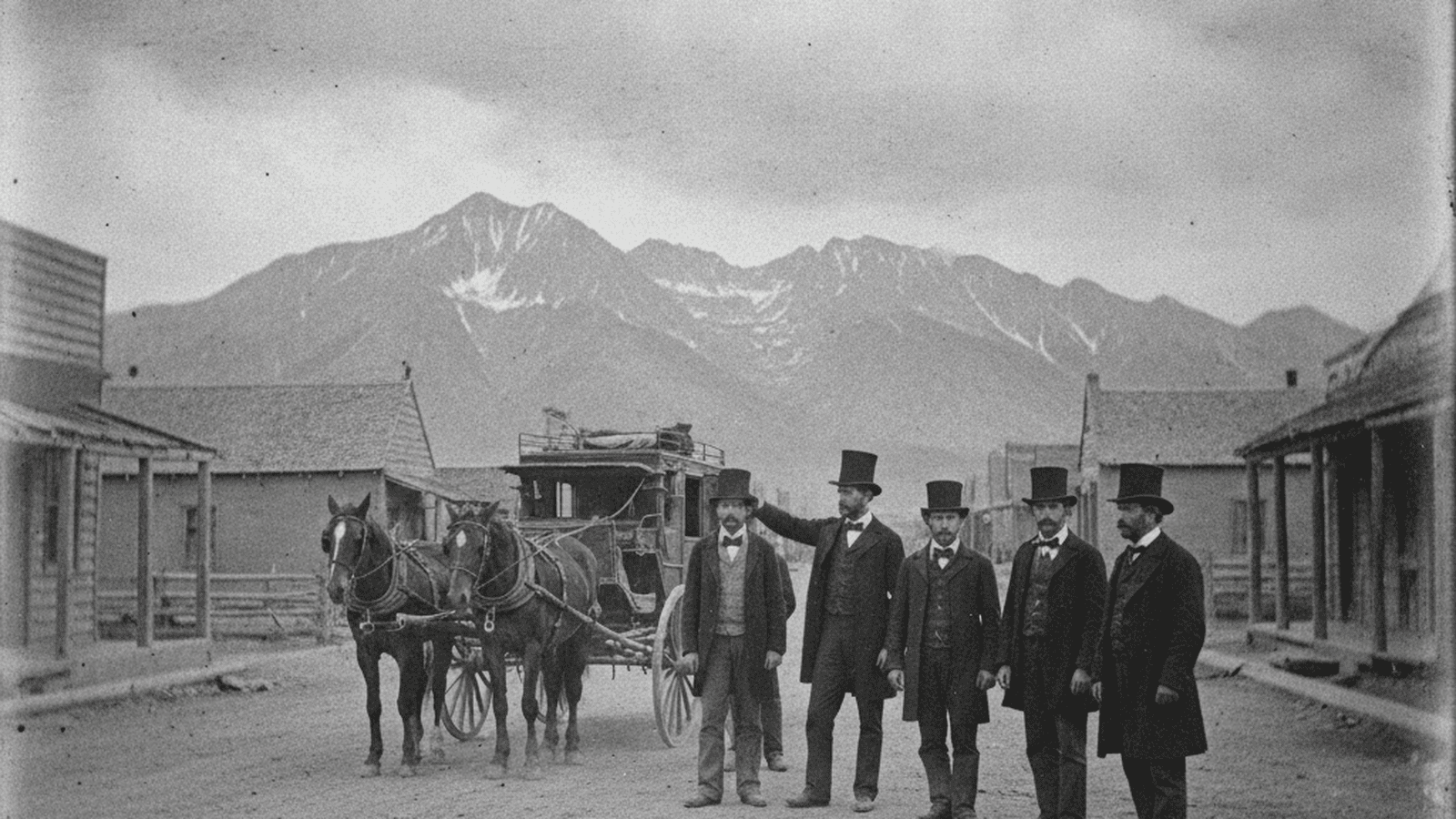
In 1851, federal officials appointed to the newly formed Utah Territory fled their posts following a series of bitter confrontations with Governor Brigham Young. This mass resignation created a constitutional crisis in the United States by leaving the territory without a legal federal administration or functioning judiciary.
TLDR: In 1851, federal appointees in Utah Territory abandoned their posts after clashing with Governor Brigham Young over religious influence and legal authority. Their departure left the region without a functioning federal government, sparking a national debate over territorial sovereignty and eventually leading to the armed Utah War of 1857.
In the autumn of 1851, the fledgling Utah Territory faced a total collapse of its federal administrative structure. This crisis, known as the “Runaway Officials” incident, represented one of the earliest and most significant challenges to federal authority in the American West. The conflict pitted newly arrived federal appointees against the established ecclesiastical leadership of the Church of Jesus Christ of Latter-day Saints, led by Governor Brigham Young. This confrontation tested the limits of territorial governance and the reach of the United States Constitution in remote regions.
The trouble began shortly after the Compromise of 1850 established the Utah Territory. President Millard Fillmore appointed a mix of local leaders and outsiders to govern the region. Among the outsiders were Chief Justice Lemuel Brandebury, Associate Justice Perry Brocchus, and Territorial Secretary Broughton Harris. Upon their arrival in Salt Lake City in the summer of 1851, these officials found a society where the lines between religious law and civil governance were almost non-existent, creating immediate friction with the local population.
Tensions escalated rapidly during a public conference in September. Justice Brocchus delivered a speech that was intended to be a patriotic address but shifted into a sharp critique of the community’s morality, specifically targeting the practice of plural marriage. Governor Young responded with a fiery rebuttal, reportedly suggesting that if Brocchus were to repeat such insults, he might not leave the territory alive. The exchange shattered any hope of a working relationship between the federal appointees and the local executive branch.
Secretary Harris further complicated matters by refusing to turn over the territorial seal or the $24,000 in federal funds earmarked for the legislature. He argued that the census and election proceedings conducted by Young were illegal under the organic act that created the territory. Without the secretary’s cooperation, the territorial legislature could not legally convene or pay its members, effectively paralyzing the local government. Harris insisted that federal law must be followed to the letter, while Young argued for the practical needs of the settlers.
Feeling physically threatened and politically marginalized, Brandebury, Brocchus, and Harris abandoned their posts on September 28, 1851. They fled back to Washington, D.C., leaving Utah without a functioning supreme court or a secretary to certify its laws. This mass exodus created a constitutional vacuum, as the federal government had no immediate way to enforce its statutes or oversee the actions of the territorial governor from thousands of miles away. The departure was seen by locals as an abandonment of duty, while the officials viewed it as a necessary escape from a lawless regime.
Upon their return to the capital, the officials submitted a report to President Fillmore alleging that Utah was in a state of open rebellion and that the will of Brigham Young was the only law in the territory. While Young’s supporters in Washington attempted to frame the officials as cowards who had shirked their duties, the incident deeply alarmed federal authorities. It raised fundamental questions about the limits of popular sovereignty and whether a religious minority could effectively nullify federal oversight through intimidation and local control.
The crisis of 1851 served as a direct precursor to the more violent Utah War of 1857. It forced the United States government to reconsider how it managed remote territories where local customs clashed with federal mandates. In the years following the incident, Congress moved to tighten its grip on territorial appointments and eventually passed the Morrill Anti-Bigamy Act of 1862, signaling a long-term shift toward more assertive federal intervention in the Mountain West and a redefinition of the relationship between church and state.

Lila Hayes serves as a Staff Writer for Just Right News, where she anchors the “Courts, Law, and Constitutional Order” beat. Her work is defined by a steadfast commitment to the foundational principles of the American republic and a rigorous defense of the legal frameworks that ensure national stability. As a primary voice for the outlet, she provides readers with a clear-eyed analysis of the judiciary, focusing on the importance of originalism and the preservation of the separation of powers.
Lila’s perspective was forged in the American heartland. Raised in St. Louis, Missouri, she grew up in a Hispanic household where the values of hard work, faith, and respect for the law were paramount. Her upbringing instilled in her a deep appreciation for the American Dream and the legal protections that make it possible. This Missouri background remains a cornerstone of her reporting, providing a grounded, common-sense counter-narrative to the often-insular legal circles of the coastal elite. She understands that the decisions made in high-court chambers have real-world consequences for families and small business owners across the country.
At Just Right News, Lila has become widely recognized for her signature feature series, “The Rulebook of Power.” In this ongoing project, she delves into the mechanics of the federal government, examining how administrative overreach and judicial activism can threaten the delicate balance of the Constitution. She approaches her beat with the tenacity of a veteran journalist and the precision of a legal scholar, consistently advocating for a judiciary that interprets the law as written rather than legislating from the bench. For Lila, the Constitution is not a “living” document subject to the whims of modern social trends; it is a fixed standard that ensures the government remains the servant of the people, not their master.
Now based in Philadelphia, Pennsylvania, Lila finds herself at the very epicenter of American constitutional history. Living and working in the city where the Founders drafted the documents she defends daily provides a constant source of inspiration. The historic halls and landmarks of Philadelphia serve as a daily reminder of the high stakes involved in her reporting. Her presence in the city allows her to bridge the gap between the historical intent of the law and its contemporary application, ensuring that the legacy of the Founding Fathers remains central to the national conversation.
Throughout her career, Lila has remained dedicated to the idea that a free society requires an informed citizenry and a transparent legal system. Her reporting is more than just a collection of headlines; it is a defense of the constitutional order that has sustained the nation for over two centuries. By focusing on the “Rulebook of Power,” she ensures that her readers understand not just what is happening in the courtrooms, but why those decisions matter for the future of American liberty. Lila Hayes continues to be a vital voice for those who believe that the law should be a shield for the citizen and a constraint on the state.