

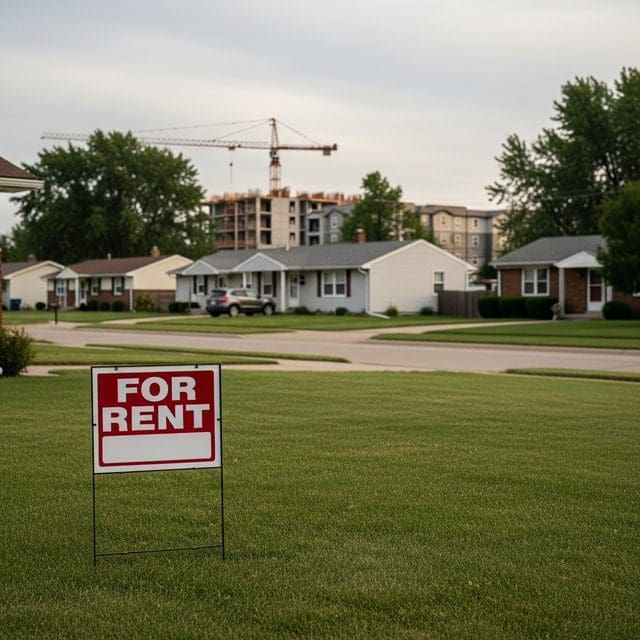
New federal data reveals shifting income limits and rent benchmarks as half of American renter households struggle with housing costs exceeding 30 percent of their income.
The Department of Housing and Urban Development (HUD) has released updated Fiscal Year 2026 Fair Market Rents (FMR) and income-limit data, providing new 40th-percentile rent benchmarks down to the ZIP code level. These figures serve as the operative caps for housing vouchers and federal assistance programs. The update arrives as a new Congressional Research Service brief confirms that roughly half of all U.S. renter households are now cost-burdened, spending more than 30 percent of their gross income on housing. This mismatch between federal aid and market rates continues to define the domestic economic landscape.
Accompanying the rent data, HUD adjusted median family income limits with an average increase of 3.4 percent. These adjustments redefine thresholds for “low” and “extremely low” income categories, determining eligibility for the Low-Income Housing Tax Credit (LIHTC) program. While these technical shifts aim to keep pace with inflation, the Congressional Research Service warns that federal rental assistance reaches only a small portion of eligible households. The highest burdens remain concentrated among the lowest-income renters, where demand for subsidized units vastly outstrips available federal funding.
In a shift toward market-oriented messaging, the administration’s 2026 accomplishments report claims national median rents have hit a four-year low and mortgage affordability has reached a four-year high. The report attributes these trends to deregulation and lower borrowing costs, framing the story around market corrections rather than subsidy expansions. However, this optimism is tempered by broader indicators. Consumer sentiment fell 8 percent in early August, and retail sales in July saw their sharpest decline in 14 months. This decline suggests many households are tightening budgets despite official claims of improved affordability.
For seniors on fixed incomes, the housing squeeze is particularly acute. The Social Security Administration confirmed a 2.8 percent Cost-of-Living Adjustment (COLA) for 2026, a figure trailing the 3.4 percent increase in HUD’s income benchmarks. This disparity suggests the most vulnerable renters may see utility and housing costs rise faster than their monthly benefits. Furthermore, a persistent K-shaped wealth gap is visible; while wealthy Americans drive demand in luxury travel, lower-income consumers face constrained demand and rising debt. Airfares have increased 25 percent year-over-year, yet travel demand remains sustained by the top tier of earners.
Regional variations further complicate the national picture. In Tulsa, Oklahoma, where the median rent sits at approximately $1,052, local families face a relatively stable market compared to coastal hubs. Nevertheless, they remain subject to federal policy shifts and inflationary pressures. As the federal government rolls out new initiatives, such as the “Treatment First” toolkit linking homelessness to addiction recovery, the focus is shifting toward integrating service-based interventions with existing housing stock. This represents a pivot in federal guidance toward treatment-integrated housing rather than traditional housing-only models.
As the nation navigates these fiscal challenges, the intersection of public policy and private property rights remains a central tension. The fundamental concern for most Americans remains the cost of their primary residence. For the taxpayer, the challenge remains balancing the necessity of a social safety net with the reality of limited federal resources and the need for sustainable, market-driven housing growth that respects local sovereignty and individual liberty.

Deborah Cole serves as a Senior Correspondent for Just Right News, where she spearheads the network’s coverage of Housing, Infrastructure, and Mobility. With a career defined by a commitment to rigorous reporting and a focus on the fundamental pillars of American community life, Deborah brings a principled perspective to the complex issues that dictate how and where we live. Her work is grounded in the belief that sound policy, fiscal responsibility, and respect for private property are the essential foundations of a prosperous society.
Originally from Boston, Massachusetts, Deborah’s upbringing in one of the nation’s oldest and most historically significant cities deeply influenced her professional trajectory. Growing up amidst the architectural legacy and dense urban planning of New England, she developed an early appreciation for the importance of durable infrastructure and the role of local tradition in shaping neighborhoods. Her perspective is informed by the classic American values of her hometown—hard work, community cohesion, and a healthy skepticism of top-down bureaucratic mandates that often overlook the unique needs of individual citizens.
Today, Deborah operates from her base in Austin, Texas, a city that serves as a primary laboratory for her reporting. Austin’s rapid expansion and its status as a hub for innovation and migration provide her with a front-row seat to the most pressing challenges in modern infrastructure and housing. From the Lone Star State, she chronicles the tensions between rapid growth and the preservation of the American Dream, often highlighting how market-driven solutions and deregulation can address the housing shortages that plague many of the country’s metropolitan areas.
At Just Right News, Deborah is perhaps best known for her signature feature series, “Where We Live.” Through this platform, she explores the intersection of public policy and private life, moving beyond mere statistics to tell the stories of families, small business owners, and local developers. Her reporting frequently highlights the importance of mobility—not just in terms of transportation and transit, but as a vehicle for economic opportunity and social stability. She remains a staunch advocate for the taxpayer, consistently scrutinizing government spending on large-scale projects and advocating for transparency in how infrastructure dollars are allocated.
Deborah’s beat is more than just a collection of policy topics; it is an investigation into the physical and legal structures that allow families to flourish. Whether she is reporting on the impact of zoning laws on suburban development or the necessity of maintaining the nation’s highway systems, her work is characterized by a dedication to the facts and a respect for the constitutional principles that protect the rights of homeowners.
As a Senior Correspondent, Deborah Cole continues to be a vital voice for Just Right News, providing the audience with the clarity and context needed to navigate an ever-changing landscape. Her reporting ensures that the values of individual liberty and local sovereignty remain at the forefront of the national conversation regarding the future of our cities and towns. Through her tireless efforts, she remains committed to informing the public on the issues that hit closest to home.