

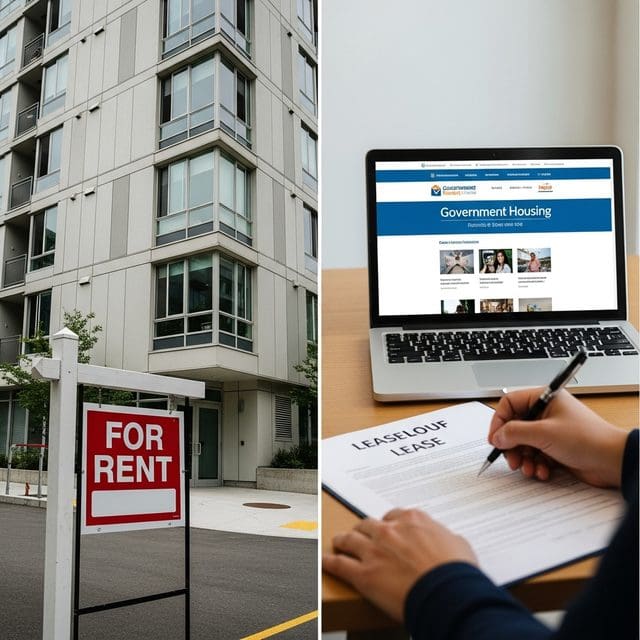
Lawmakers and federal agencies are moving to overhaul traditional security deposit requirements as high move-in costs and a thinning housing supply squeeze American renters.
The financial barrier to entry for American renters is facing an unprecedented legislative and market-driven overhaul. As median home prices in markets like King County, Washington, hover near $975,000, the rental market has become the only viable option for a growing segment of the population. However, the upfront cost of moving—often requiring thousands of dollars in security deposits and first month’s rent—remains a primary driver of housing instability and a significant hurdle for workforce mobility.
At the federal level, the proposed DEPOSIT Act represents a shift toward direct intervention. This legislation would authorize the Department of Housing and Urban Development (HUD) to allow Section 8 and HOME program funds to cover security deposits and moving expenses. Furthermore, the bill proposes the creation of a revolving fund utilizing unclaimed deposits to assist future tenants. This is complemented by the Choice in Affordable Housing Act, a $500 million federal proposal designed to incentivize landlords in low-poverty areas to accept voucher holders by providing dedicated deposit assistance.
While federal agencies debate these subsidies, the private sector has already begun moving away from the traditional cash-escrow model. Platforms like Airbnb have largely barred hosts from charging security deposits on-platform, shifting instead to internal damage protection programs like AirCover. In the long-term residential market, reporting from the Seattle Times highlights a surge in ‘deposit-free’ insurance products. These tools allow renters to pay a small monthly fee or a one-time non-refundable premium instead of a large lump sum. However, consumer advocates warn that these services may offer fewer tenant protections and can end up costing more over the duration of a lease, as the payments do not build equity or return to the tenant upon move-out.
State-level policy is also trending toward strict caps to protect the liquidity of the American taxpayer. California recently joined at least 11 other states in capping residential security deposits at a maximum of one month’s rent, a regulation that went into effect on July 1, 2026. This move has forced industry groups to update compliance forms and return-agreement language. In contrast, Washington state currently lacks a statutory cap on deposit size, requiring only that the amounts be ‘reasonable’ and returned within 21 days with an itemized list of deductions. This regulatory vacuum leaves local tenants reliant on city-level protections or private insurance alternatives.
The urgency of these reforms is underscored by a looming supply crunch. Local rental data in major hubs like Seattle show average rents hovering around $2,095. While prices have remained relatively flat recently, analysts warn that the pipeline for new apartment supply in 2025 and 2026 is thin. This lack of inventory is expected to give landlords more leverage to raise rents, making the initial move-in cost even more of a gatekeeper for low-to-middle-income families.
Financial institutions are also playing a peripheral role in this shifting landscape. Small-business landlords are increasingly turning to high-reward credit products, such as the Chase Ink Business Cash card, which currently offers a record 100,000-point bonus, to manage property maintenance and cash flow. While these tools assist the ‘mom-and-pop’ landlord in maintaining their investments, they do little to alleviate the liquidity crisis facing tenants. As HUD begins to study ‘alternative to security deposit’ products, the tension between market efficiency and individual property rights remains a central theme. For the principled observer, the goal is a housing market that functions without constant bureaucratic intervention, yet the current cost-of-living crisis suggests that the traditional deposit may be a relic that the modern economy can no longer afford to sustain.

Deborah Cole serves as a Senior Correspondent for Just Right News, where she spearheads the network’s coverage of Housing, Infrastructure, and Mobility. With a career defined by a commitment to rigorous reporting and a focus on the fundamental pillars of American community life, Deborah brings a principled perspective to the complex issues that dictate how and where we live. Her work is grounded in the belief that sound policy, fiscal responsibility, and respect for private property are the essential foundations of a prosperous society.
Originally from Boston, Massachusetts, Deborah’s upbringing in one of the nation’s oldest and most historically significant cities deeply influenced her professional trajectory. Growing up amidst the architectural legacy and dense urban planning of New England, she developed an early appreciation for the importance of durable infrastructure and the role of local tradition in shaping neighborhoods. Her perspective is informed by the classic American values of her hometown—hard work, community cohesion, and a healthy skepticism of top-down bureaucratic mandates that often overlook the unique needs of individual citizens.
Today, Deborah operates from her base in Austin, Texas, a city that serves as a primary laboratory for her reporting. Austin’s rapid expansion and its status as a hub for innovation and migration provide her with a front-row seat to the most pressing challenges in modern infrastructure and housing. From the Lone Star State, she chronicles the tensions between rapid growth and the preservation of the American Dream, often highlighting how market-driven solutions and deregulation can address the housing shortages that plague many of the country’s metropolitan areas.
At Just Right News, Deborah is perhaps best known for her signature feature series, “Where We Live.” Through this platform, she explores the intersection of public policy and private life, moving beyond mere statistics to tell the stories of families, small business owners, and local developers. Her reporting frequently highlights the importance of mobility—not just in terms of transportation and transit, but as a vehicle for economic opportunity and social stability. She remains a staunch advocate for the taxpayer, consistently scrutinizing government spending on large-scale projects and advocating for transparency in how infrastructure dollars are allocated.
Deborah’s beat is more than just a collection of policy topics; it is an investigation into the physical and legal structures that allow families to flourish. Whether she is reporting on the impact of zoning laws on suburban development or the necessity of maintaining the nation’s highway systems, her work is characterized by a dedication to the facts and a respect for the constitutional principles that protect the rights of homeowners.
As a Senior Correspondent, Deborah Cole continues to be a vital voice for Just Right News, providing the audience with the clarity and context needed to navigate an ever-changing landscape. Her reporting ensures that the values of individual liberty and local sovereignty remain at the forefront of the national conversation regarding the future of our cities and towns. Through her tireless efforts, she remains committed to informing the public on the issues that hit closest to home.