

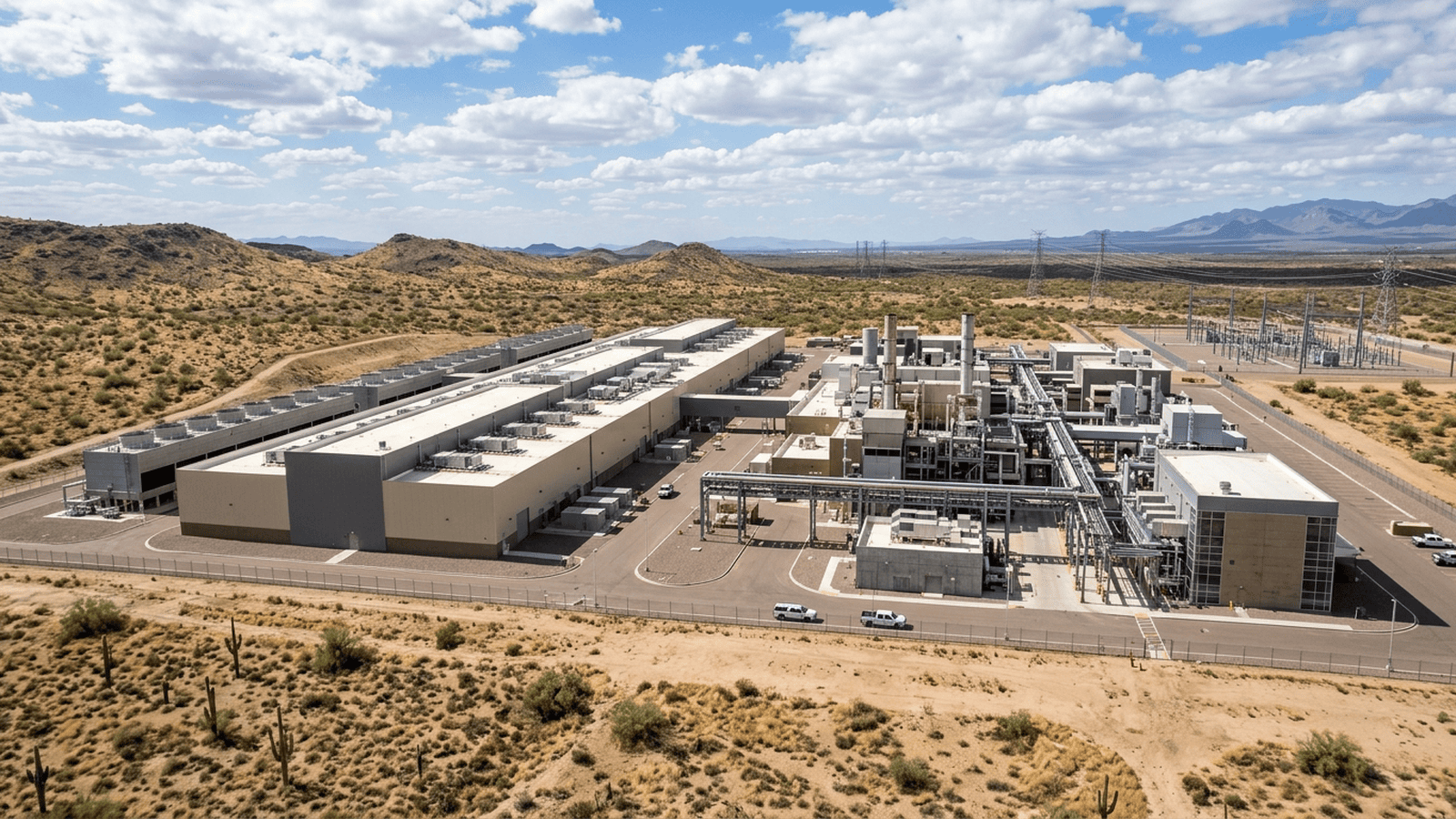
President Trump said the United States would block data centers from moving overseas and impose substantial penalties on companies that try. Treasury Secretary Scott Bessent linked the concern to technology transfer and reliance on overseas production, noting that 97 percent of high-end chips are made in Taiwan. He said large Taiwan Semiconductor Manufacturing Company fabrication plants are being built in Arizona, with substantial chip-industry onshoring hoped for by the end of Trump’s term. The interview did not set out penalty amounts, covered companies, compliance forms, enforcement arrangements, or deadlines. The policy direction is clear, but the practical rules and oversight process remain unspecified in the transcript excerpt.
TLDR: Trump said companies could face penalties for moving data centers overseas, while Bessent tied the approach to technology security and reliance on foreign production. The interview does not spell out covered projects, penalty amounts, enforcement roles, or timelines.
President Donald Trump said his administration would not allow data centers to move to other countries and would impose “tremendous penalties” on companies that try. Treasury Secretary Scott Bessent said the president is concerned about technology transfer offshore and the risk of relying on overseas production. The transcript does not specify how the proposed penalties would work or which companies and projects they would cover.
Bessent gave the administration’s stated rationale during an interview on “Face the Nation.” He said the United States once led the chip industry, while 97 percent of high-end chips are now made in Taiwan. He described that concentration as a strategic vulnerability. In his account, encouraging domestic production and preventing a similar dependence on overseas data centers are common-sense steps to address that concern.
The secretary also made clear that he had not discussed the president’s data-center remarks with him. Bessent said he was present at the press conference but did not speak with Trump afterward. That distinction matters: the president announced a firm direction, while the Treasury secretary described the broader concern behind it without supplying implementation details.
The discussion placed data centers alongside the administration’s effort to bring chip production back to the United States. Bessent said large fabrication plants, or fabs, are being built by Taiwan Semiconductor Manufacturing Company in Arizona. He said the administration hopes to have substantial onshoring of the chip business by the end of Trump’s term. The transcript gives no construction costs, production targets, or schedule for the Arizona facilities.
The president’s statement points toward a more restrictive approach to where companies may build or operate data centers. It also signals potential penalties for companies seeking to locate them outside the United States. Those measures could limit business choices, but the excerpt does not establish that a formal rule has been issued or identify any affected company. No regulatory text, enforcement agency, appeal process, or effective date appears in the material provided.
Bessent’s explanation focuses on strategic dependence and technology transfer, not on environmental or public-health effects. The excerpt does not discuss electricity demand, water use, local permitting, or effects on nearby communities. Those issues cannot be assigned a role in the administration’s stated case on the basis of this interview segment. The policy argument presented here is about keeping technology infrastructure and production in the country.
The practical impact for companies remains undefined in the transcript. Firms considering overseas data centers could face penalties under the approach Trump described, but no amount or calculation method is given. The excerpt identifies no forms, reporting requirements, compliance checks, enforcement timetable, or deadline for companies. It also does not say whether the policy would apply to planned projects, existing facilities, or both. Those details are not established by the president’s broad announcement.
Without those terms, companies cannot tell from this exchange what conduct might trigger a penalty or how a decision would be reviewed. The transcript does not explain whether companies would receive notice before enforcement, whether they could challenge a penalty, or which agency would make those decisions. These are unanswered questions about implementation, not details supplied by Bessent.
The Arizona fabs provide a concrete example of the domestic chip investment Bessent discussed, but the interview gives little information about their progress. It does not state when production will begin, how much capacity the facilities will add, or what share of chip demand they could meet. Bessent’s hope for substantial onshoring by the end of Trump’s term is an aim, not a detailed timetable in this excerpt.
The policy announcement and the chip-building effort are connected in the interview by the administration’s concern about dependence on overseas technology and production. But the transcript does not describe a formal link between the two initiatives. It does not say that data-center penalties would depend on chip investment, or that companies would receive incentives for building facilities in the United States.
The exchange therefore records a stated policy direction and its national-security rationale, but not a completed regulatory framework. Bessent’s account of his limited discussion with Trump underscores how little implementation information the interview provides. No written policy deadline, oversight process, or official responsible for enforcement is named. Any future rules, penalties, timelines, and compliance obligations will need to be judged from formal details when they become available.

Eric Nolan serves as the Senior Correspondent for Food, Water, and Environmental Health at Just Right News, where he brings a principled, common-sense perspective to the most fundamental issues facing the American public. With a career dedicated to uncovering the truth behind the policies that govern our natural resources, Eric has become a trusted voice for readers who value traditional stewardship over bureaucratic overreach. His reporting is defined by a commitment to the idea that true environmentalism is rooted in the protection of the American family and the preservation of the nation’s agricultural heritage.
Raised in Fresno, California, Eric’s worldview was shaped in the heart of the San Joaquin Valley. Growing up in one of the world’s most productive agricultural hubs, he witnessed firsthand the vital connection between the land, the water, and the dinner table. In Fresno, he saw the resilience of farmers and the devastating impact that distant, top-down regulations can have on local communities. This upbringing instilled in him a deep respect for the producers who feed the country and a lifelong skepticism toward the alarmist narratives often pushed by mainstream media. For Eric, environmental health is not an abstract political talking point; it is a matter of ensuring that the people who work the land have the freedom and the resources to do so effectively.
Now based in Eugene, Oregon, Eric operates from a unique vantage point in the Pacific Northwest. Living in a region often defined by intense environmental debate, he provides a necessary counter-narrative to the prevailing trends of the area. From his base in Eugene, he monitors the shifting tides of federal and state policies, ensuring that the voices of rural citizens and property owners are not drowned out by urban activism. His reporting often bridges the gap between the rugged realities of the outdoors and the legislative halls where decisions are made, offering a grounded perspective that prioritizes local sovereignty and practical solutions.
As the lead for the acclaimed feature series “Earth on the Table,” Eric explores the intricate journey of the American food supply. He tackles critical issues such as water rights, soil health, and food security through a lens of national stability and individual liberty. He believes that a healthy environment and a thriving economy are not mutually exclusive, but rather two sides of the same coin of national prosperity. His work consistently highlights how innovation and private-sector ingenuity are the most effective tools for ensuring clean water and a safe food supply, rather than the expansion of the administrative state.
At Just Right News, Eric’s reporting serves as a vital resource for those who seek accountability and transparency. Whether he is investigating the impact of federal land management on local economies or examining the safety of the national food infrastructure, his work remains anchored in the values of heritage and hard work. Eric Nolan continues to be a leading voice in environmental journalism, championing the belief that the best way to protect our natural resources is to empower the people who live and work closest to them.