

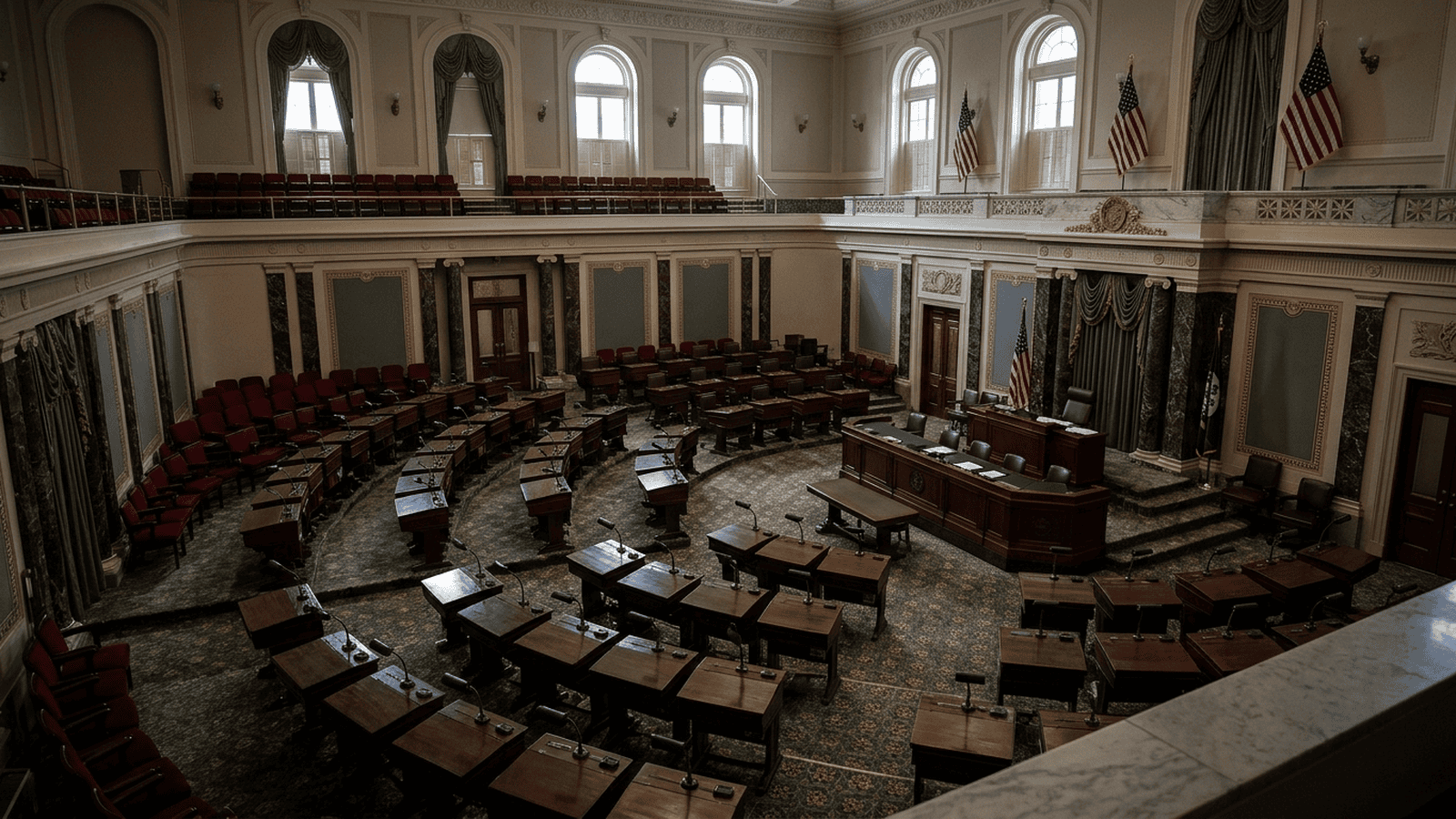
The Senate rejected a House-adopted resolution directing President Trump to remove U.S. forces from hostilities with Iran, voting 48 to 51. Three Republicans joined nearly all Democrats in support, while Sen. John Fetterman was the only Democrat not to back it. The measure’s practical effect would have been largely symbolic, and administrations of both parties have disputed the constitutionality of the War Powers Resolution process. The vote leaves presidential authority unchanged by this measure and keeps the disagreement between Congress and the executive branch unresolved. No new fees, forms, deadlines or enforcement steps were specified; lawmakers retain other oversight avenues, including the funding process.
TLDR: The Senate vote failed to limit President Trump’s authority over Iran, despite concerns about the war’s economic toll and support from three Republicans. The result leaves the legal dispute over congressional war powers open, with funding and future votes remaining possible routes for oversight.
The Senate has rejected another effort to limit President Donald Trump’s authority over military action involving Iran. The measure failed Thursday by a vote of 48 to 51. Three Republicans, Susan Collins of Maine, Lisa Murkowski of Alaska and Rand Paul of Kentucky, joined nearly all Democrats in supporting it. John Fetterman of Pennsylvania was the lone Democrat not to vote for the resolution.
The official rationale for the measure was to direct the president to remove U.S. forces from hostilities with Iran. The excerpt gives no stated rationale from senators who opposed it. The vote instead preserved the current division of authority while leaving the legal dispute over Congress’s power unresolved.
The resolution had been adopted by the House and was aimed at reining in the president’s ability to strike Iran. Its practical effect would have been largely symbolic, according to the account. That distinction matters: the Senate did not enact a new limit on presidential action, and the vote did not settle how the War Powers Resolution applies to the conflict.
Under the War Powers Resolution of 1973, a president must withdraw forces from hostilities if Congress directs that step through a concurrent resolution. Administrations of both parties have argued that this process is unconstitutional. The White House argued against the measure’s validity after a similar resolution was adopted over the summer, leaving a basic disagreement between the branches in place.
The Senate’s vote came after Republicans suffered sweeping losses in the midterm elections. Voters cited the Iran war and its economic toll among their top concerns. Sen. Tim Kaine of Virginia, who has led Democratic efforts to restrict the president’s authority on Iran, urged Republicans to support the measure. He said the election results made public opposition to the war clear and argued that the Senate should respond to that message.
Kaine described the war as unilateral and said its costs had risen for American families. Those comments were his argument for the resolution, not a finding established by the Senate vote. The result showed that concern about the war and its effect on the economy did not produce enough support to pass this measure. It also showed that public frustration, as described by Kaine and reflected in voter concerns, did not itself change the legal powers available to the president.
The vote also reflected a change from earlier Senate action. In June, four Republicans joined most Democrats to adopt a resolution intended to constrain the president on Iran. Trump pushed back against the Republican senators who supported it at a lunch with Senate Republicans the following day. After that meeting, a separate effort to restrict presidential war powers fell short as key Republicans changed their votes.
Thom Tillis of North Carolina, who had supported a previous effort, voted against Thursday’s resolution. He said this measure would not go to the president and would amount to a statement from Congress. Tillis said he was using other means, including the funding process, to address supplies and hold Defense Secretary Pete Hegseth accountable. His position illustrates that lawmakers can pursue oversight through channels other than a resolution directing the president to withdraw forces.
Since the war began in late February, Democrats have forced more than a dozen war-powers votes. Most have failed. One effort advanced in May with support from four Republicans and the absence of several GOP senators, but it later stalled after Republicans met with the president. Another House-adopted measure before the midterms also narrowly failed, even as some Republicans spoke more openly against the war.
The practical impact of Thursday’s vote is limited but clear. The Senate did not direct U.S. forces to leave hostilities with Iran, and the president’s authority was not curtailed by this resolution. There were no new fees, forms, compliance deadlines or enforcement steps described in the account, and no specific cost estimate was provided. The directly affected parties are the president, Congress and U.S. forces involved in the conflict; the measure’s failure leaves the existing dispute over executive and congressional authority unresolved.
That outcome preserves executive discretion while leaving Congress’s power to direct a withdrawal contested. It also leaves the economic concerns cited by voters in place without a new Senate restriction on the war. Further votes and the funding process remain available as avenues for lawmakers to express opposition or pursue oversight. Those are the necessary next steps for compliance and accountability, while the legal disagreement remains part of the plan ahead.

Olivia Kendall serves as the Senior Correspondent for Geopolitics, Defense, and Foreign Policy at Just Right News, where she provides a principled, conservative perspective on the complex forces shaping the global stage. With a career dedicated to deconstructing the intricacies of international relations, Kendall has become a trusted voice for readers who value national sovereignty, a robust military, and a foreign policy that prioritizes American interests above all else.
A native of Washington, D.C., Kendall’s professional journey is deeply rooted in her upbringing within the nation’s capital. Growing up in the epicenter of American political life, she developed an early and profound understanding of how policy is crafted and, more importantly, how it often fails to account for the values of the American heartland. This unique vantage point allowed her to witness firsthand the rise of globalist bureaucracies, fueling her commitment to reporting that champions the constitutional foundations of the United States. Her background as a British White American further informs her worldview, providing her with a keen appreciation for the Western tradition and the enduring importance of the “Special Relationship” in maintaining global stability.
Now based in Arlington, Virginia, Kendall operates from the doorstep of the Pentagon and the heart of the nation’s defense establishment. Her proximity to the decision-makers in the military and intelligence communities allows her to provide boots-on-the-ground reporting that is both timely and deeply informed. For Kendall, Arlington is more than just a base of operations; it is a daily reminder of the sacrifices made by the men and women in uniform. This connection to the defense community drives her rigorous coverage of military readiness and her advocacy for a “peace through strength” approach to diplomacy.
At Just Right News, Kendall is perhaps best known for her acclaimed feature series, “The World’s Shadow on America.” In this ongoing project, she explores the direct correlation between international developments and the daily lives of American citizens. Whether she is analyzing the encroachment of foreign adversaries in domestic supply chains or the impact of international treaties on local economies, Kendall’s work serves as a vital bridge between distant geopolitical shifts and their consequences at home. She rejects the notion that foreign policy is an abstract concern for elites, instead proving that what happens in the corridors of power in Brussels or Beijing has a tangible “shadow” that falls across every American doorstep.
Throughout her tenure, Kendall has remained a steadfast critic of international overreach and a vocal proponent of a clear-eyed, realistic foreign policy. She brings a sharp analytical mind to her beat, often challenging the prevailing narratives of the mainstream media to uncover the underlying truths that affect national security. Her reporting is characterized by a refusal to compromise on the truth and a dedication to the idea that a strong, secure America is the world’s best hope for liberty. As a Senior Correspondent, Olivia Kendall continues to lead the charge in providing the essential context and conservative insight necessary to navigate an increasingly volatile world.