

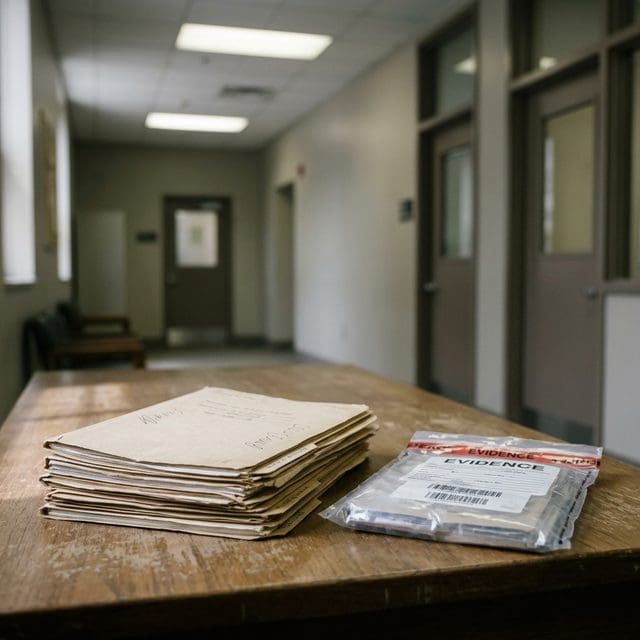
A forensic review of Jeffrey Epstein’s autopsy, an FAA router inquiry and a Cornell Greek-life review show what investigators have disclosed—and what remains unresolved.
New disclosures and reviews announced Monday have put a familiar question back in focus: what can the available records establish, and what remains unknown? The cases range from Jeffrey Epstein’s death to an air-traffic-control network failure, with university and corporate inquiries also still underway.
At University College London on Nov. 16, forensic-medicine professor Michael Freeman presented an analysis comparing the New York medical examiner’s rationale for Epstein’s death with autopsy evidence and a biomechanical assessment of his ligature injuries. UCL said the underlying medical-examiner file would be made public the same day, according to reporting by The New York Times and other outlets.
Freeman’s review highlighted three gaps: no photographs showing Epstein’s body at the scene, no preservation or examination of the ligature, and injury images he said were not explained by the medical examiner. His presentation weighed suicide and homicide. The reporting does not establish that a homicide occurred, and a dissenting analysis is not itself a finding that overturns the official determination.
The distinction matters. An autopsy file can document observations and the basis for a medical examiner’s conclusion; it does not, by itself, settle every disputed inference about how a death occurred. The material supplied about Monday’s release does not include the file’s contents, so the underlying evidence cannot be independently assessed here. The records’ availability—and whether they address the questions Freeman raised—will be central to any further review.
A separate federal inquiry is tracing a nationwide FAA ground stop to equipment installed at two sites. The FAA said a newly installed router in El Dorado, Arkansas, was at the center of the investigation, while another router installed about three weeks earlier in Amarillo, Texas, also flooded the network. Both devices were being examined at an L3Harris laboratory in Florida, with the FAA working alongside the FBI and other law-enforcement agencies, according to Axios.
Transportation Secretary Sean Duffy said inconsistent router data and an apparent data-broadcasting feature overloaded the air-traffic-control network. Officials disabled the routers’ ability to broadcast while investigating the cause. The manufacturer said the devices had worked as intended, leaving open whether the failure involved network operations or equipment configuration. The available account identifies the suspected mechanism, not a final determination of responsibility.
At Cornell University, officials said Nov. 16 that the university would announce in the coming weeks a full review of its Greek system. The review is to consider the system’s relationship to housing and residential life and the future of fraternities and sororities. Cornell also reported pilot undergraduate programming on sexual health, well-being and consent. The announcement followed scrutiny related to a sexual-assault case, but the details provided so far do not describe the review’s scope, evidence-gathering process or timetable beyond the coming weeks.
Nvidia’s board inquiry has produced no material new investigative finding as of Monday. The company said an independent-director committee, assisted by outside counsel, was reviewing reports that CEO Jensen Huang had been targeted by a foreign-intelligence effort. Nvidia said it had no reason to believe national-security or company secrets were compromised. Republican leaders of three House committees requested a closed-door briefing from Huang for Nov. 18 on his interactions with Alice Huang and Nvidia’s protections against foreign espionage.
Across these cases, announcements of reviews are not findings, and a disclosed record is not a complete explanation. The next measure of accountability will be whether the underlying materials, methods and conclusions become available for scrutiny—and whether officials can answer the questions those records leave open.
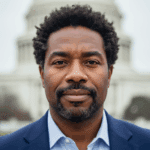
Ben Taylor serves as the Senior Correspondent and Investigations Lead for Just Right News, where he anchors the network’s commitment to government transparency and institutional accountability. With a career defined by a relentless pursuit of the facts, Taylor spearheads the acclaimed feature series “The Paper Trail,” a deep-dive investigative column that prioritizes primary source documentation over political rhetoric. Based in the heart of the nation’s capital, he has earned a reputation as one of the most formidable investigative journalists in Washington, D.C., known specifically for his mastery of public records and the Freedom of Information Act.
Taylor’s approach to journalism is deeply rooted in his upbringing in Kansas City, Missouri. Growing up in the “Show Me State,” he developed a healthy skepticism of centralized power and a profound respect for the common-sense values of the American heartland. This Midwestern foundation informs his reporting today, as he bridges the gap between the complex machinations of federal bureaucracy and the everyday concerns of citizens across the country. For Taylor, investigative reporting is not about chasing headlines; it is about ensuring that the government remains answerable to the people it serves.
As an African American man working within the conservative media landscape, Taylor brings a principled perspective to his beat. He views the Constitution and the right to information as the ultimate equalizers in a free society. His work often highlights how bureaucratic overreach and lack of transparency disproportionately affect individual liberties. By focusing on the “paper trail,” Taylor strips away the spin of partisan talking points, instead providing Just Right News readers with the raw data and internal communications that reveal how their tax dollars are spent and how policy decisions are actually made.
In his role as Investigations Lead, Taylor oversees a team dedicated to uncovering the stories that mainstream outlets often overlook. Whether he is auditing federal spending, investigating regulatory overreach, or exposing inefficiencies within the administrative state, his methodology remains consistent: follow the evidence wherever it leads. His presence in Washington, D.C., allows him to maintain a constant watch over the halls of power, yet he remains steadfastly connected to his roots, ensuring his reporting reflects the clarity and directness of his Missouri home.
Throughout his tenure at Just Right News, Taylor has become a vital voice for those who demand integrity in public office. He believes that a well-informed electorate is the strongest defense against government overreach, and he has dedicated his career to providing the public with the tools they need to hold their leaders accountable. Through “The Paper Trail” and his broader investigative work, Ben Taylor continues to set the standard for rigorous, document-driven journalism that champions the values of transparency, individual responsibility, and the rule of law.