

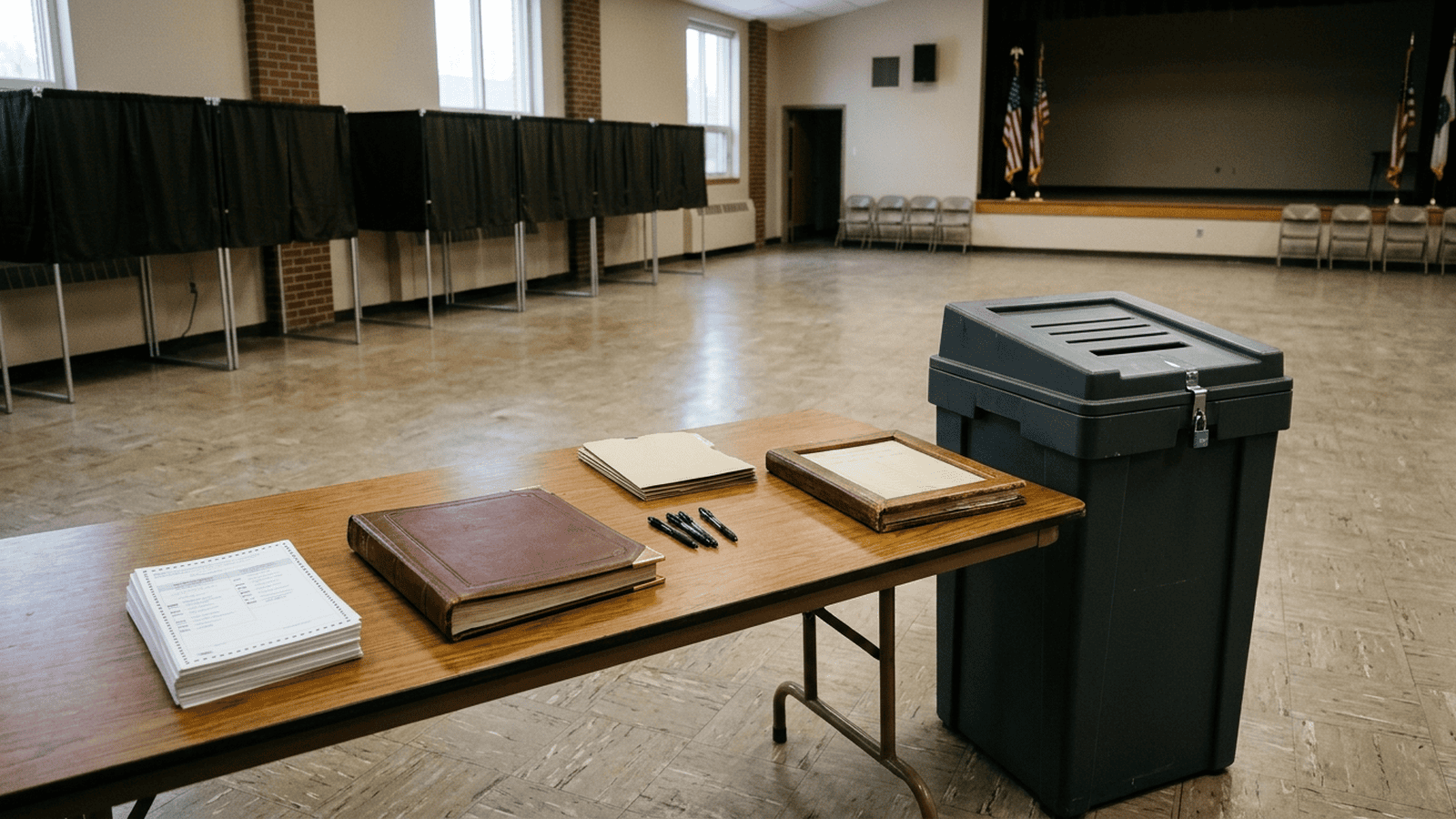
Minnesota has charged conservative activists James O’Keefe and Cam Higby with unlawful voting and identity theft over alleged false names used while starting the state’s vouching process during the Aug. 11 primary. Hennepin County Attorney Mary Moriarty said poll workers noticed suspicious behavior, alerted election officials, and prompted a police investigation. The men did not sign the oath needed to complete vouching, but prosecutors say beginning the process with false names supports the felony charges. Minnesota’s rules require both a registered voter and the person being vouched for to sign oaths, with the latter also providing specified identifying information. Neither man had entered a plea, and the account reported no trial date or further deadline.
TLDR: The felony case rests on allegations that O’Keefe and Higby used registered voters’ names while beginning, but not completing, Minnesota’s vouching procedure. Poll workers flagged their conduct, officials referred it for investigation, and the defendants had not yet entered pleas.
James O’Keefe and Cam Higby have been charged in Minnesota with unlawful voting and identity theft after a prosecutor said they used false names while approaching poll workers during the state’s Aug. 11 primary. Hennepin County Attorney Mary Moriarty announced the felony charges Wednesday. The men recorded their exchanges for a video intended to test what they described as vulnerabilities in Minnesota’s voting rules.
Moriarty said the case shows that election workers identified suspicious conduct and that officials responded. She described protecting free and fair elections as a high priority. The charges reflect the prosecutor’s position that giving false names and beginning the vouching process warranted felony counts, even though the men did not sign the oath required to complete it. Moriarty’s account is an allegation; the charges have not been proved in court.
According to Moriarty, O’Keefe, 42, of West Palm Beach, Florida, and Higby, 26, of Covington, Washington, used the names of registered voters in the precinct without those voters’ knowledge or permission. She said they wore costumes while starting the process. Poll workers became suspicious, reported their concerns to election officials, and officials asked police to investigate. The officials’ report and the subsequent investigation are the enforcement steps described by the prosecutor.
The video, posted on YouTube on Aug. 13, showed O’Keefe, Higby and others asking about vouching at several Minneapolis voting sites. The excerpt says they wore costumes similar to attire worn by some Muslims and used fake accents. Higby’s face was covered, and O’Keefe referred to him as his wife while speaking with poll workers. These details are part of the recorded conduct and the prosecutor’s account. They do not establish guilt, which will be determined through the legal process.
O’Keefe Media Group posted the video and a statement saying the team created an intentionally extreme scenario to examine how election workers would respond, what safeguards they would describe, and how far the process would proceed. The organization said workers reacted differently. Some explained how the team could proceed under the rules, while others became suspicious or communicated concerns over their radios. The group’s stated purpose differs from the prosecutor’s focus on the use of false names and the start of the process.
Minnesota’s vouching process allows a registered voter in a precinct to attest by oath to another person’s identity and residence in that precinct. The person being vouched for must also sign an oath confirming identity and eligibility. That person must provide a Minnesota driver’s license or identification card number, or the last four digits of a Social Security number. These steps create paperwork and require information from both the registered voter and the person seeking to vote through vouching.
The process is rarely used. It is most commonly used by older adults who have not updated the address on a driver’s license because they no longer drive. Fewer than 0.6% of votes cast in the November 2024 election used vouching, according to the Minnesota Secretary of State’s office website. The rules provide a way for people without current address documents to establish identity and residence, while requiring sworn statements and identifying information. The account provides no estimate of costs associated with the process.
Moriarty said the men stopped before signing the required oath, but that starting the process with false names was enough to support the felony charges. That distinction is central to the case: prosecutors allege conduct that began the process, not completion of a vouching transaction. The required oath and identifying information are the process’s stated checks; the reported concerns from poll workers led officials to ask police to investigate. The account does not describe a change to the rules or a new enforcement timeline.
David Becker, a former Justice Department official and head of the Center for Election Innovation and Research, said he knew of no examples of vouching leading to organized or widespread fraud. He also called impersonating another voter a serious crime. His comments address both the limited use of the process and the seriousness of the conduct alleged in this case.
Neither man had an opportunity to enter a plea at the time of the report. O’Keefe was not immediately available for comment, and court records did not list an attorney for him. Higby did not immediately respond to an email seeking comment, and court records likewise did not identify an attorney for him. The allegations will be addressed through legal proceedings, and the defendants will have an opportunity to respond. The account did not provide a trial date or further court schedule.

Jordan Lee serves as the Senior Correspondent for Wall Street, Finance, and Monetary Systems at Just Right News. Based in the heart of the world’s financial capital, New York City, Lee brings a sharp, principled eye to the complex mechanisms that drive the global economy. His reporting is defined by a commitment to fiscal responsibility, the defense of the free market, and a deep-seated belief that a transparent monetary system is the bedrock of a free society.
Raised in Portland, Oregon, Lee’s perspective was forged in a city that has undergone significant cultural and economic shifts. His upbringing in the Pacific Northwest instilled in him a profound appreciation for the industriousness of small business owners and the importance of local economic stability. Watching the evolution of his hometown’s landscape sparked an early interest in how federal fiscal policy and large-scale financial trends eventually trickle down to the average citizen. This background provides him with a unique vantage point; he understands the growing disconnect between the policy-making elite and the reality of Main Street, a theme that frequently resonates throughout his work.
Now operating from his base in New York City, Lee bridges the gap between the high-stakes trading floors of Manhattan and the households of everyday Americans. He views the financial sector not merely as a collection of numbers and tickers, but as a vital engine of American prosperity that requires constant vigilance and accountability. His reporting often highlights the dangers of centralized financial control and the necessity of maintaining a system that rewards merit, risk-taking, and innovation.
As the creator and lead of the featured series, “The Invisible Economy,” Lee pulls back the curtain on the often-opaque world of monetary systems. He specializes in translating the dense jargon of central banking and international finance into actionable insights for the Just Right News audience. His work explores the “invisible” forces—such as inflationary pressures, regulatory creep, and the expansion of the administrative state—that erode the purchasing power of American families. By focusing on these systemic issues, Lee empowers readers to understand the hidden forces shaping their financial independence.
Lee’s journalistic philosophy is rooted in a steadfast commitment to traditional American values. As an Asian American professional who has navigated the competitive corridors of the financial world, he is a vocal advocate for meritocracy and the preservation of the American Dream. He believes that a stable currency and a predictable regulatory environment are essential for national sovereignty and individual liberty. His reporting frequently warns against the risks of government overreach in the private sector, arguing that the most effective solutions to economic challenges arise from competition and individual enterprise rather than bureaucratic mandates.
At Just Right News, Jordan Lee remains dedicated to providing a clear-eyed defense of the taxpayer. Whether he is analyzing market volatility or investigating the long-term implications of national debt, his mission is to provide the truth about where the money is going and what it means for the future of the country. Through his rigorous analysis and principled stance, Lee has become a trusted voice for those who value a strong, sovereign, and fiscally sound America.