

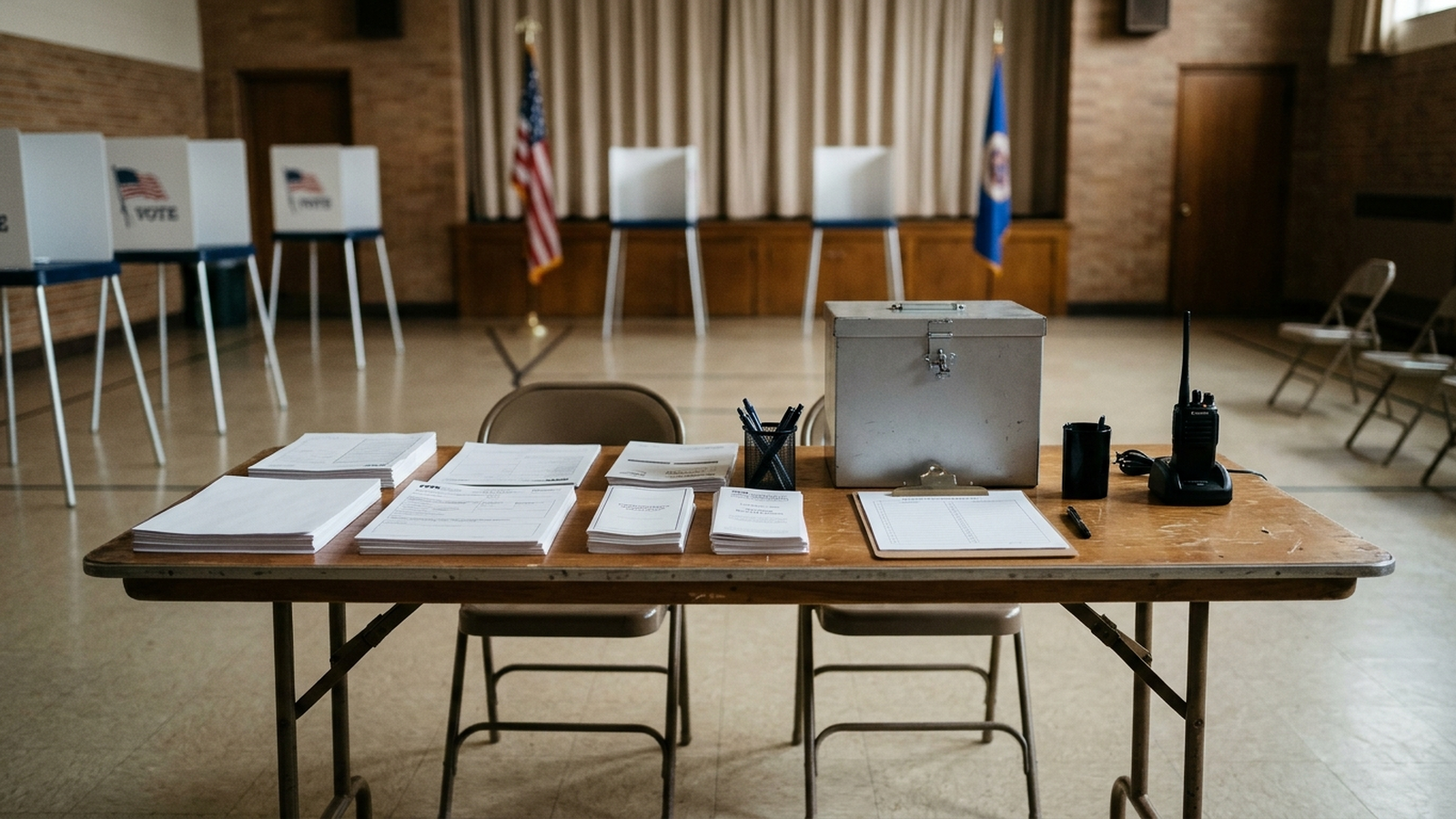
Hennepin County prosecutors charged James O’Keefe and Cam Higby with unlawful voting and identity theft over alleged false names used while attempting to begin Minnesota’s voter-vouching process during the Aug. 11 primary. Neither man has entered a plea, and the accusations have not been adjudicated. Prosecutor Mary Moriarty said poll workers flagged the conduct, officials contacted police, and the response showed the system for identifying and addressing misconduct worked. Minnesota’s process requires sworn statements from both the voucher and the person seeking to register and vote, along with specified identifying information. The men stopped before signing the required oath, and no hearing date or further deadline was reported.
TLDR: Minnesota prosecutors say two activists used registered voters’ names while starting the state’s vouching process, prompting felony charges after poll workers raised concerns. The men have not entered pleas, and the reported court process will determine how the allegations proceed.
James O’Keefe and Cam Higby have been charged with unlawful voting and identity theft in Minnesota after a prosecutor said they used false names while approaching poll workers during the state’s Aug. 11 primary. Hennepin County Attorney Mary Moriarty announced the felony charges Wednesday. The allegations have not been adjudicated, and neither man has had an opportunity to enter a plea.
Moriarty said the case shows that “the system for identifying misconduct and responding to it functioned well during the primary.” She said free and fair elections are a high priority and that protecting them requires a response to suspected misconduct. Poll workers flagged the men’s behavior, election officials contacted police, and police investigated.
According to Moriarty, O’Keefe and Higby wore costumes and used names belonging to registered voters in the precinct without those voters’ knowledge or permission. The men were attempting to begin Minnesota’s “vouching” process, which allows a registered voter in a precinct to attest to another person’s identity and residence. Prosecutors say the pair stopped before signing the oath required to complete that process. Moriarty said beginning it with false names was enough to justify the charges.
The men recorded their interactions for a video intended to expose what they described as vulnerabilities in Minnesota’s voting laws. O’Keefe Media Group later posted the video and a statement. The organization said the team staged an intentionally extreme scenario to see how election workers would respond, what safeguards they would describe, and how far they would allow the process to proceed.
The organization’s statement said workers did not respond uniformly. Some explained how the undercover team could proceed under the rules. Others grew suspicious, objected to the investigation, or communicated concerns by radio. That account and the prosecutor’s description establish competing interpretations of the events; they do not settle the legal question now before the courts.
O’Keefe was not immediately available for comment, and court records did not list an attorney who could comment for him. Higby did not immediately respond to an email seeking comment, and court records did not list an attorney for him. Neither has entered a plea, according to the report. The charges therefore remain allegations, not findings of guilt.
Minnesota permits a registered voter to vouch for another voter in the same precinct by signing an oath that the second person has a qualifying identity and lives in that precinct. The person being vouched for must also sign an oath affirming identity and eligibility. That person must provide a Minnesota driver’s license or identification card number, or the last four digits of a Social Security number.
The process is rarely used. It is most commonly used by older adults who no longer drive and have not updated the address on a driver’s license. Fewer than 0.6% of votes cast in the November 2024 election used vouching, according to the Minnesota Secretary of State’s office website. That limited use is relevant context, but it does not resolve what happened at the polling places or whether the alleged conduct meets the legal standard for the charges.
The practical rules involve an oath from the registered voter acting as voucher, a separate oath from the person seeking to register and vote, and identifying information from that person. The account describes no fee, new form, or additional compliance deadline resulting from the charges. The immediate enforcement step reported is the felony prosecution; the men had not yet had an opportunity to enter pleas. The process directly affects voters who lack proof of their current address and seek to register through a voucher, including some older adults.
Election identification rules vary across the country. Minnesota is among the states that allow officials or registered voters to vouch for people without current identification. The report also describes other state approaches, including affidavits, personal information, and attestations by officials or people who know a voter. Those comparisons provide context, but this case concerns Minnesota’s rules and the alleged use of other voters’ names in one primary.
The next steps are part of the court process. The report gives no hearing date or further deadline, and it records no plea from either defendant. The allegations will proceed through that process, while the poll-worker response and election officials’ referral to police remain the oversight actions described so far. Further conclusions must wait for the legal proceedings; no expert assurance beyond the statements reported here is established.
Chloe Foster serves as a Staff Writer for Just Right News, where she spearheads the outlet’s coverage of Media, Culture, and Information Integrity. In an era defined by rapid-fire digital communication and shifting societal norms, Chloe has distinguished herself as a vital voice for readers seeking clarity amidst the noise. Her signature feature series, “The Story Wars,” has become a cornerstone of the publication, offering a deep dive into the ideological battles currently shaping American life and the ways in which mainstream narratives are constructed, disseminated, and often manipulated.
Chloe’s unique perspective is informed by a life lived in two of the nation’s most influential cultural hubs. Raised in Los Angeles, California, she grew up in the shadow of the world’s most powerful media and entertainment apparatus. This upbringing provided her with a front-row seat to the “dream factory,” allowing her to observe firsthand how cultural exports are crafted and how they often diverge from the lived experiences of everyday Americans. Her time in Los Angeles instilled in her a healthy skepticism of manufactured consensus and a passion for uncovering the truths that lie beneath polished public relations campaigns.
Today, Chloe operates from Brooklyn, New York, a vantage point that places her at the epicenter of the modern media landscape. Living and working in a deep-blue urban environment as a conservative journalist has sharpened her reporting, requiring a rigorous commitment to intellectual honesty and a steadfast defense of traditional values. Her base in Brooklyn allows her to engage directly with the institutions and influencers who drive the national conversation, providing Just Right News readers with an “on-the-ground” look at the cultural shifts originating in the Northeast.
As a Hispanic woman, Chloe brings a nuanced understanding of community and heritage to her beat. She frequently explores how media portrayals of the Latino community often overlook the deep-seated faith, entrepreneurial spirit, and family-centric values that define it. Her work challenges the monolithic labels often applied by mainstream outlets, instead highlighting the diversity of thought and the conservative principles that resonate within her community.
In her role at Just Right News, Chloe views “Information Integrity” not merely as a buzzword, but as a mission. She believes that a healthy republic requires a media landscape where facts are prioritized over agendas and where the public is empowered to think for themselves. Through “The Story Wars,” she deconstructs the framing of major news events, exposing bias and providing the context necessary for readers to understand the broader cultural implications of the day’s headlines.
Chloe Foster’s reporting is more than just a collection of articles; it is a sustained effort to reclaim the narrative for those who feel sidelined by the prevailing media establishment. By bridging the gap between her West Coast roots and her East Coast base, she continues to provide essential commentary on the forces that define our shared American culture.