

Gen. Randy George warned in late December that Army stocks of THAAD and Patriot missile interceptors could remain strategically low until 2030. Officials cited transfers to Ukraine, defense of Israel, wartime use and limited industrial capacity as contributing factors. CSIS estimates suggest the Iran war consumed up to 61% of the prewar Patriot inventory and as much as 82% of the THAAD stockpile, while replacement deliveries take years. The United States has requested more than 800 THAAD interceptors for fiscal year 2027, and Lockheed Martin has announced plans to expand annual THAAD production capacity. Pentagon spokesman Sean Parnell disputes claims of a shortage and says the military retains the arsenal needed for its operations.
TLDR: A prewar Army assessment warned that THAAD and Patriot stocks could remain low through 2030, while CSIS estimates point to substantial use during the Iran war. The fiscal year 2027 request and contractor production plans are the next identified steps, though the Pentagon disputes that the military faces a shortage.
Army Chief of Staff Gen. Randy George warned in late December that the Army was critically short of missile defense munitions and that the shortage could last another five years, according to multiple U.S. officials familiar with his assessment. The warning came two months before the U.S. war with Iran began. Defense Secretary Pete Hegseth ousted George in April, while the war was underway. The excerpt does not state why George was removed or connect the decision to his warning.
The practical rationale behind George’s assessment was a mismatch between the use of missile interceptors and the ability to replace them. Officials told CBS News that transfers of Patriot missiles to Ukraine after Russia’s 2022 invasion, munitions used to defend Israel, and reduced defense-industry capacity contributed to the shortage. The assessment appeared in the Pentagon’s annual Global Force Management Allocation Plan, which is approved by the defense secretary and sets where troops and weapons are allocated.
George prepared the risk analysis for the Defense Department’s fiscal year 2027 plan, before the war with Iran began. He warned that stocks of Terminal High Altitude Area Defense, or THAAD, and Patriot missiles would remain strategically low until 2030. U.S. officials said the country still holds significant stocks of some offensive weapons, including Joint Direct Attack Munitions and Small Diameter Bombs, but described missile-defense munitions as being at low strategic-risk levels. CBS News withheld exact percentage figures cited by officials for security reasons. George declined to comment.
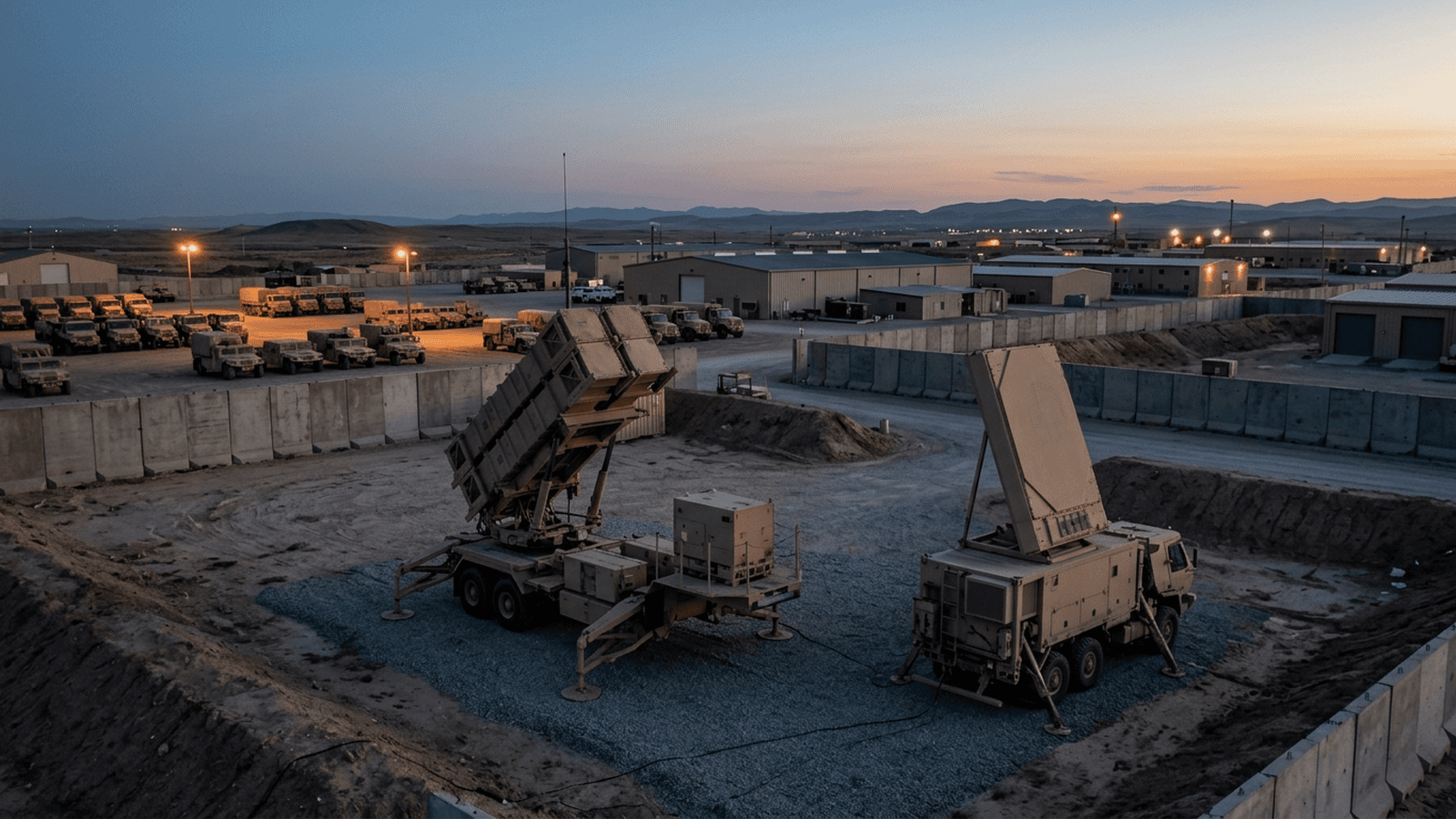
The distinction matters because THAAD and Patriot systems serve different roles. THAAD is designed to intercept ballistic missiles in the final part of their flight, inside or just outside Earth’s atmosphere. The Army has eight THAAD batteries. A battery has 90 soldiers and six truck-mounted launchers, and a full battery controls 48 interceptors, according to a 2025 Congressional Research Service report.
Patriot systems protect military installations, troops and other critical infrastructure from ballistic and cruise missiles and hostile aircraft. They can engage a wider range of aerial threats at lower altitudes than THAAD. Used together, the systems provide overlapping layers of defense. The Patriot munition described as critically low is the PAC-3 interceptor, which destroys incoming tactical ballistic and cruise missiles by striking them at high speed. U.S. officials also say it can bring down enemy aircraft.
That capacity is relevant to a possible conflict with China, said Mark Cancian, a retired Marine colonel and senior adviser at the Center for Strategic and International Studies. He described THAAD and Patriot as two Army munitions likely to see heavy use in such a conflict, with missile defense playing a major role. The excerpt does not provide a forecast of when or whether such a conflict would occur.
CSIS estimates show how quickly the Iran war used available stocks. Before the war, the United States had roughly 2,300 Patriot interceptors, according to the group’s estimate. It estimated that between 1,050 and 1,430 were expended during the conflict, potentially using as much as 61% of the prewar inventory. Fewer than 500 replacement munitions were expected in fiscal year 2026. The prewar THAAD stockpile was estimated at about 355 interceptors; CSIS estimated that the war used between 190 and 290, or as much as 82%. No THAAD replenishment deliveries were expected in fiscal year 2026.
Delivery timelines also constrain how fast stocks can recover. CSIS estimates that new THAAD interceptor contracts take four years and five months to complete. Patriot PAC-3 orders take an average of three and a half years. The United States has requested more than 800 THAAD interceptors for fiscal year 2027. Lockheed Martin announced in January that it planned to raise annual THAAD production capacity from 96 to 400 interceptors. Lockheed Martin and RTX, through Raytheon, are among the contractors making these systems and key components, and both have signed agreements aimed at speeding production.
The practical impact is a long replenishment schedule, continued pressure on inventories and a need to direct production toward missile defense. The disclosed figures describe military stockpiles and contractor delivery schedules, not a cost to households; the excerpt gives no dollar total. It identifies no public forms, civilian compliance duties or enforcement process. A U.S. official told CBS News that even without further use in Iran or other conflicts, replenishing stocks to the already-low December 2025 level could take until 2030. That timeline depends on avoiding additional expenditure, according to the official.
The Pentagon’s chief spokesman, Sean Parnell, rejected claims of a U.S. munitions shortage. He said the military has what it needs to strike at the president’s chosen time and place and has conducted successful operations while maintaining a deep, ready arsenal. Those assurances differ from the risk assessment described by officials and the CSIS estimates, while the exact figures in George’s analysis remain undisclosed. The next identified steps are the fiscal year 2027 request and the contractors’ production plans; the excerpt provides no separate deadline or oversight schedule. Those steps will be necessary to track whether replenishment catches up with use, while the Pentagon’s confidence remains its stated position.

Daniel Owens serves as a Senior Correspondent for Just Right News, where he leads the newsroom’s coverage of Education, Workforce, and Upward Mobility. In an era where the national conversation often overlooks the practical foundations of success, Owens brings a principled perspective to the forefront of the media landscape. His work is defined by a commitment to the idea that a strong society is built on the pillars of quality education, a robust work ethic, and the removal of bureaucratic barriers to individual achievement.
Born and raised in Cleveland, Ohio, Owens’s worldview was shaped by the industrial landscape of the Midwest. Growing up in a city known for its grit and resilience, he witnessed firsthand the transformative power of steady employment and the devastating effects of economic stagnation. This background instilled in him a deep respect for the American worker and a healthy skepticism toward top-down government solutions that often fail to reach the communities they intend to help. As an African American man who has navigated the path to professional success, Owens approaches his beat with a nuanced understanding of how meritocracy and personal responsibility intersect with opportunity. He frequently draws on his roots to highlight the importance of family stability and community-led initiatives in fostering the next generation of leaders.
At Just Right News, Owens is the architect of the acclaimed feature series, “The Learning Curve.” Through this platform, he explores the evolving landscape of American schooling, from the rise of the school choice movement to the revitalization of trade schools and vocational training. He frequently challenges the status quo of higher education, advocating for a return to academic rigor and the practical alignment of degrees with market demands. For Owens, education is not merely about obtaining credentials; it is about equipping young people with the tools necessary to lead self-sufficient, meaningful lives. His reporting on “The Learning Curve” has become essential reading for parents and policymakers who believe that educational competition and parental rights are the keys to a brighter future.
Now based in Raleigh, North Carolina, Owens finds himself at the heart of one of the nation’s most dynamic regions for innovation and growth. Raleigh’s unique blend of traditional values and a fast-paced economy provides the perfect backdrop for his reporting on the modern workforce. From the tech hubs of the Research Triangle to the rural communities of the South, he tracks how shifts in the economy are impacting families and local industries. His reporting often highlights the success stories of entrepreneurs and workers who are thriving by embracing the values of hard work and innovation.
Throughout his career, Daniel Owens has remained a steadfast voice for the student seeking a better path and the worker striving for a better life. His reporting for Just Right News serves as a vital resource for readers who value common-sense solutions to the challenges of the 21st-century economy. By focusing on the intersection of policy and the human spirit, Owens continues to provide a roadmap for how individuals and communities can achieve lasting upward mobility.