

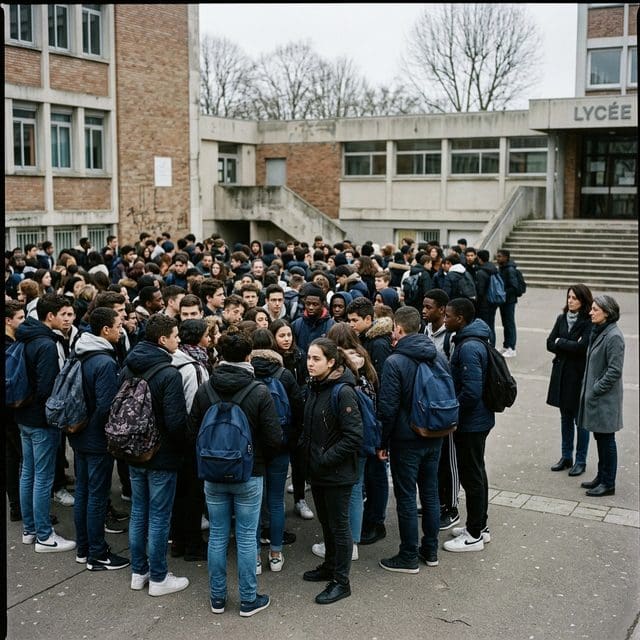
French students are protesting school conditions as Ekiti officials celebrate Olayemi Oyebanji’s professorship, while Princeton’s latest events offer a quieter look at campus learning.
Education’s value as a path to opportunity depends not only on what students learn, but also on whether schools have the staff and conditions to teach them. Recent developments in France, Nigeria and the United States offer sharply different snapshots: student demands over strained school conditions, recognition of an academic career, and modest campus programming aimed at communication and cultural learning.
In France, students are protesting what they describe as problems with school buildings, teacher shortages and overcrowded schedules. Greta Thunberg joined students at Paul Eluard High School in Saint-Denis on October 13 and said young people were being excluded from the conversation and that their future was being taken from them, according to The Independent.
The scale of disruption underscores the challenge facing schools and officials. Education Minister Édouard Geffray said about 200 schools were closed on October 13, while the education ministry reported that eight teaching staff were injured during protests the previous day, Al Jazeera reported. More than 70,000 people had joined the latest major protest on the preceding Thursday.
France’s Justice Ministry said more than 6,800 people, mainly minors, had been taken into police custody during the protests. Police had opened investigations into 24 allegations of brutality as of October 13. Unions and the left-wing France Unbowed party back the demonstrations, with marches planned in Paris and other cities that day.
The reported demands address basic conditions that can shape students’ ability to learn: functioning facilities, enough teachers and schedules that do not leave pupils overloaded. The available reports do not quantify how those conditions affect academic outcomes or describe a government response to the specific demands. They do show a dispute moving beyond classrooms and onto the streets, where students and supporters are seeking a larger role in decisions about their education.
In Nigeria’s Ekiti State, the state government announced on October 13 that Olayemi Oyebanji had been elevated to professor by the University of Ibadan. The title covers institutional administration, leadership, quality assurance in education and human-resources development. Ekiti APC described the promotion as recognition of years of scholarship and public service, while State Universal Basic Education Board chairman Prof. Femi Akinwumi praised Oyebanji’s academic work and pro-bono lecturing, PUNCH reported.
The announcement highlights one form of investment in education: advanced scholarship and professional expertise. But the reports provide no details about how the promotion might influence policy or classroom practice. Oyebanji’s academic distinction is a milestone in her career; it is not, by itself, evidence of improved outcomes for pupils in Ekiti’s schools.
At Princeton University, the available October 13 event listings included public-speaking practice sessions and an exhibition program on modernism and decolonization in West Africa. The practice sessions offer students a chance to build confidence speaking before an audience, a skill that can carry into academic and professional settings. The exhibition connects cultural history with questions of political change and ideas about the future. Neither listing represents a reported policy change, student-debt development or intervention in school conditions.
Taken together, the reports show education at several levels: the day-to-day capacity of schools, the work and recognition of educators and scholars, and the skills universities invite students to develop. They do not provide a common measure of results or enough evidence to compare the institutions. The clearest contrast is between France’s public dispute over whether schools are equipped to serve students and the quieter institutional milestones and programs elsewhere.
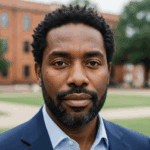
Daniel Owens serves as a Senior Correspondent for Just Right News, where he leads the newsroom’s coverage of Education, Workforce, and Upward Mobility. In an era where the national conversation often overlooks the practical foundations of success, Owens brings a principled perspective to the forefront of the media landscape. His work is defined by a commitment to the idea that a strong society is built on the pillars of quality education, a robust work ethic, and the removal of bureaucratic barriers to individual achievement.
Born and raised in Cleveland, Ohio, Owens’s worldview was shaped by the industrial landscape of the Midwest. Growing up in a city known for its grit and resilience, he witnessed firsthand the transformative power of steady employment and the devastating effects of economic stagnation. This background instilled in him a deep respect for the American worker and a healthy skepticism toward top-down government solutions that often fail to reach the communities they intend to help. As an African American man who has navigated the path to professional success, Owens approaches his beat with a nuanced understanding of how meritocracy and personal responsibility intersect with opportunity. He frequently draws on his roots to highlight the importance of family stability and community-led initiatives in fostering the next generation of leaders.
At Just Right News, Owens is the architect of the acclaimed feature series, “The Learning Curve.” Through this platform, he explores the evolving landscape of American schooling, from the rise of the school choice movement to the revitalization of trade schools and vocational training. He frequently challenges the status quo of higher education, advocating for a return to academic rigor and the practical alignment of degrees with market demands. For Owens, education is not merely about obtaining credentials; it is about equipping young people with the tools necessary to lead self-sufficient, meaningful lives. His reporting on “The Learning Curve” has become essential reading for parents and policymakers who believe that educational competition and parental rights are the keys to a brighter future.
Now based in Raleigh, North Carolina, Owens finds himself at the heart of one of the nation’s most dynamic regions for innovation and growth. Raleigh’s unique blend of traditional values and a fast-paced economy provides the perfect backdrop for his reporting on the modern workforce. From the tech hubs of the Research Triangle to the rural communities of the South, he tracks how shifts in the economy are impacting families and local industries. His reporting often highlights the success stories of entrepreneurs and workers who are thriving by embracing the values of hard work and innovation.
Throughout his career, Daniel Owens has remained a steadfast voice for the student seeking a better path and the worker striving for a better life. His reporting for Just Right News serves as a vital resource for readers who value common-sense solutions to the challenges of the 21st-century economy. By focusing on the intersection of policy and the human spirit, Owens continues to provide a roadmap for how individuals and communities can achieve lasting upward mobility.